 Whalesbook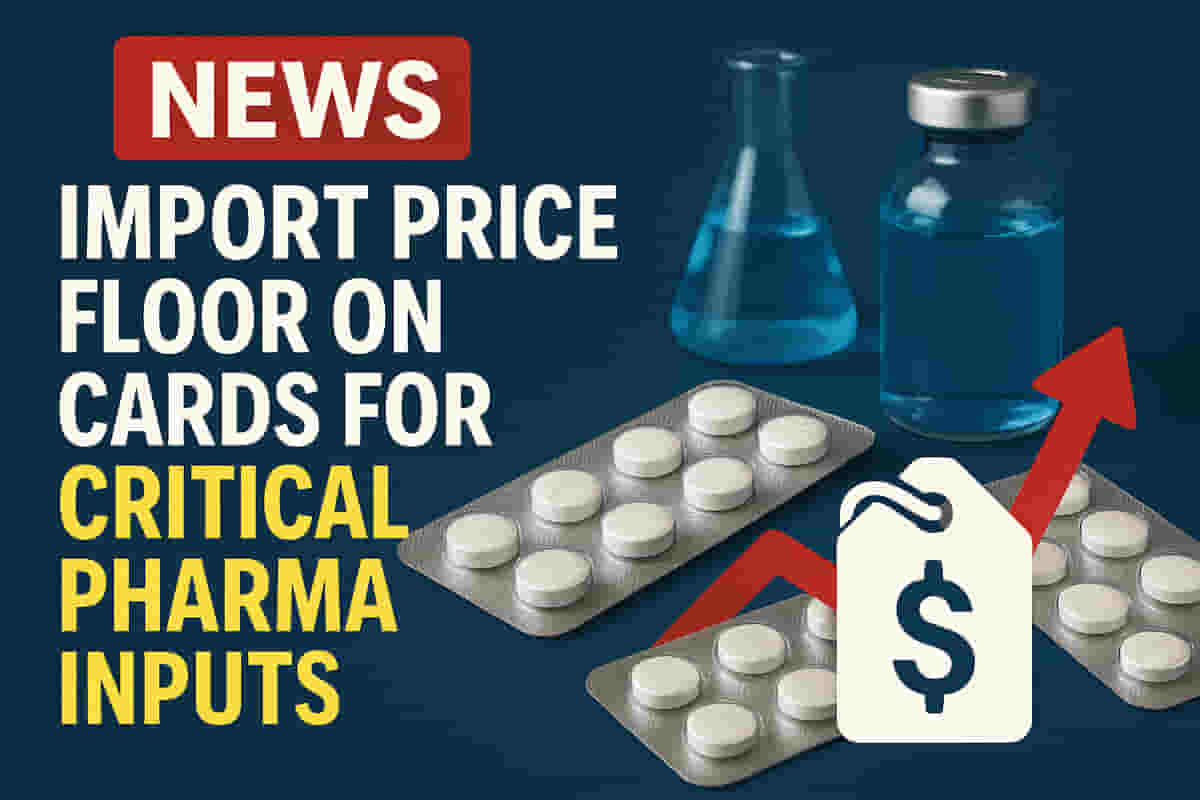


The Indian government is on the verge of implementing a Minimum Import Price (MIP) for key pharmaceutical raw materials, a strategic move designed to shield the domestic drug industry from aggressive, low-cost imports, particularly from China. This policy, which is in its final stages and has moved from the Department of Pharmaceuticals to the Health Ministry, will prevent the import of bulk drugs and Active Pharmaceutical Ingredients (APIs) below a predetermined price threshold.
Currently, MIP is in place for two products: ATS-8, with an imported price fixed at $111 per kg until September 30, 2026, and sulphadiazine, fixed at Rs. 1,174 per kg with the same expiry. The new notification is anticipated to extend this protection to critical materials such as Penicillin-G, 6APA, and Amoxicillin, which are vital for manufacturing a wide range of medicines.
This initiative is seen as a significant push towards 'Atmanirbhar Bharat' (self-reliant India), especially given China's dominant position, supplying approximately 70% of the raw materials valued at $10-12 billion consumed by India's pharmaceutical sector. The government's previous Production-Linked Incentive (PLI) scheme, launched in 2020 to boost domestic manufacturing of critical raw materials, faced challenges as Indian buyers often opted for the lowest-priced imported inputs, blunting the scheme's effectiveness. Aurobindo Pharma, for instance, invested Rs 3,500 crore in a large penicillin manufacturing site as part of the PLI scheme, reviving production that had collapsed due to Chinese competition decades ago.
By establishing an MIP, the government intends to create a level playing field, encouraging domestic production and ensuring a stable supply chain for essential pharmaceutical inputs. The details, including specific products and pricing, will be notified to the Directorate General of Foreign Trade (DGFT) soon.
Impact
This policy is expected to enhance the competitiveness of the Indian pharmaceutical manufacturing sector by reducing reliance on potentially unfair pricing practices from international suppliers, particularly China. It aims to secure the domestic supply chain and boost indigenous production capabilities for critical APIs, aligning with India's goal of greater self-sufficiency in pharmaceuticals. While it might lead to slightly higher input costs initially for some manufacturers, the long-term benefits include supply chain stability and reduced vulnerability to external market fluctuations. Rating: 7/10.
Defined Terms:
Minimum Import Price (MIP): A government-set minimum price below which imports of a particular commodity or product are not allowed. This is used to protect domestic industries from cheap imports that could harm local producers.
Active Pharmaceutical Ingredients (APIs): The biologically active component of a drug product that produces the intended health effects. They are the core ingredients in medicines.
Predatory Price Cuts: The practice of selling goods or services at an extremely low price, often below cost, with the intention of driving competitors out of the market.
Directorate General of Foreign Trade (DGFT): An organisation under the Ministry of Commerce and Industry, Government of India, responsible for formulating and implementing foreign trade policy.
Production-Linked Incentive (PLI) Scheme: A government scheme that provides financial incentives to domestic manufacturers based on their incremental sales of manufactured goods. It aims to boost domestic manufacturing, reduce imports, and create jobs.
Atmanirbhar Bharat: A Hindi phrase meaning 'self-reliant India', referring to a national initiative launched by the Indian government to promote domestic production and reduce dependence on imports.