

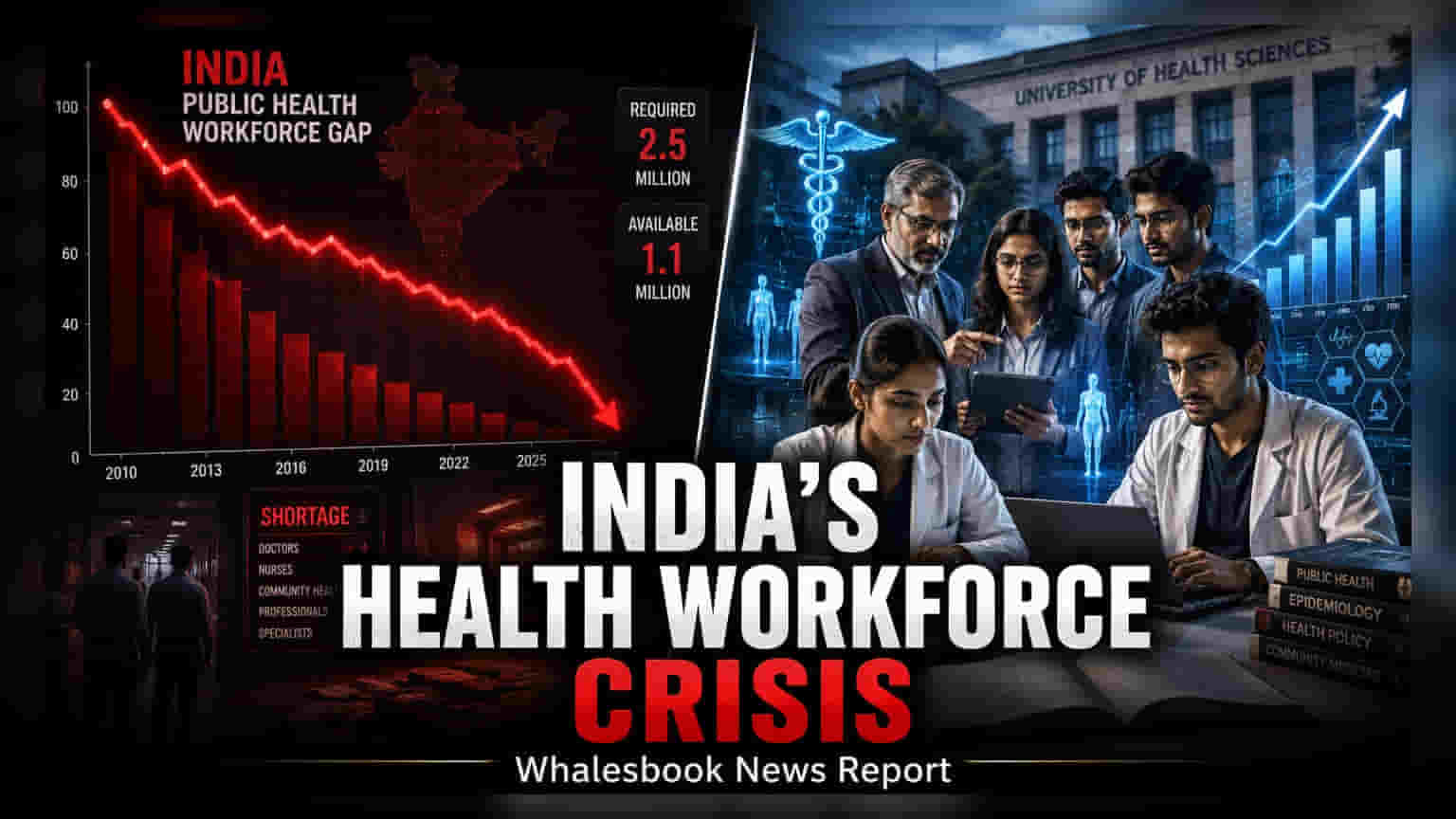
India needs over 45,000 additional public health professionals to support national programs like Ayushman Bharat. The Public Health Foundation of India's newly recognized university is launching multidisciplinary training to address this shortage, which threatens the efficiency of recent healthcare investments.
India is currently facing a significant workforce challenge that threatens to undermine the impact of large-scale healthcare initiatives. Despite a major surge in capital allocation toward health infrastructure and systems such as the Ayushman Bharat scheme and the Digital Health Mission, the country requires more than 45,000 additional trained public health professionals to effectively manage and scale these services. This human resource gap has become a primary hurdle, as the speed of infrastructure development is currently outpacing the availability of skilled experts who can oversee policy implementation, digital health integration, and system management.
Expanding Training Capacity at PHFI-IPHS
The Public Health Foundation of India’s Institute of Public Health Sciences (PHFI-IPHS) is moving to address this scarcity by leveraging its new status as a Deemed-to-be University. The institute is focusing on training a new generation of leaders through specialized multidisciplinary programs. These courses, including Master of Public Health, Master of Health Administration, and MSc degrees in One Health and Digital Health & Data Science, are designed to combine technical expertise with management and policy skills. By utilizing campuses in Hyderabad, Bengaluru, and Bhubaneswar, the institution aims to provide hands-on experience through partnerships with government health systems and national programs.
Growing Pressures on India's Healthcare System
The need for specialized personnel is driven by several systemic changes. India is dealing with the dual burden of shifting disease patterns and rapid urbanization, alongside the growing complexities of climate-related health risks and an aging population. Additionally, the rapid digital transformation of the health sector has created a need for professionals who are proficient in both health administration and data science.
For investors and stakeholders in the healthcare sector, this workforce shortage represents a core operational risk. While the government and private entities continue to increase capital spending on facilities and medical technology, the lack of qualified staff to operate these systems can lead to project execution delays, lower operational efficiency, and higher costs. The long-term success of India’s expanding healthcare network will depend heavily on the ability of educational institutions to close this capacity gap, ensuring that new infrastructure translates into actual improvements in healthcare delivery. Investors may track the intake numbers at these specialized institutions and government initiatives aimed at health sector upskilling as key indicators of the industry's ability to sustain its current growth trajectory.