

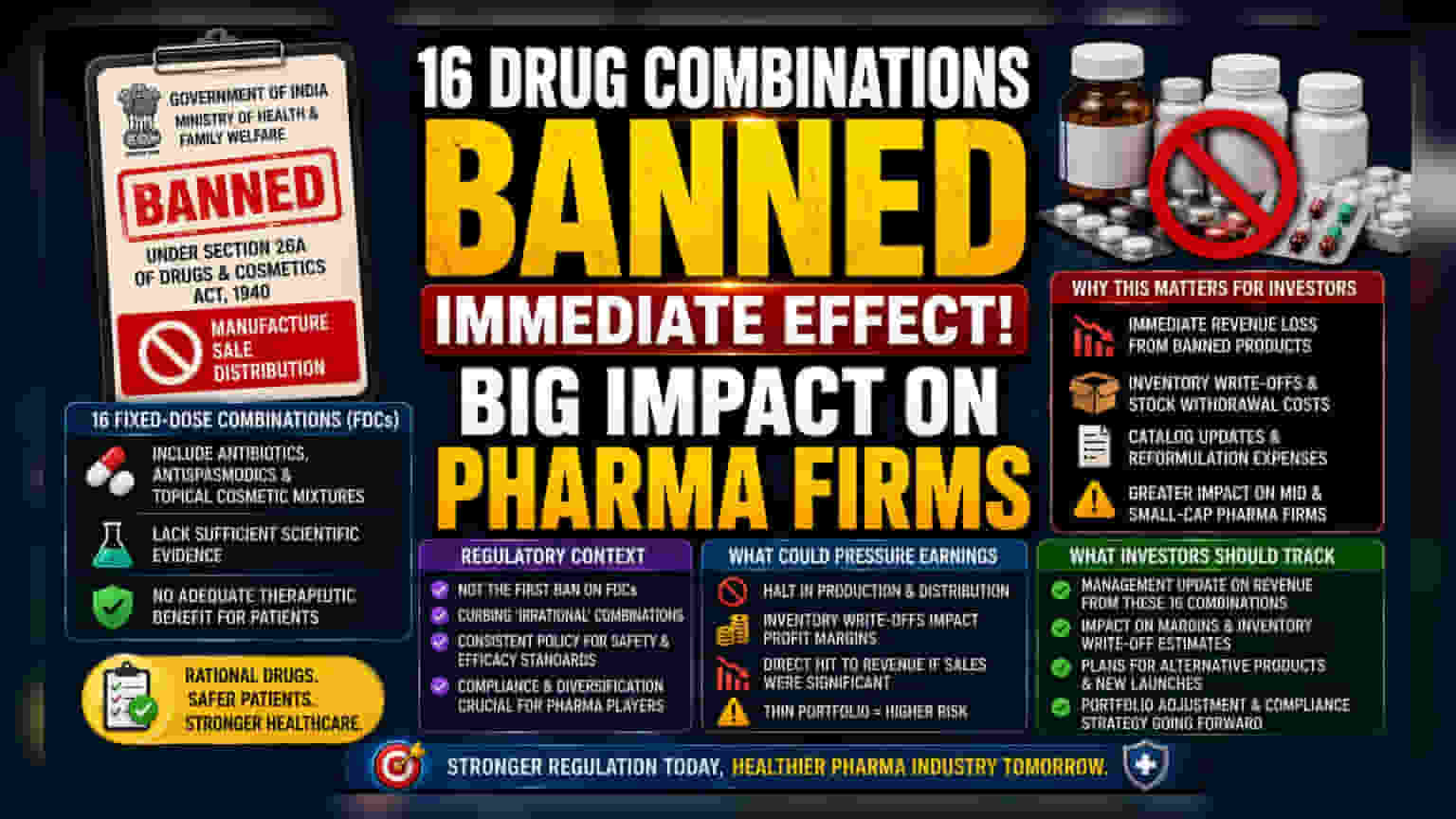
The Indian government has banned 16 fixed-dose drug combinations (FDCs) to remove irrational and unproven medicines from the market. This immediate ban affects antibiotics and cosmetic mixtures, creating regulatory pressure for pharma companies with exposure to these products. Investors may monitor potential revenue loss and the need for portfolio adjustments among manufacturers of these formulations.
What Happened
The Indian government has issued an immediate ban on the manufacture, sale, and distribution of 16 fixed-dose drug combinations (FDCs). This action, taken under Section 26A of the Drugs and Cosmetics Act, 1940, follows a long-term review by an Expert Committee and the Drugs Technical Advisory Board. Authorities determined that these specific combinations—which include various antibiotics, antispasmodics, and topical cosmetic mixtures—lack sufficient scientific evidence to justify their use. The government concluded that these products do not provide the necessary therapeutic benefit to patients, leading to their prohibition.
Why This Matters For Investors
For pharmaceutical companies, this move highlights the ongoing regulatory focus on rationalizing drug combinations in India. When the government bans specific drug combinations, companies that manufacture or sell these products face an immediate hit to revenue from those specific lines. Beyond the loss of sales, firms must also manage the costs associated with withdrawing existing stock from the market, updating their product catalogs, and potentially reformulating their offerings. This creates short-term financial pressure for companies that rely heavily on these categories for their product mix.
The Regulatory And Industry Context
This is not the first time Indian regulators have acted against fixed-dose combinations. Similar bans have occurred in the past, reflecting a consistent policy effort to curb the use of 'irrational' combinations that may not meet modern clinical safety and efficacy standards. While large, diversified pharma companies often have broad product portfolios that can absorb the impact of such bans, smaller manufacturers with more concentrated portfolios may face greater challenges. The recurring nature of these regulatory reviews means that compliance and portfolio diversification remain key operational factors for players in the generic and branded generics space.
What Could Pressure Earnings
Investors may note that the immediate ban requires companies to halt production and distribution right away. This can lead to inventory write-offs, where unsold stock becomes unusable and must be destroyed. Furthermore, if a significant portion of a company's sales was tied to these 16 combinations, there will be a direct impact on their quarterly revenue. The pressure is compounded if the company does not have ready-to-sell alternatives to fill the gap in their product portfolio quickly. While the overall impact on the sector is often manageable for large-cap firms, it can be disproportionately negative for mid- and small-cap firms with fewer product alternatives.
What Investors Should Track
Investors may look for company filings regarding the impact of this specific notification. Key monitorables include management commentary on the revenue contribution of these 16 combinations, the expected impact on profit margins due to inventory write-offs, and any plans for new product launches to replace the banned items. Watching how companies adjust their portfolios to meet stricter regulatory requirements will also be important for assessing long-term operational quality.