

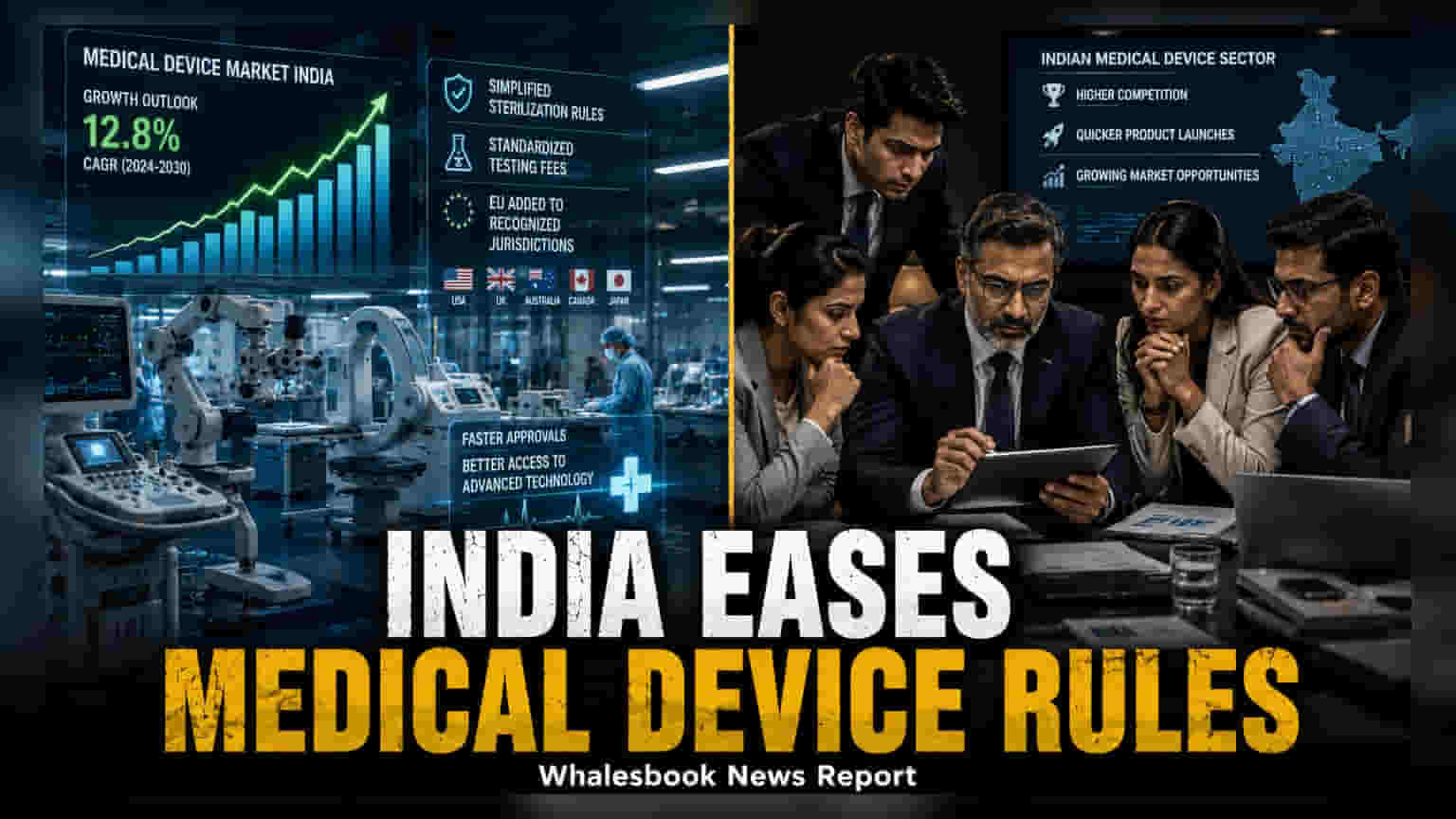
The Ministry of Health and Family Welfare has relaxed the Medical Devices Rules, 2017, to simplify manufacturing and import processes. The reforms introduce uniform testing fees and recognize the European Union for clinical investigation waivers, aiming to accelerate the entry of advanced medical technologies into the Indian market.
The Indian government has introduced a significant overhaul of the Medical Devices Rules, 2017, aimed at reducing the regulatory burden on businesses and speeding up the availability of advanced medical technology in the country. These amendments are expected to impact both domestic manufacturers and companies importing advanced medical products into India.
Key Regulatory Changes
The updated regulations focus on three main areas to improve ease of business. First, the rules for sterilization have been simplified. Previously, companies relying on external sterilization facilities faced a cumbersome process involving separate loan licenses. The new amendments remove this requirement, allowing manufacturers to use third-party facilities with reduced documentation and faster approval timelines.
Second, the Ministry has introduced a standardized fee structure for medical device testing. By bringing consistency to these charges, the government aims to reduce disputes between manufacturers and testing laboratories, ensuring more predictable costs for the industry.
Third, the government has added the European Union to its list of recognized stringent regulatory jurisdictions. This change is particularly relevant for importers. Companies with medical devices already approved in the EU can now avail of waivers for clinical investigations for products without direct predicate devices in India. This aligns the EU with existing recognized regions, including the United States, United Kingdom, Australia, Canada, and Japan, potentially cutting down the time it takes to launch imported high-tech medical equipment.
Investor and Sector Impact
For investors tracking the Indian healthcare and medical device sector, these reforms signal a move toward a more integrated global market. The easier regulatory pathway for imported devices could benefit companies that distribute or partner with international brands, as it allows for quicker product launches.
However, this increased ease of entry also introduces competition. Domestic manufacturers, who have been building their capabilities in recent years, may face faster arrival of advanced foreign technology. The ability of local firms to adapt to this competitive landscape will be a key factor to watch. Furthermore, while the rules are designed to be simpler, the actual speed of implementation will depend on how quickly testing laboratories and administrative bodies adopt the new standardized fees and waiver processes.
Investors may track how these changes affect the product pipelines of major healthcare companies operating in India, particularly those focusing on specialized or advanced diagnostic and therapeutic devices. The success of these reforms will ultimately be measured by the reduction in approval times and the resulting increase in the variety of medical technologies available to healthcare providers across the country.