

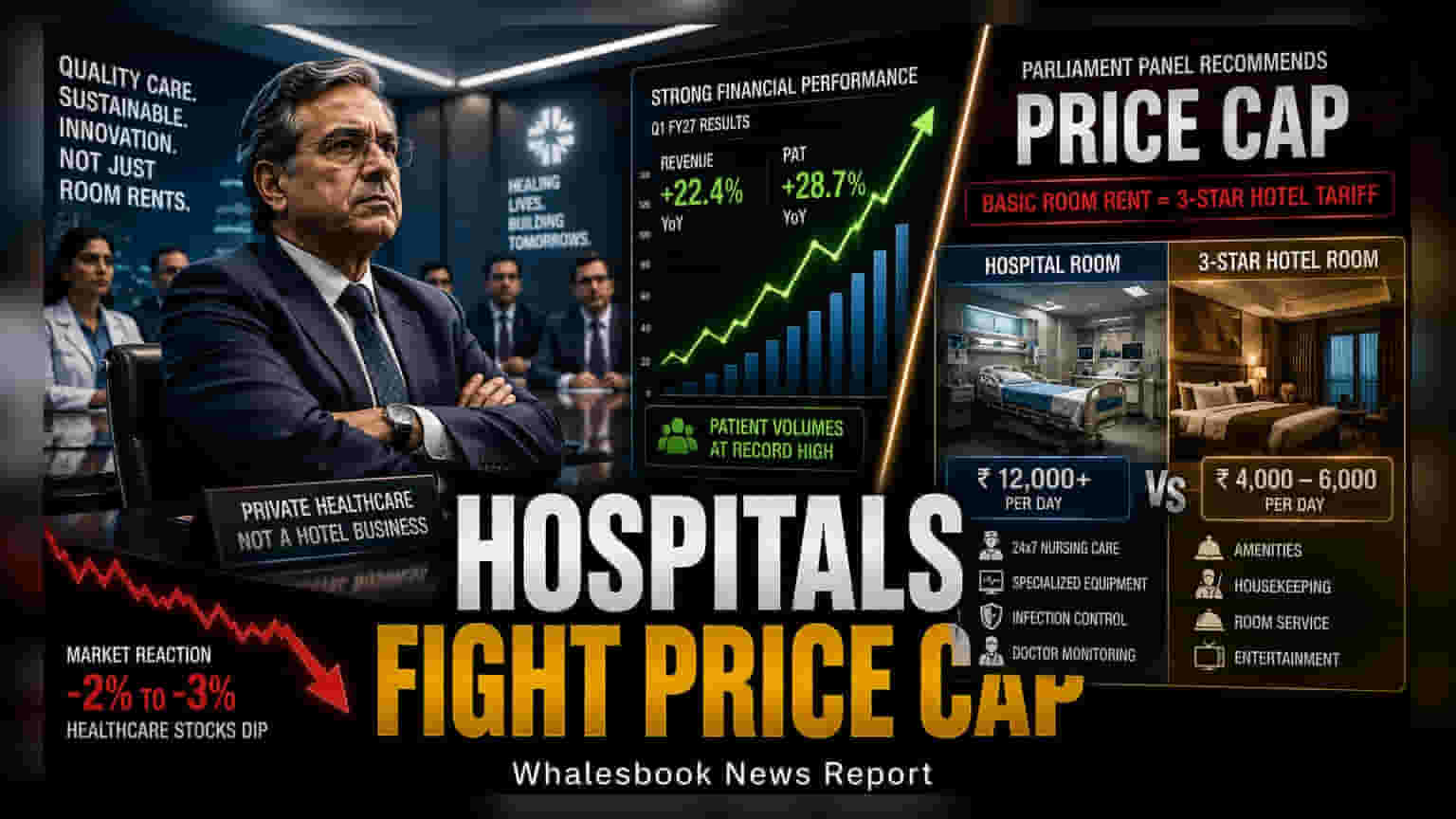
A parliamentary committee has recommended capping hospital room rents at the level of three-star hotels, prompting strong opposition from healthcare providers. While the sector reported strong revenue growth in Q1 FY27, investors are concerned that mandatory pricing limits could squeeze profit margins and slow down expansion. The market has already shown sensitivity, with healthcare stocks witnessing volatility following the proposal.
India's private healthcare sector is facing a period of regulatory uncertainty following a recommendation by the Parliamentary Standing Committee on Health and Family Welfare to cap basic hospital room rents at the price levels of three-star hotels. This proposal, part of a recent report on healthcare affordability, has triggered a sharp response from major hospital chains and industry associations who warn that such a move could disrupt the economics of medical service delivery.
Industry Backlash Against Pricing Proposals
Industry leadership and representative bodies like NATHEALTH have pushed back against the committee’s comparison, arguing that it oversimplifies hospital operational costs. Hospital executives point out that a room charge in a healthcare facility is fundamentally different from a hotel tariff. They note that hospital bills include not just the bed, but also the costs associated with specialized medical infrastructure, infection control protocols, nursing support, and 24/7 clinical monitoring.
Company leaders, including representatives from major chains like Apollo Hospitals, have argued that capping charges without considering these underlying delivery costs could deter private investment. They maintain that the current pricing is necessary to support capital-intensive projects, medical innovation, and the high cost of maintaining compliant facilities. They emphasize that any move to limit charges could negatively impact the ability of hospitals to maintain high standards of clinical care.
Financial Performance and Market Reaction
These concerns emerge even as the sector continues to show strong financial health. Most listed hospital chains reported robust revenue growth in the first quarter of fiscal year 2027, driven by higher patient volumes and recent expansion projects. However, the market reaction to the committee's report has been cautious. Healthcare stocks saw a brief dip of 2% to 3% when the news first surfaced in early August, reflecting investor anxiety regarding potential government intervention.
For investors, the primary concern lies in whether these recommendations eventually become mandatory regulations. While the current proposal is a recommendation rather than a law, any move to control treatment pricing or room charges could directly impact profitability. Market participants often look at these charges as a component of the overall hospital revenue model, and any cap could theoretically lead to margin compression if hospitals cannot recover their costs elsewhere.
Monitoring Future Regulatory Steps
The risk for shareholders involves how the government chooses to act on these suggestions. If the authorities move toward a more rigid pricing framework, hospitals may be forced to recalibrate their revenue models, which could influence future capital spending plans or expansion timelines.
The next important step for investors will be to monitor any official government notifications or policy changes stemming from this report. Management commentary during future earnings calls regarding the potential impact of such regulations will also provide clarity on how companies plan to manage costs and sustain their current growth trajectory amidst this regulatory pressure.