

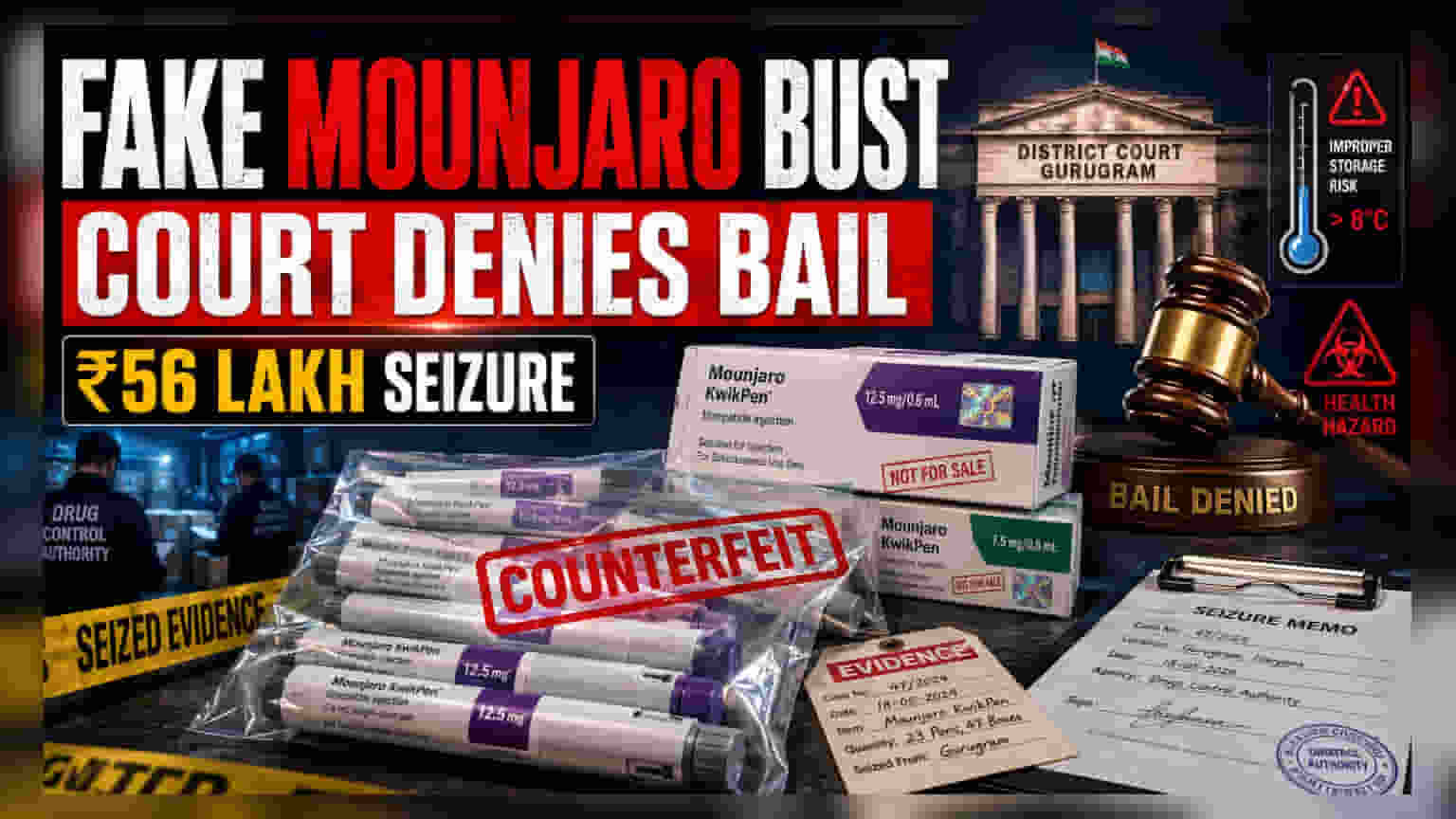
A Gurugram court has denied bail to Avi Sharma, who is accused of producing and selling fake Mounjaro KwikPen injections. The case highlights growing risks in the high-demand weight-loss drug market, where counterfeiters attempt to exploit supply gaps. The court emphasized the severity of the fraud, noting that the seized products were confirmed to be fake by the manufacturer, Eli Lilly.
What Happened
A Gurugram court has refused bail to Avi Sharma, who faces charges for the alleged manufacturing and distribution of counterfeit Mounjaro KwikPen injections. The court order, dated June 20, highlighted the gravity of the accusations, describing the activity as a fraud on the public. Sharma was arrested in April following a joint operation by police and drug inspectors that led to the seizure of items labeled as Mounjaro, a popular medication used for diabetes and weight management.
The Allegations And Findings
The investigation revealed significant issues with the seized products. Authorities reported that Sharma could not produce any valid licenses or import bills for the goods, which had a combined maximum retail price of over ₹56.15 lakh. Upon investigation, Eli Lilly, the manufacturer of the genuine drug, confirmed that the seized injections were not produced by the company. Furthermore, the court noted that three labels on the recovered pens were fabricated. Prosecutors also alleged that the storage conditions for these items failed to meet the temperature requirements, posing additional health risks.
The Business Context
The rise of weight-loss drugs like Mounjaro, which belongs to the GLP-1 receptor agonist class, has seen massive global demand. This popularity has unfortunately created a target for counterfeiters looking to capitalize on supply constraints. For pharmaceutical companies, protecting brand integrity and ensuring patient safety is a critical priority, often requiring them to coordinate closely with regulatory bodies like the Central Drugs Standard Control Organisation (CDSCO) to track and seize illegal products.
The Legal Defense
During the bail hearing, Sharma’s legal team argued that he had been in custody since mid-April and was no longer needed for investigation. The defense also contended that the prosecution’s case relied heavily on the statements of a co-accused and that no direct recovery of drugs was made from Sharma’s person. Regarding an additional allegation involving the manufacturing of a product named "Tone Up" without proper licenses, the defense stated this was an experimental project and had not been sold commercially. However, the court ultimately decided that the nature of the fraud and the ongoing investigation warranted the denial of bail.
What Investors Should Track
For those tracking the healthcare and pharmaceutical sector, this case highlights the increasing regulatory focus on supply chain integrity and drug authenticity in India. Investors may watch for how companies manage their distribution networks and cooperate with authorities to prevent the spread of counterfeit medicines. The primary monitorables in such cases are the outcomes of ongoing court proceedings, potential regulatory shifts in drug tracking requirements, and the continued efforts by major pharmaceutical firms to safeguard their products against illegal imitations.