

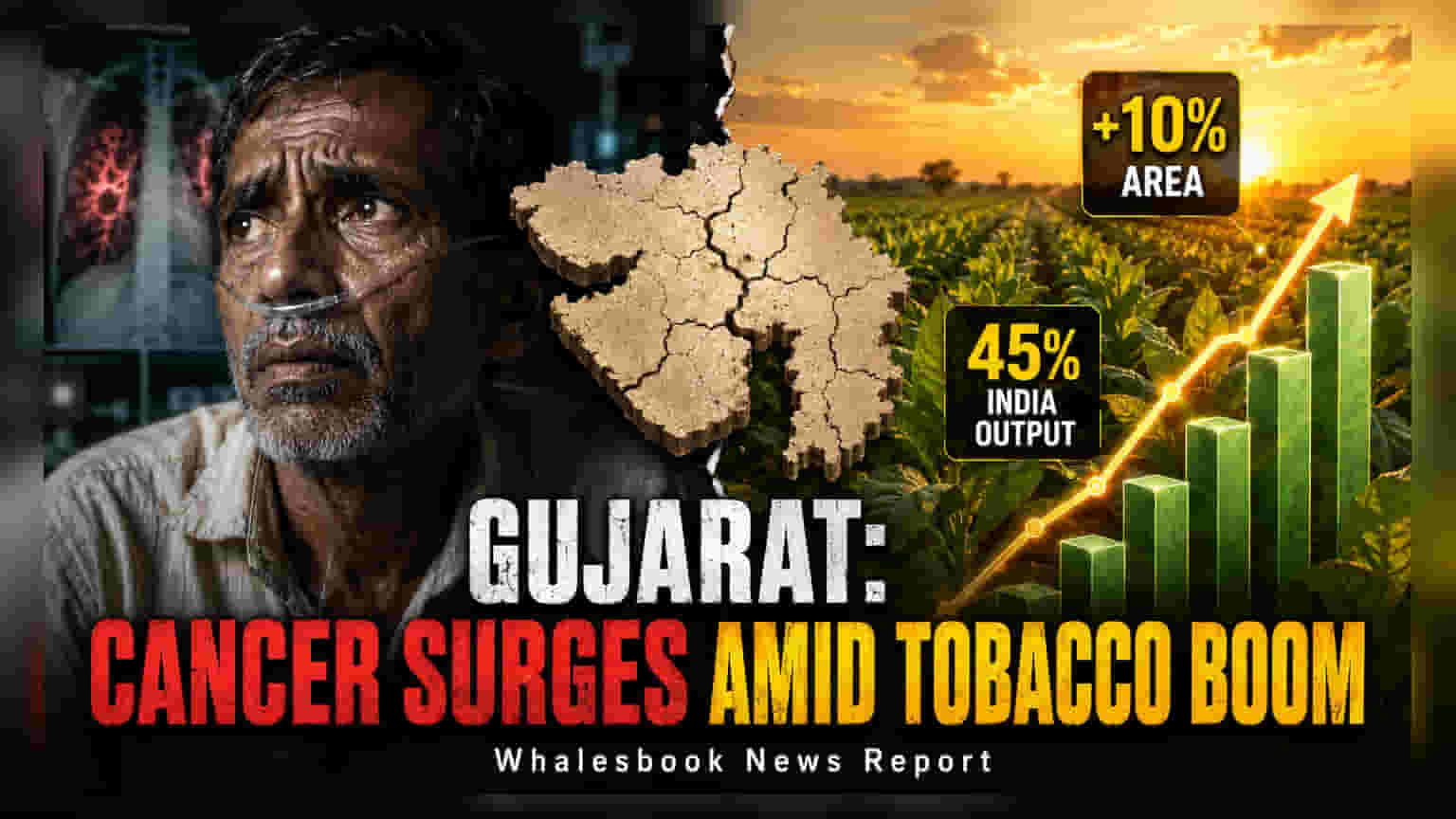
Gujarat's tobacco production has increased 10% since FY23, even as the state reports a steady rise in lung cancer registrations at the Gujarat Cancer & Research Institute. With tobacco cultivation covering over 2 lakh hectares, national efforts to shift farmers to alternative crops face challenges due to low fund utilization.
Gujarat, which accounts for nearly 45% of India’s total tobacco production, continues to see an expansion in cultivation even as public health data indicates a growing burden of lung cancer. Official figures from the Gujarat Cancer & Research Institute (GCRI) show a consistent upward trend in patient registrations, with annual cases rising from 813 in 2021 to 1,133 by 2025. Over this five-year period, the institute recorded 4,830 lung cancer cases, with men representing the majority at approximately 81% of total registrations.
Production Expansion and Agricultural Trends
This rise in health concerns coincides with the state's expanding agricultural footprint for the crop. According to projections from the state’s agricultural department for the 2026 fiscal year, both the land area dedicated to tobacco farming and the total output have grown by 10% compared to levels seen in 2023. In the 2026 fiscal year, tobacco was cultivated across approximately 2.13 lakh hectares in Gujarat, resulting in an estimated production of 4.91 lakh tonnes. For investors tracking the agricultural and consumer goods sectors, these numbers highlight the continued economic reliance of local farmers on tobacco despite long-term health risks and national policy shifts.
Challenges in Crop Diversification
The central government has attempted to address this dependence through the Crop Diversification Programme under the Pradhan Mantri-Rashtriya Krishi Vikas Yojana. The initiative was designed to incentivize farmers in major tobacco-producing states, including Gujarat, Andhra Pradesh, and Karnataka, to switch to alternative crops. However, the program has faced significant hurdles in implementation. Between the 2021 and 2025 fiscal years, while ₹53.1 crore was allocated by the Centre, only ₹18.56 crore was released to states. Actual utilization of these funds remained even lower, at ₹9.88 crore, suggesting that the economic attractiveness of tobacco farming currently outweighs the incentives provided for shifting to alternative crops.
Implications for Sector Outlook
For the broader economy and companies involved in tobacco-based consumer products, the data underscores a complex environment. While tobacco remains a high-yielding crop for farmers, the increasing clinical evidence linking consumption to health issues poses a recurring risk to long-term demand and regulatory policy. Investors tracking the industry often monitor these trends, as they can lead to stricter excise duties, advertising limitations, or potential shifts in government agricultural support. The key monitorable for the coming years remains the effectiveness of the diversification program and whether the state can successfully shift large-scale acreage to crops that offer farmers comparable financial returns.