

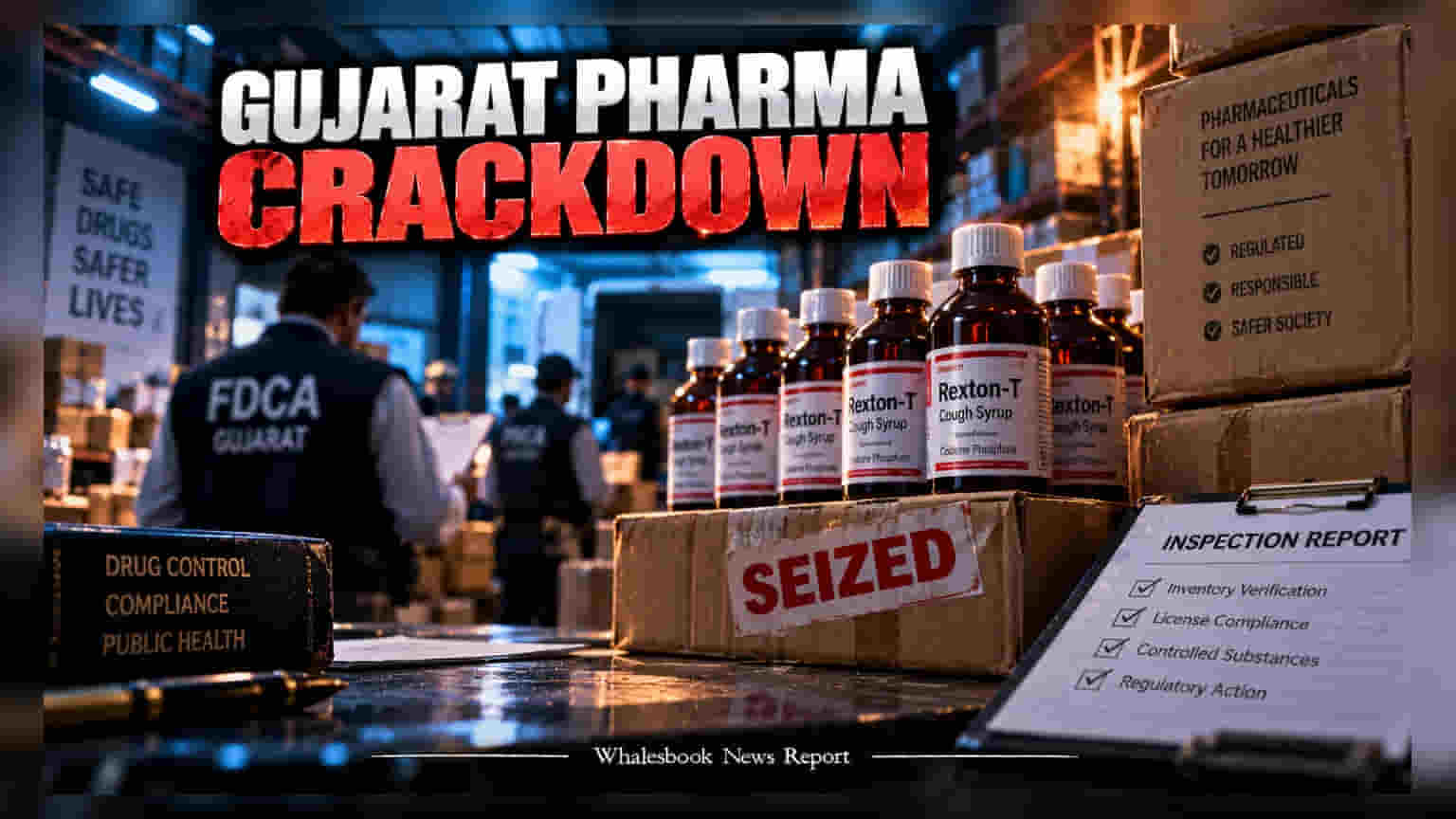
The Gujarat Food and Drugs Control Administration has cancelled licenses and seized thousands of bottles of codeine-based cough syrups in a major regulatory crackdown. While the affected companies are private, the operation highlights a stricter compliance environment for pharmaceutical distributors across the state.
The Gujarat Food and Drugs Control Administration (FDCA) has launched a significant enforcement drive to curb the illegal distribution of codeine-based medications across the state. This operation follows a clear state mandate to ensure all controlled substances, including specific cough syrups, are sold only through legal channels with valid medical prescriptions. Regulators have carried out extensive inspections in districts including Ahmedabad, Gandhinagar, and Mehsana, resulting in several license cancellations and show-cause notices for pharmaceutical firms found to be non-compliant with inventory norms.
The most substantial intervention occurred at Balaji Pharma in the Ahmedabad rural area, where authorities confiscated 37,762 bottles of Rexton-T Syrup. The regulator is currently analyzing the inventory and investigating transaction logs to identify how the stock was managed. Additionally, the drug sales license for Health Point Pharma in Kalol, Gandhinagar, was officially cancelled after the company provided an unsatisfactory response to previous regulatory inquiries. Other entities currently facing scrutiny include Jai Ambe Distributors, Formalin Lifesciences, Rain Remedies, Capital Pharma, and HRDM Global Solutions.
For market participants, it is important to note that the firms involved in this enforcement action are private, unlisted entities. Consequently, these developments do not have a direct impact on any publicly traded pharmaceutical stocks on the Indian exchanges. However, the crackdown serves as a notable indicator of the rising regulatory scrutiny within the pharmaceutical distribution sector.
The state government’s zero-tolerance approach toward record-keeping failures and unauthorized sales means that wholesale and retail distributors in Gujarat may face higher compliance costs and more frequent audits. The primary risk for smaller pharmaceutical businesses in this environment includes potential operational disruptions during inspections and the possibility of severe penalties, such as permanent license cancellations, if strict inventory management and prescription verification standards are not met.
Investors tracking the healthcare and distribution sector in the region should monitor for any further updates on regulatory policies regarding controlled substances. The next important step will be to see if these investigations lead to broader, state-wide changes in how controlled pharmaceutical products are tracked and distributed, which could influence the operational landscape for pharmaceutical logistics companies in the long term.