 Whalesbook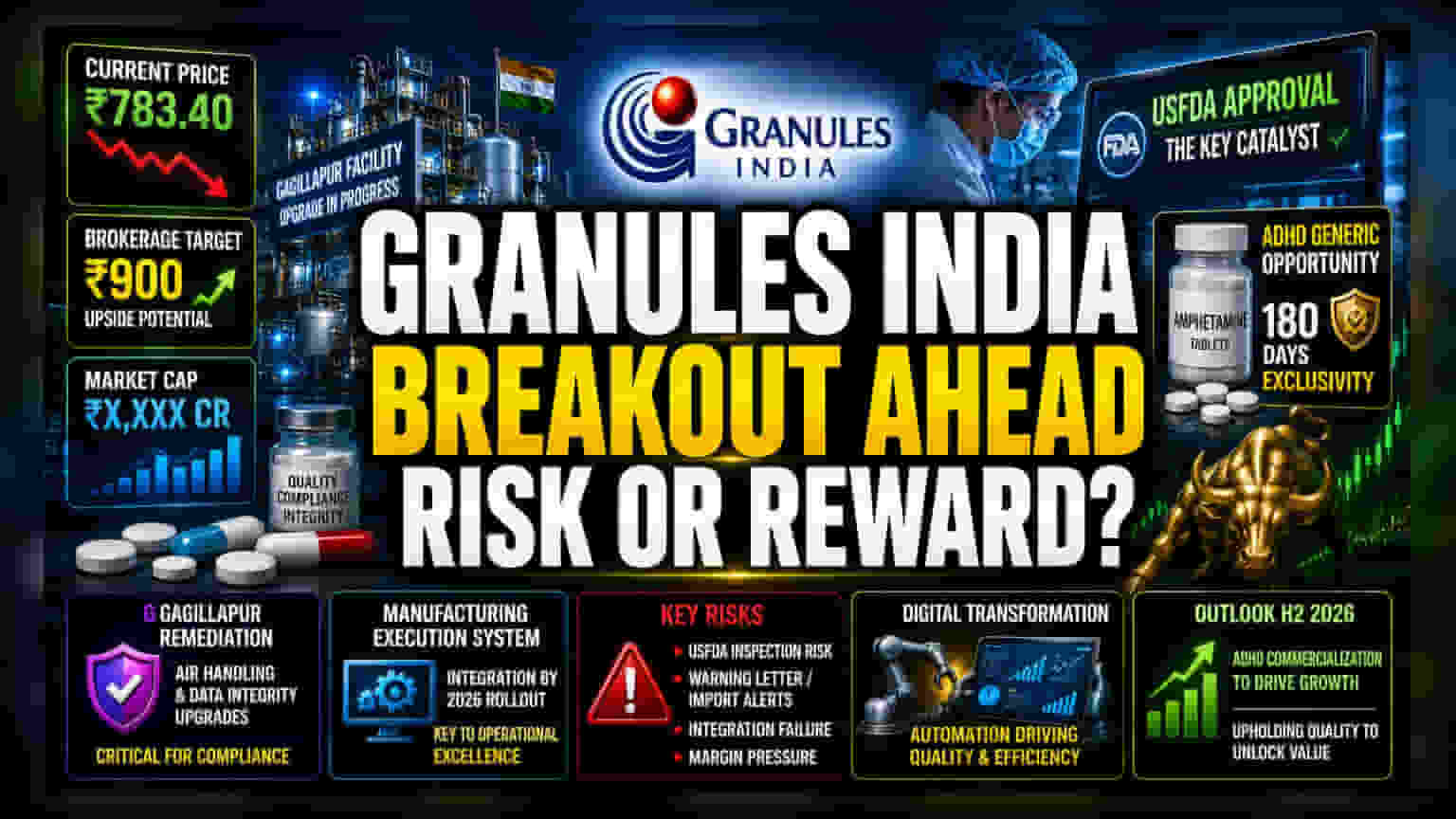


The Valuation Gap
Granules India finds itself at a sensitive juncture where technical sentiment clashes with operational reality. While the market capitalization remains robust, the recent dip to Rs 783.40 underscores investor skepticism regarding the pace of facility upgrades. The brokerage target of Rs 900 implies a significant premium that is predicated entirely on the flawless execution of the Gagillapur facility remediation. If the company fails to demonstrate that its air handling and data integrity improvements meet the stringent expectations of the USFDA, the current valuation could face pressure, as the costs of maintaining these advanced control systems may begin to weigh on operating margins.
Analytical Deep Dive: The ADHD Catalyst
The strategic pivot toward the ADHD medication segment represents a high-stakes play for market share, particularly with the securing of 180-day exclusivity for generic amphetamine tablets. In the context of the broader Indian pharmaceutical sector, this move shifts the company from a commodity-heavy volume manufacturer to a more specialized player. When compared to peers like Divi’s Laboratories or Laurus Labs, which also deal with complex regulatory environments, Granules India’s success hinges on whether its Manufacturing Execution System integration stays on schedule through the 2026 rollout. Delay in these systems would not only inflate operational expenditure but could also jeopardize the tentative approvals currently driving institutional confidence.
The Forensic Bear Case
Investors should remain wary of the company’s structural reliance on successful inspections. The history of the Gagillapur facility suggests that even minor slips in cross-contamination protocols can lead to lengthy warning letters or import alerts, which act as a hard ceiling on growth. Furthermore, the reliance on USFDA-driven catalysts leaves the stock vulnerable to macro-regulatory shifts. Unlike diversified pharmaceutical giants with global footprint resilience, Granules India remains highly sensitive to single-facility disruptions. The transition toward automated systems, while necessary, carries the risk of integration failure that could disrupt quarterly output. Past management commentary has highlighted a commitment to quality, but the capital expenditure required to maintain these standards against increasing labor and compliance costs remains a primary threat to bottom-line profitability.
The Future Outlook
Brokerage consensus leans toward a recovery phase, provided the company translates its digital transformation into tangible compliance stability. The projected trajectory for the second half of 2026 remains tied to the commercialization of its ADHD pipeline. Should the USFDA grant final approval, the company gains a critical window to capture market share before competitors can flood the space with alternative generics. For the stock to reach its upside potential, institutional participants will need to see sustained proof that the remediation efforts are not just temporary fixes, but permanent improvements to the underlying manufacturing quality.