

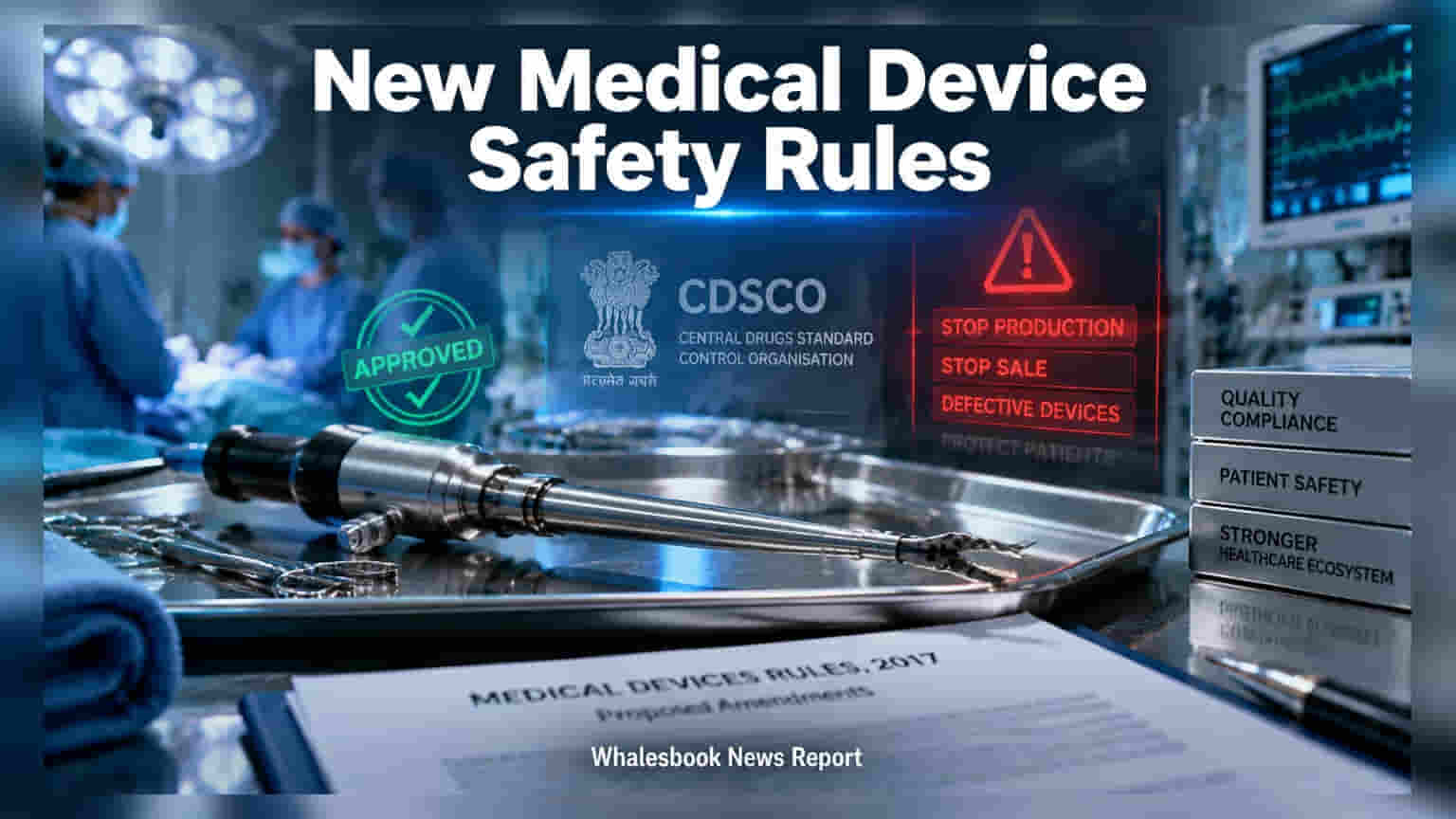
The government is moving to amend the Medical Devices Rules, 2017, empowering regulators to halt production and mandate the destruction of substandard equipment. This move aims to ensure patient safety and replace fragmented enforcement with a uniform, enforceable standard. For investors, the shift signals potential long-term benefits for quality-focused manufacturers, though it may also increase compliance and operational scrutiny across the sector.
The Indian government has proposed a significant shift in the regulatory landscape for the healthcare equipment sector by seeking to amend the Medical Devices Rules, 2017. Under the proposed change to Rule 30(1), the Central Drugs Standard Control Organisation (CDSCO) and state-level licensing bodies will gain explicit authority to issue stop-production and stop-sale orders for medical devices identified as defective or substandard.
Currently, while the Drugs and Cosmetics Act of 1940 provides the basic legal structure for licensing, enforcement tools for immediate, on-the-spot intervention have often been viewed as lacking the necessary granularity. The proposed amendment aims to close these gaps, allowing regulators to mandate the immediate destruction of unsafe products. This is intended to ensure that compromised or faulty equipment, such as implants, surgical instruments, and diagnostic tools, does not re-enter the supply chain through secondary markets.
Impact on Manufacturer Compliance
For investors monitoring the healthcare manufacturing space, this regulatory move indicates a tightening of operational standards. Manufacturers will likely need to enhance their quality control protocols to meet these new, more rigorous enforcement mechanisms. While large, established players with robust quality management systems may already be aligned with international best practices, the increased oversight could create operational pressure for smaller, unorganised entities that struggle with compliance costs.
From a market perspective, the move is a step toward consolidating industry standards. By standardizing the enforcement protocols and removing the ambiguity that previously complicated the recall of faulty goods, the government is looking to reduce public health risks. Historically, the burden of managing defective products often rested on case-by-case assessments, which could lead to inconsistent outcomes. The move to codify these powers suggests a shift toward a more proactive regulatory environment where accountability is strictly defined.
Sector Implications
Investors may view this as a balancing act for the sector. On one hand, companies will face higher compliance requirements and a stricter regulatory watch, which could increase operational expenses related to quality assurance and documentation. On the other hand, a more stringently regulated market often favors quality-focused companies, as it helps weed out substandard players and improves overall sector credibility. As India continues to position itself as a key hub for medical device manufacturing, aligning with stricter quality and disposal standards is widely seen as a necessary move to maintain trust in both domestic and international markets.
The next step for stakeholders will be to track the final implementation details and the specific guidelines regarding the destruction of goods. Investors should watch for further announcements from the health ministry regarding the timeline for these amendments and the potential impact on quarterly capital spending for compliance infrastructure, as companies may need to invest in more sophisticated monitoring and disposal systems to align with the new, unified standards.