

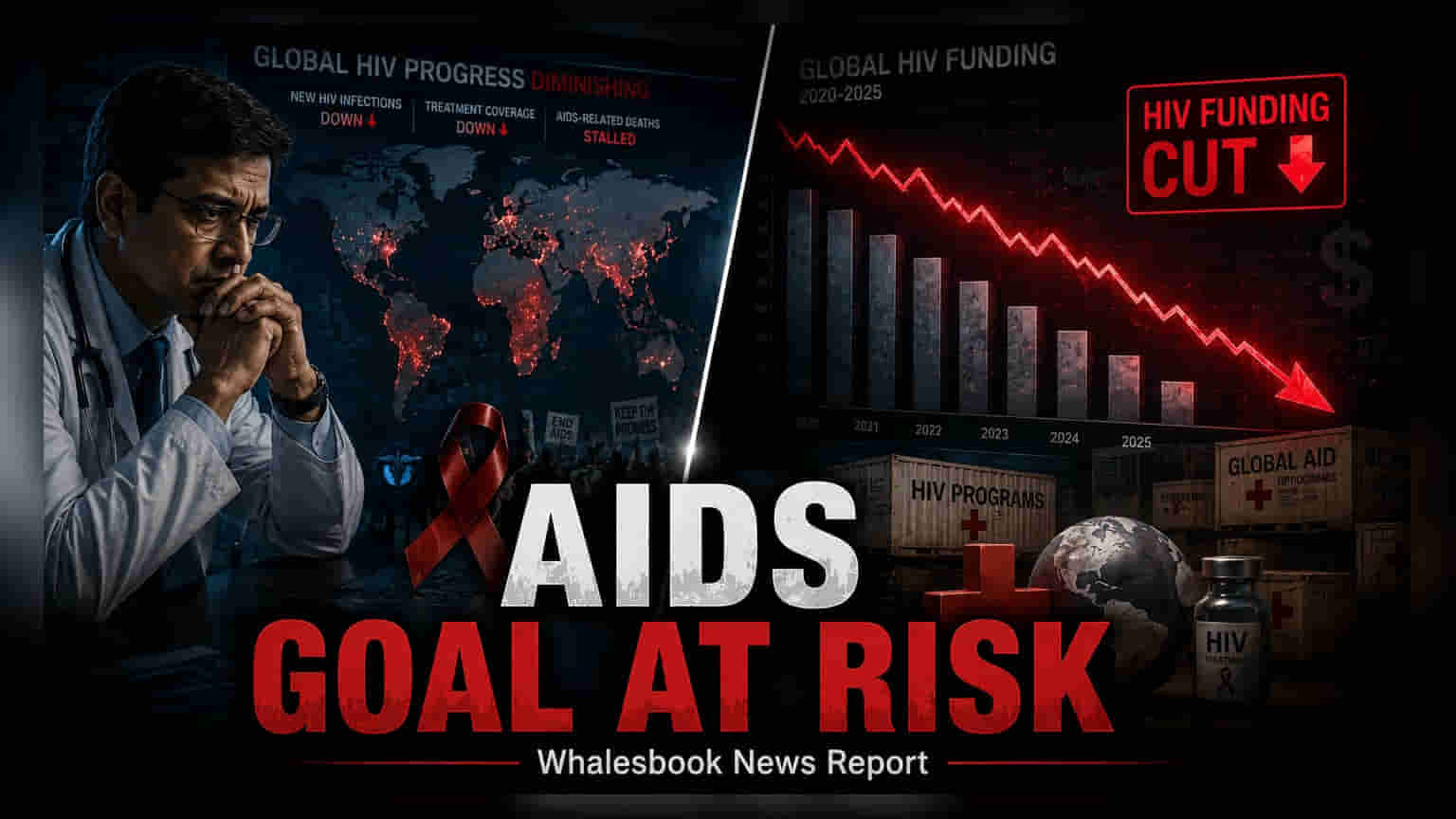
International HIV financing fell by $1.5 billion to $7.3 billion in 2025, according to UNAIDS. This 18% decline creates a $4.3 billion shortfall, threatening global access to life-saving prevention and treatment programs.
Global efforts to end AIDS as a public health threat by 2030 are facing significant financial pressure. A new report from the Joint United Nations Programme on HIV/AIDS (UNAIDS) confirms that international funding for HIV programs dropped to $7.3 billion in 2025, down from $8.8 billion in 2024. This 18% reduction represents the lowest level of international financial support for HIV initiatives in nearly two decades.
Impact on Medical Supply Chains and Prevention
The sharp decline in global aid has directly affected the availability of essential medical supplies and prevention tools in low- and middle-income countries. Data shows that access to pre-exposure prophylaxis (PrEP), a critical preventative medicine, has fallen significantly in several nations, including Nigeria, Cameroon, and Zambia, where coverage dropped by over 50%. Furthermore, major initiatives supporting condom distribution have seen funding plummet by 93%, directly impacting primary prevention strategies.
The $4.3 Billion Funding Gap
While the total annual investment required to meet the 2030 targets stands at $21.9 billion, only $17.6 billion was available in 2025. This leaves a critical $4.3 billion shortfall. Although new HIV infections and AIDS-related deaths have reached their lowest levels in three decades, the funding gap threatens to reverse these gains. The financial instability is particularly concerning for the 21 countries that have reported a recent rise in new infection rates.
Regional Resilience and Treatment Disparities
Despite the reduction in international aid, some nations have managed to sustain or scale their HIV programs through increased domestic spending. Countries such as South Africa, Brazil, Uganda, and Ethiopia have utilized local financing to maintain progress. However, large disparities persist. Women and girls in sub-Saharan Africa continue to face the highest risk, representing 60% of new infections, while more than 570,000 children globally remain without access to necessary HIV treatment.
Future Monitorables for Healthcare Sectors
In July 2026, 149 UN member states adopted a new Political Declaration on HIV and AIDS, reaffirming commitments to the 2030 targets. For investors and stakeholders in the healthcare and pharmaceutical sectors, the key monitorable will be whether this political commitment translates into actual capital deployment. Future updates will focus on whether nations can successfully increase domestic funding to bridge the $4.3 billion gap, the stability of long-term supply chain contracts for antiretroviral therapies, and the ability of pharmaceutical firms to maintain product accessibility in regions where external funding has retreated.