

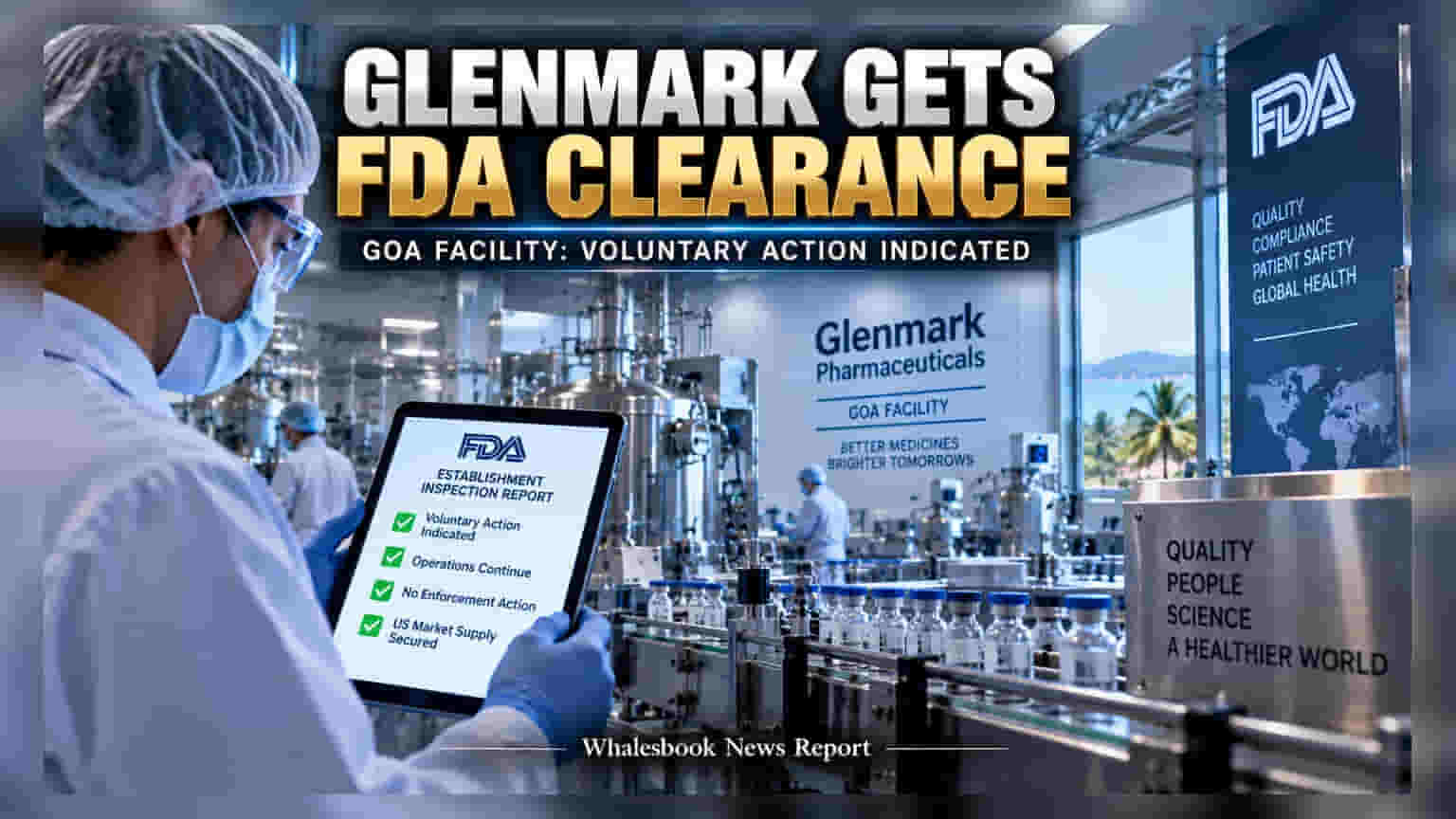
Glenmark Pharmaceuticals received a positive regulatory status from the US FDA for its Goa manufacturing facility. The agency classified the site inspection as Voluntary Action Indicated, which allows for continued production and exports. This classification is a key relief for the company, as it avoids strict enforcement actions that could have disrupted its US generic drug business.
Glenmark Pharmaceuticals has received the Establishment Inspection Report from the US Food and Drug Administration (FDA) for its formulation manufacturing plant in Goa. The regulator has assigned the facility a status of Voluntary Action Indicated, following an inspection conducted by officials between June 22 and June 30, 2026.
In the context of US drug manufacturing oversight, the Voluntary Action Indicated status means that while the FDA inspector observed certain areas where the company needs to improve its processes, these findings do not require formal legal enforcement. This is a much better outcome for a pharmaceutical company than an Official Action Indicated status, which could have led to warning letters, product holds, or the loss of approval to export drugs to the United States.
For Glenmark, maintaining a clean regulatory record at its manufacturing sites is essential to its business model. The company generates a significant portion of its revenue from the US market, where it sells various generic drug products. Any regulatory restriction at a key site like the Goa unit could have created supply chain problems, potentially delaying shipments or impacting revenue in one of its most important markets.
Since the company already relies on a global network of manufacturing sites and research centers, the operational continuity of each unit is a priority. By receiving this classification, the company can proceed with its current production and export activities without the threat of immediate regulatory penalties.
The next steps for the company involve implementing the corrective measures it has committed to the FDA. Investors will now look for the company to maintain these compliance standards during future inspections. The stability of its manufacturing base and the ability to continue securing new generic drug approvals from the US regulator will be the primary monitorables for the company in the coming quarters.