 Whalesbook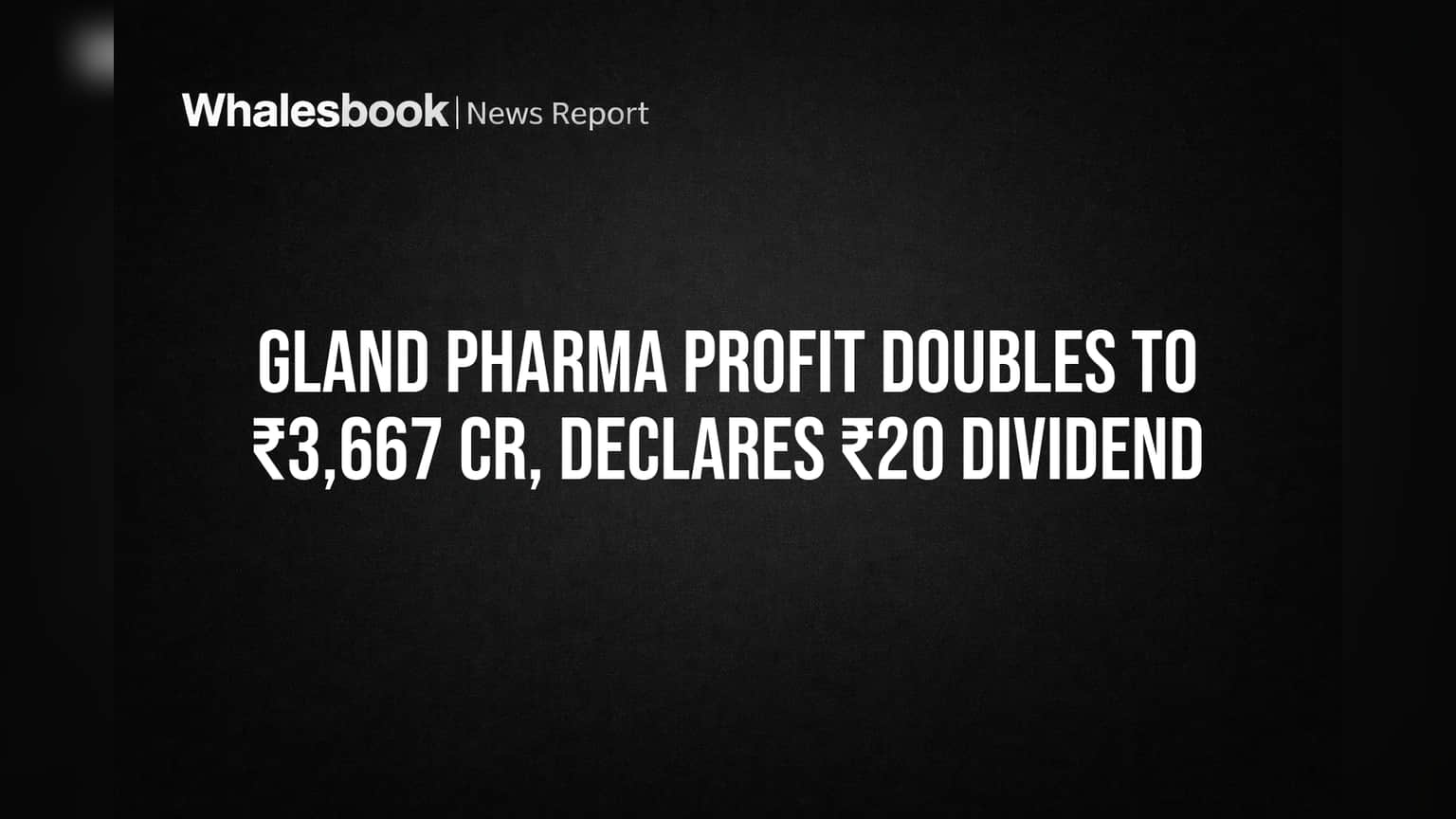


Gland Pharma's fourth quarter of fiscal year 2026 showed exceptional operational success, with net profit more than doubling and revenue rising significantly, supported by wider margins. However, the market reaction was subdued, with shares declining even as broader indices showed minor changes. This disconnect highlights how investors are looking beyond the headline figures to Gland Pharma's position in the competitive drug market.
Record Earnings Fall Short of Market Expectations
Gland Pharma's fourth quarter concluded with a 97% year-on-year surge in net profit, reaching Rs 3,666.75 crore. This increase was driven by a 22.3% rise in consolidated revenue to Rs 17,427.9 crore. Operational efficiency was evident in a 48% jump in Earnings Before Interest, Taxes, Depreciation, and Amortisation (EBITDA) to Rs 513 crore, pushing EBITDA margins up to 29.4% from 24.4% a year earlier. Management also signaled confidence by recommending a dividend of Rs 20 per share for FY2025-26. Despite these strong financial results, Gland Pharma's stock closed Friday's trading session down 1.6% at Rs 1,868.30, a move that was steeper than the benchmark Nifty index's 0.19% decline. This suggests the strong quarterly results may have been fully priced in, or investors are focusing on future challenges and valuation.
Valuation and Sector Peers
With a market capitalization around ₹30,000 to ₹31,500 crore, Gland Pharma is a significant player in the Indian pharmaceutical market. Its reported Price-to-Earnings (P/E) ratio has recently been observed in the 25.99 to 37.05 range. This valuation often comes with high growth expectations. Comparing Gland Pharma to its peers, the Nifty Pharma index carries a P/E of approximately 37.8, indicating the sector generally trades at premium multiples. Key competitors like Sun Pharmaceutical Industries and Dr. Reddy's Laboratories are much larger by market cap. Other companies such as Aurobindo Pharma and Alkem Laboratories trade at P/E ratios of 17.89 and 27.93 respectively, showing diverse growth expectations and valuations across the sector. Gland Pharma's P/E is roughly in line with the sector average, but the stock's dip implies investors are scrutinizing its future growth prospects against its price.
Sector Trends and Historical Stock Moves
Gland Pharma's stock has shown varied reactions to earnings announcements in the past. In recent years, strong earnings have sometimes led to price increases, like a 7.41% jump in January 2026, but also to downward adjustments, including declines of 0.89% and 1.28% in late 2025. This shows market sentiment can depend on more than just current profits, including forward guidance and economic conditions. The Indian pharmaceutical sector is expected to grow, with projections indicating 7-9% revenue expansion for FY2026, driven by domestic demand and European markets. However, growth in the US market is moderating, slowing to an expected 3-5%. This presents a potential challenge for export-focused companies like Gland Pharma. Government initiatives, such as production-linked incentives, aim to boost domestic manufacturing and reduce import reliance, providing a supportive backdrop. Still, moderating US growth could temper enthusiasm for sector-wide earnings beats.
Analyst Views and Future Outlook
Most analysts recommend 'Buy' or 'Outperform' for Gland Pharma, with average 12-month price targets generally between INR 1,966 and INR 2,000, suggesting moderate potential upside. However, there have been instances of price target revisions downwards, indicating varying analyst opinions. Despite strong profits, sustained revenue growth, R&D success, and effective navigation of international regulations will be key to justifying current valuations and future stock price increases.
Navigating Valuation Challenges
While Gland Pharma's financials are strong, the stock's post-earnings decline suggests investors are carefully assessing its future. For the company to overcome any potential valuation overhang, sustained execution across its product portfolio and contract development and manufacturing (CDMO) partnerships will be essential. This includes navigating increasing competition and pricing pressures in key markets, particularly the US, to ensure continued value delivery.