

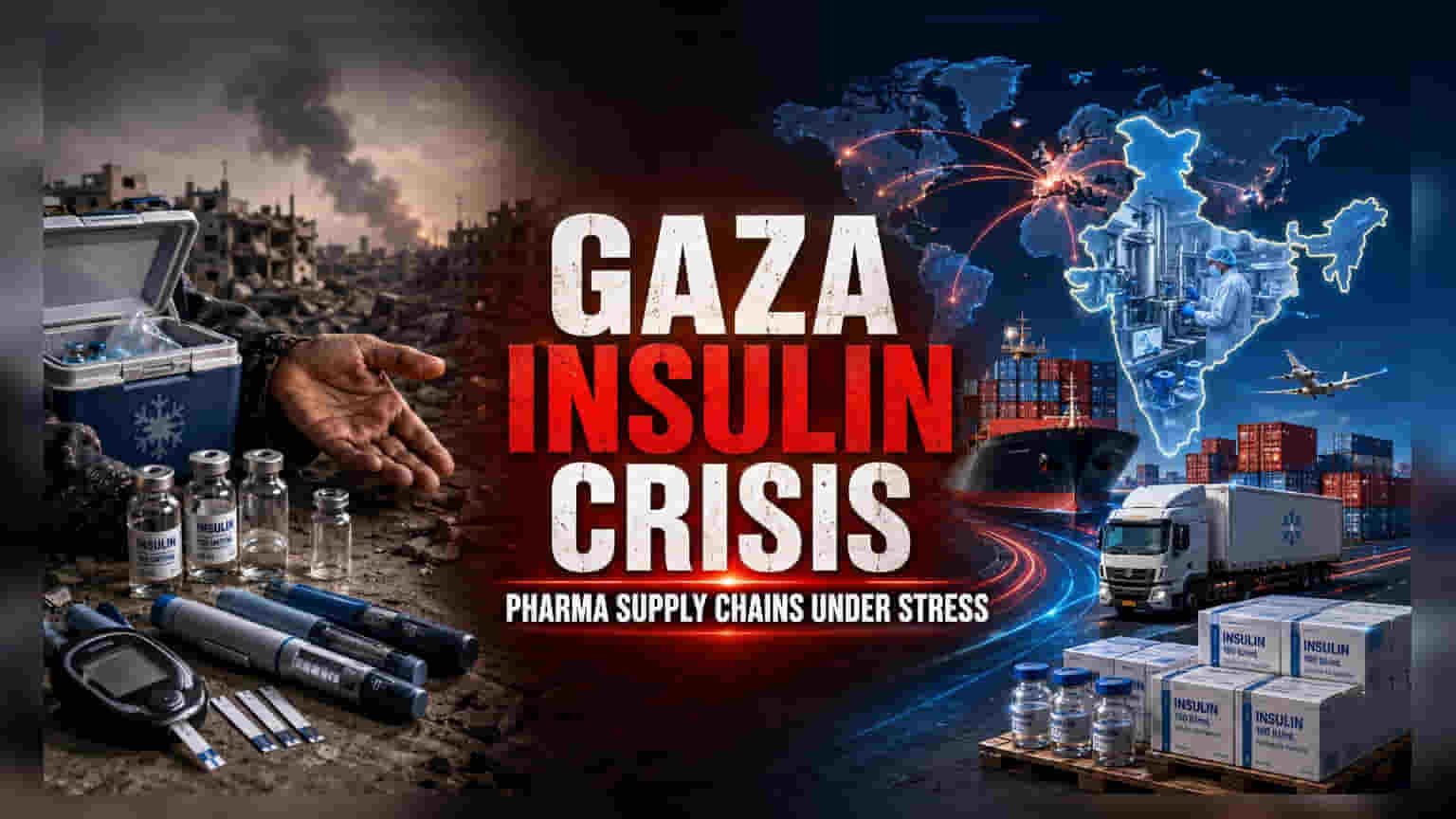
Severe insulin shortages in Gaza due to ongoing conflict underscore the fragility of pharmaceutical supply chains in volatile regions. For Indian investors, this highlights systemic risks like rising logistics costs and transport disruptions that can affect the profit margins of global pharmaceutical exporters.
What Happened
Diabetes patients in the Gaza Strip are facing a life-threatening crisis as a severe shortage of insulin, glucose meters, and test strips has crippled access to essential care. Since late 2023, the ongoing conflict has severely restricted medical imports, leading to a dangerous scarcity of critical diabetes management tools. Reports indicate that insulin pens, which were previously affordable, have seen their prices surge significantly, forcing patients to ration medication and rely on potentially compromised supplies. This humanitarian crisis has placed tens of thousands of patients, including children with Type 1 diabetes, at risk of severe health complications.
Fragility of Pharma Supply Chains
For the pharmaceutical sector, events like this serve as a stark reminder of the vulnerability of drug supply chains to geopolitical instability. Unlike many other consumer goods, medicines like insulin require highly controlled logistical environments, including precise temperature management and strict shelf-life monitoring. When transport routes are closed or airspace is restricted, it is not just the volume of trade that suffers, but the structural integrity of the entire supply chain.
Investors in the pharmaceutical sector typically track supply chain resilience as a key operational metric. In regions of conflict or significant geopolitical tension, the ability to maintain consistent drug delivery is often compromised by rising freight costs, maritime diversions, and the inability to secure insurance for high-risk trade corridors. These logistical bottlenecks can significantly inflate input costs for pharmaceutical companies and erode operating margins.
The Impact on Indian Pharmaceutical Exporters
India, often described as the 'pharmacy of the world,' maintains a strong export footprint in the Middle East and surrounding regions. While the region accounts for a smaller portion of India's total pharmaceutical exports—estimated at roughly 2%—the sector is highly sensitive to logistics and freight volatility. For Indian manufacturers with significant export operations, prolonged regional conflict can lead to:
- Higher Freight and Insurance Costs: Disrupted trade routes and maritime security concerns often lead to a sharp increase in shipping premiums and fuel surcharges.
- Inventory and Working Capital Pressure: Delays in product reaching its destination can lead to inventory build-up at ports or warehouses, increasing working capital requirements.
- Margin Pressure: If companies cannot pass on these increased logistics costs to their customers, profitability may come under pressure.
Operational Realities for Insulin Makers
Insulin remains one of the most complex products to manufacture and distribute globally. Major players, including Indian biopharmaceutical companies, manage large-scale international supply networks to reach patients in emerging markets. The recent focus for many of these firms has been on scaling manufacturing facilities—such as large units in Southeast Asia—to ensure they can meet global demand while navigating geopolitical complexities. However, even with large-scale production, the 'last-mile' delivery in unstable environments remains a significant challenge for the entire global pharma industry.
What Investors Should Track
Investors observing the pharmaceutical sector may want to focus on several monitorables:
- Logistics and Freight Trends: Continued monitoring of shipping routes and air freight costs, which serve as a proxy for supply chain health.
- Export Destination Exposure: Assessing how much of a company’s export revenue is derived from regions with high geopolitical risk.
- Operating Margin Trends: Watching quarterly reports for commentary on how rising logistics and input costs are impacting EBITDA margins.
- Supply Chain Diversification: Evaluating whether companies are moving toward more robust, localized, or diversified distribution strategies to mitigate regional risks.