

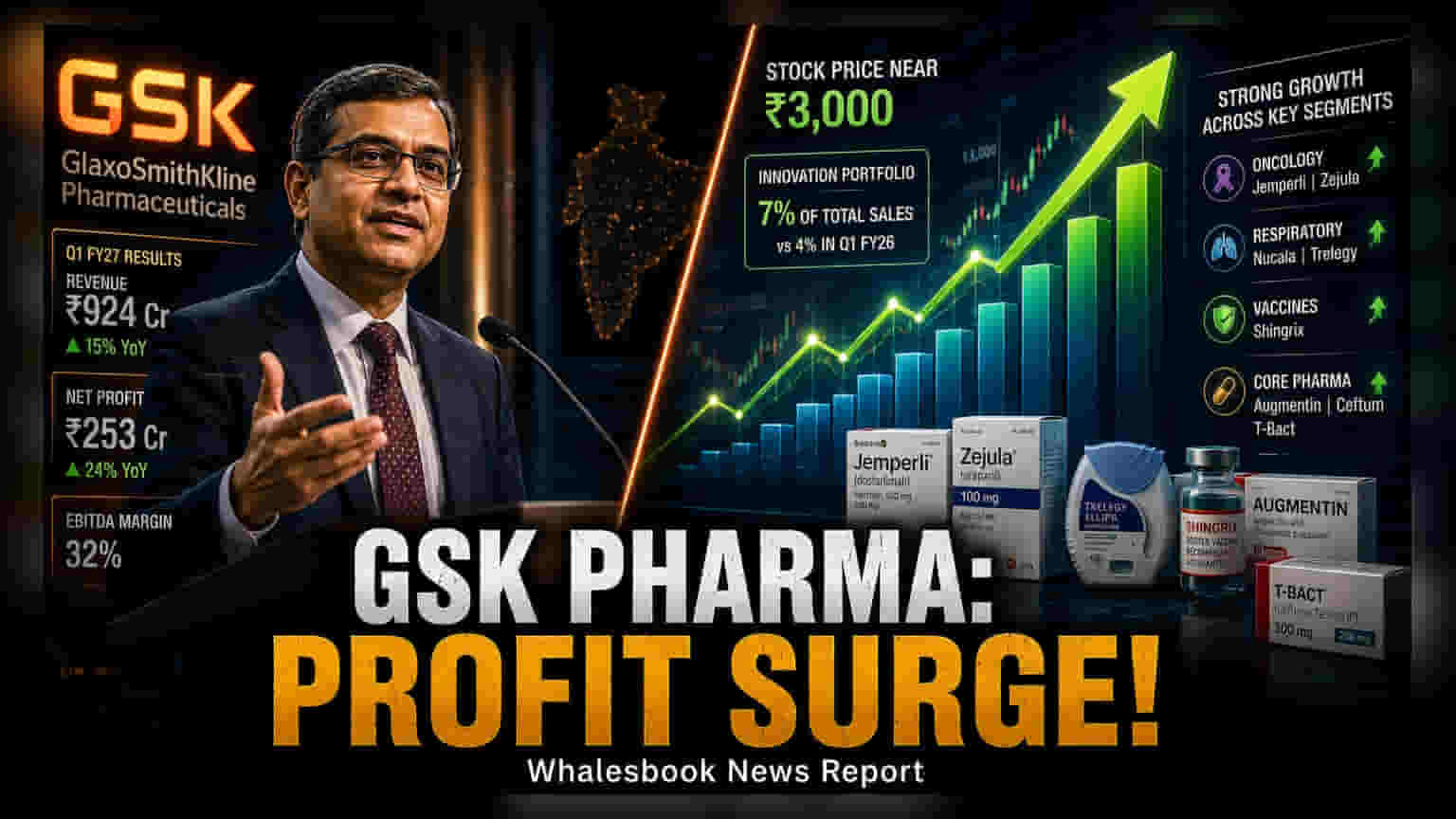
GlaxoSmithKline Pharmaceuticals reported a 15% increase in revenue to ₹924 crore and a 24% rise in net profit for Q1 FY27. The growth was driven by strong demand for vaccines and specialty medicines, alongside the resolution of previous supply chain disruptions. Investors are now tracking how the company's shift toward an innovative product portfolio impacts future profit margins.
GlaxoSmithKline Pharmaceuticals has reported a strong start to the 2027 financial year, with first-quarter financial results highlighting significant growth in both revenue and profit. The company posted a revenue of ₹924 crore, representing a 15% increase compared to the same period last year. Net profit for the quarter rose 24% to reach ₹253 crore. This performance has been accompanied by positive momentum in the company’s stock price, which was recently trading near the ₹3,000 mark.
Strategic Shift Toward Specialty Medicines
A key driver of this quarterly growth is the company’s changing business mix. GlaxoSmithKline is increasingly focusing on its "innovation portfolio," which includes specialty medicines and vaccines. This segment now contributes 7% to the company's total sales, an improvement from 4% in the previous year. New product launches in oncology, such as Jemperli and Zejula, alongside respiratory treatments like Nucala and Trelegy, have been central to this strategy. By moving toward higher-value products, the company aims to diversify its revenue streams beyond traditional medicines.
The core pharmaceutical business, which covers the majority of the company's revenue, also saw double-digit growth. Established brands in the general medicines segment, such as Augmentin, Ceftum, and T-Bact, continued to perform well. Furthermore, the vaccines division saw strong momentum, with brands like Shingrix recording significant growth. This performance was supported by the resolution of supply chain challenges that had impacted the company in the previous financial year, allowing for smoother product availability.
Key Monitorables for Investors
While the recent results reflect strong operational performance, investors generally watch for several factors that could influence future growth. Regulatory pricing controls under the National List of Essential Medicines (NLEM) remain a standard factor in the Indian pharmaceutical sector, as these rules can limit price increases for key drugs. Additionally, as an Indian subsidiary of a global firm, the company’s future growth is partly tied to its access to the parental company’s global drug pipeline. Maintaining consistent supply chains and managing competitive pressures in specialty therapy areas will also be important for sustaining the current profit margins, which stood at an EBITDA margin of 32% for the quarter. The company’s ability to balance its established general medicine brands with new, innovative launches will likely determine its earnings trajectory in the coming quarters.