

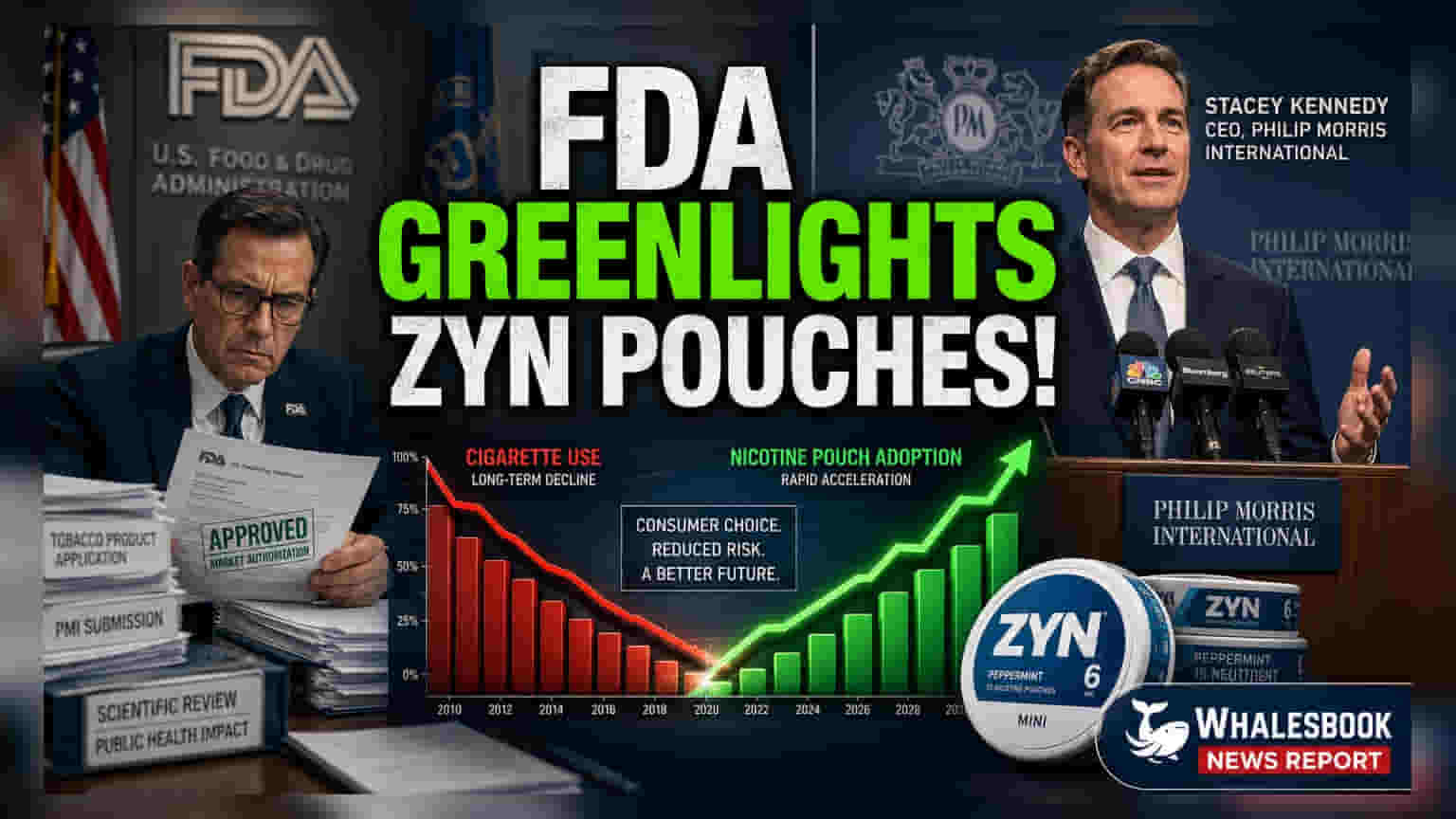
The U.S. FDA has issued Modified Risk Tobacco Product orders for 20 ZYN nicotine pouches, marking the first time such products can be marketed as lower-risk alternatives to cigarettes. This decision allows Philip Morris International to legally claim reduced health risks, potentially influencing consumer adoption and future growth in the oral nicotine segment.
What Happened
The U.S. Food and Drug Administration (FDA) has issued Modified Risk Tobacco Product (MRTP) orders for 20 variants of ZYN nicotine pouches. This is the first time nicotine pouches have received this specific regulatory authorization in the United States. The decision permits Philip Morris International (PMI), through its U.S. subsidiary, to market these products with claims that switching from cigarettes to ZYN reduces the risk of serious illnesses, including mouth cancer, heart disease, lung cancer, stroke, emphysema, and chronic bronchitis.
Why This Matters For Investors
The authorization serves as a key regulatory validation for the oral nicotine category, which PMI has been aggressively expanding to offset declining cigarette volumes globally. By allowing science-based risk reduction claims, the FDA has provided a marketing advantage that could accelerate the migration of adult smokers toward these products. For investors, this is a signal that the company’s transition toward smoke-free alternatives is gaining regulatory support, which is critical for long-term product adoption and brand differentiation in a highly regulated market.
Scientific Rationale And Consumer Data
The FDA’s decision was based on a review of scientific data showing that ZYN products deliver nicotine without the burning of tobacco or the inhalation of smoke. This process inherently reduces exposure to harmful chemicals associated with cigarette use. The agency’s review included evidence that a significant portion of adult smokers who transitioned to ZYN products either quit smoking entirely or significantly reduced their daily cigarette consumption. More than half of the surveyed users in the study reported no cigarette use in the 30 days prior, highlighting a clear trend toward product substitution.
The Business Context Of Smoke-Free Growth
Philip Morris International has been shifting its capital and research focus toward smoke-free products as cigarette sales face pressure from health regulations and changing consumer preferences. This MRTP authorization acts as a shield against potential regulatory hurdles in the U.S. and strengthens the company's position in the oral nicotine market. However, success in this segment depends on continuous consumer retention and the company’s ability to manage production capacity to meet rising demand.
Risks And Regulatory Boundaries
While this approval is a positive step for PMI, the nicotine pouch sector remains under strict regulatory scrutiny. Future growth depends on the company maintaining compliance with FDA standards, which could change based on long-term health studies or shifts in public health policy. Investors should monitor whether other competitors receive similar authorizations, as the current "first-mover" advantage could be diluted if the regulatory landscape becomes more permissive for the broader industry.
What Investors Should Track
The key monitorable for investors will be the impact of these authorized labels on sales growth in the U.S. market over the coming quarters. Other factors to track include the company's marketing strategy following this approval, any updates from the FDA regarding other products, and whether the shift from traditional cigarettes to ZYN accelerates the transition away from combustible tobacco products, thereby influencing overall company margins.