

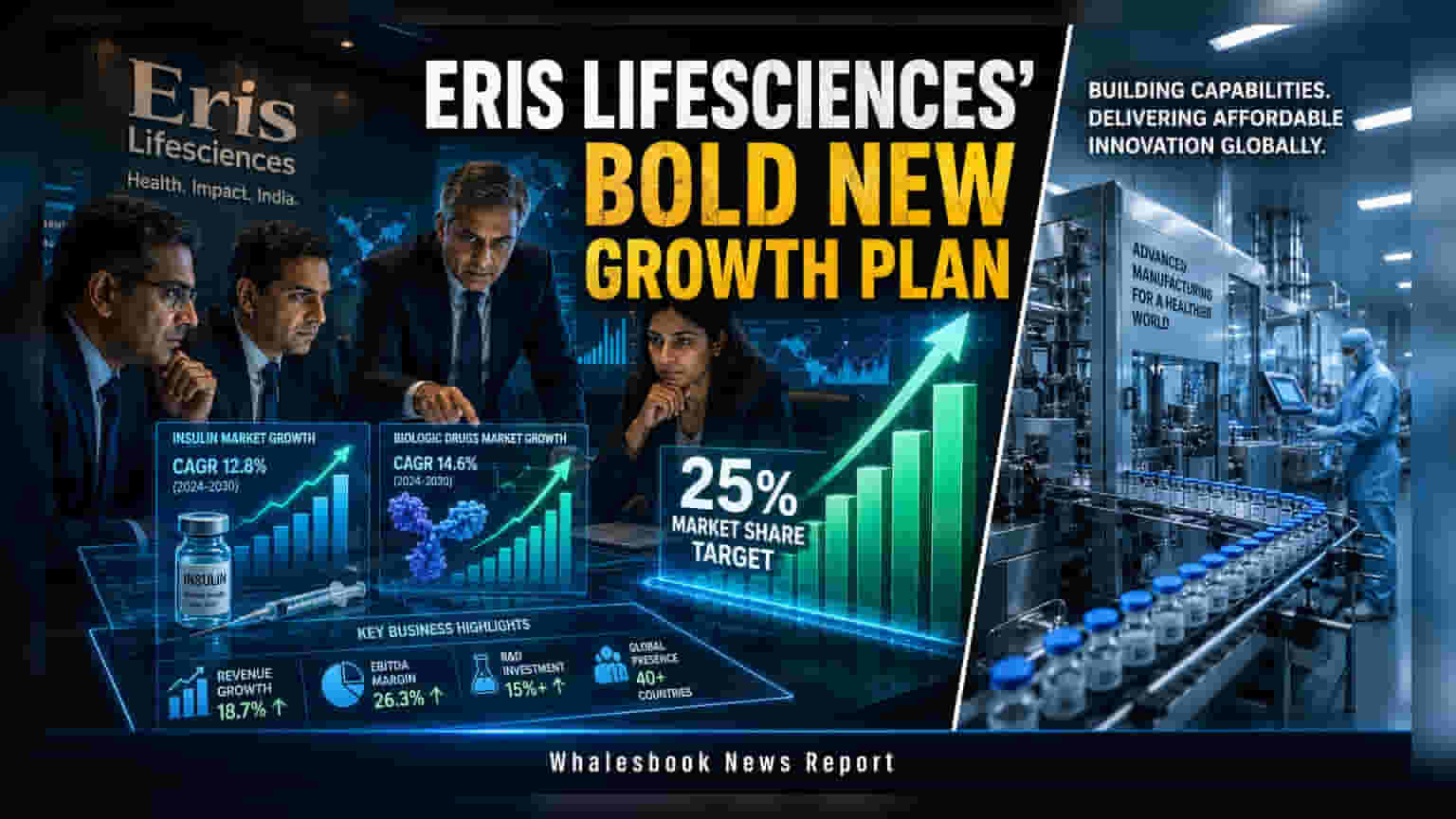
Eris Lifesciences plans to capture a quarter of India’s ₹5,500 crore insulin market by leveraging recent acquisitions and new in-house manufacturing. After spending over ₹4,300 crore on buyouts since 2023, the company is now focusing on improving profit margins through backward integration and expanding its presence in high-value diabetes and biologics therapies.
Eris Lifesciences has signaled a strategic shift from large-scale acquisitions to maximizing returns from its existing portfolio. Having invested more than ₹4,300 crore in various buyouts over the past three years, the company is now prioritizing the integration and scaling of its diabetes, dermatology, and biologics segments. According to recent company updates, the primary goal is to capture a 25% market share in the domestic insulin space within the next two to three years.
Scaling the Insulin and Diabetes Portfolio
The Indian insulin market is valued at approximately ₹5,500 crore. Eris Lifesciences has already increased its market share in acquired insulin brands from 9% to 16%. A key component of this growth strategy involves moving toward higher-value insulin analogues and GLP-1 therapies. The company reported that its generic semaglutide product, launched recently, secured a 22% volume market share in its first full quarter, highlighting its ability to capture demand in competitive segments.
Manufacturing and Profit Margins
To support these targets, Eris is heavily focused on backward integration. The company has transformed its Bhopal facility into a dedicated hub for biologics manufacturing. By bringing cartridge production in-house, Eris aims to improve its operating margins, which have already seen success in other segments like dermatology, where margins now exceed 40%. The company’s financial performance reflects this expansion, with FY26 revenue at ₹2,778 crore and EBITDA at ₹1,026 crore. In the first quarter of FY27, revenue grew by 13% to reach ₹873.25 crore.
Future Expansion and Operational Risks
Looking ahead, Eris is diversifying its manufacturing capabilities. A new injectables facility in Ahmedabad, with a capital spending of ₹130 crore, is scheduled for commissioning in FY28. This plant is intended to facilitate entry into regulated international markets, specifically Europe. While the strategy centers on growth, investors should monitor the company's ability to maintain these margins as it scales its biologics pipeline, which includes future plans for monoclonal antibodies in oncology and nephrology. The risk for shareholders lies in the successful execution of this complex manufacturing transition and the ability to maintain competitive pricing in the highly regulated and fragmented Indian pharmaceutical market. The next major monitorables will be the progress of the Ahmedabad facility’s commissioning and the sustained growth of market share in the insulin segment.