

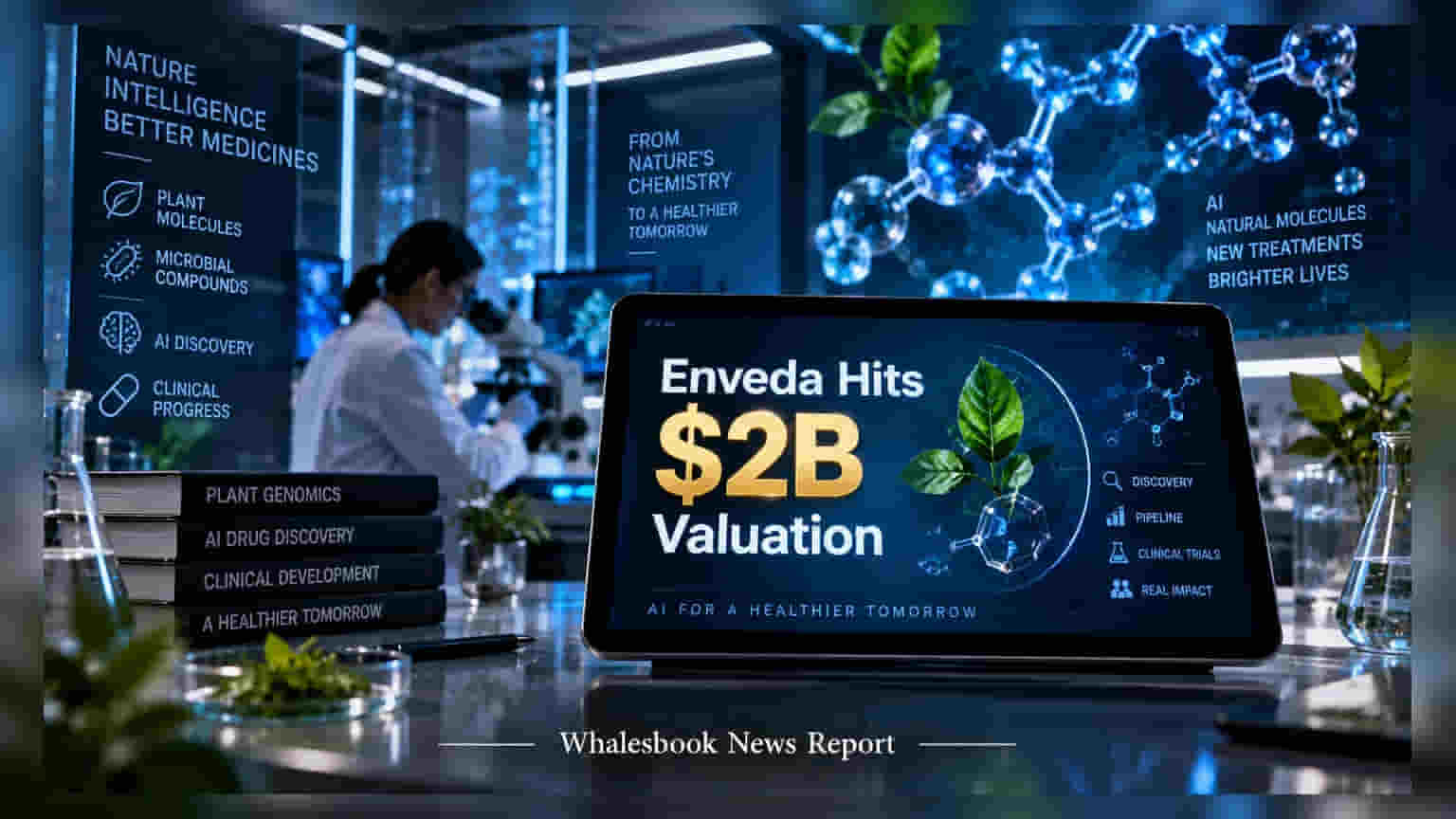
Enveda has secured $311 million in Series E funding, pushing its valuation to $2 billion. The biotech startup uses AI to discover drugs from natural sources like plants. Investors are watching the company’s move into human clinical trials, as the sector looks for proof that AI can successfully create approved medicines.
Enveda, a biotechnology company focused on using artificial intelligence to discover new medicines, has successfully raised $311 million in a Series E funding round. This latest investment from major backers including Catalio Capital Management and Iconiq has pushed the firm’s valuation to $2 billion, doubling its value compared to last year.
The company, founded by Viswa Colluru, who formerly worked at Recursion Pharmaceuticals, takes a different approach to drug discovery. Rather than using traditional synthetic chemistry, which involves creating compounds in a lab, Enveda uses machine learning to map out chemical structures found in plants and microbes. The goal is to identify effective natural molecules faster than traditional methods, which can often be slow and inefficient during the early stages of research.
Enveda is now moving from the discovery phase to human clinical trials. Its current pipeline includes treatments for severe skin conditions. Additionally, the company is developing a candidate to help patients maintain their weight after they stop using GLP-1 receptor agonists, a popular class of drugs used for weight loss and diabetes management.
While the AI-for-drug-discovery sector has attracted significant investment, it remains a challenging field. To date, no major pharmaceutical company has brought a drug to the market that was developed solely using these AI platforms. Investors are currently looking for concrete evidence that these computational models can translate into safe and effective treatments for humans.
For investors, the primary risk remains the high cost and long timeline of drug development. Bringing a new drug to market involves years of research, expensive clinical trials, and a high risk of failure if the drug does not meet regulatory standards. Because the company is now entering clinical testing, the most important update for shareholders and investors will be the results from these human trials. Success in these trials will be the primary indicator of whether the company's AI engine can effectively predict which compounds will work, while failure could delay or derail the product pipeline.