

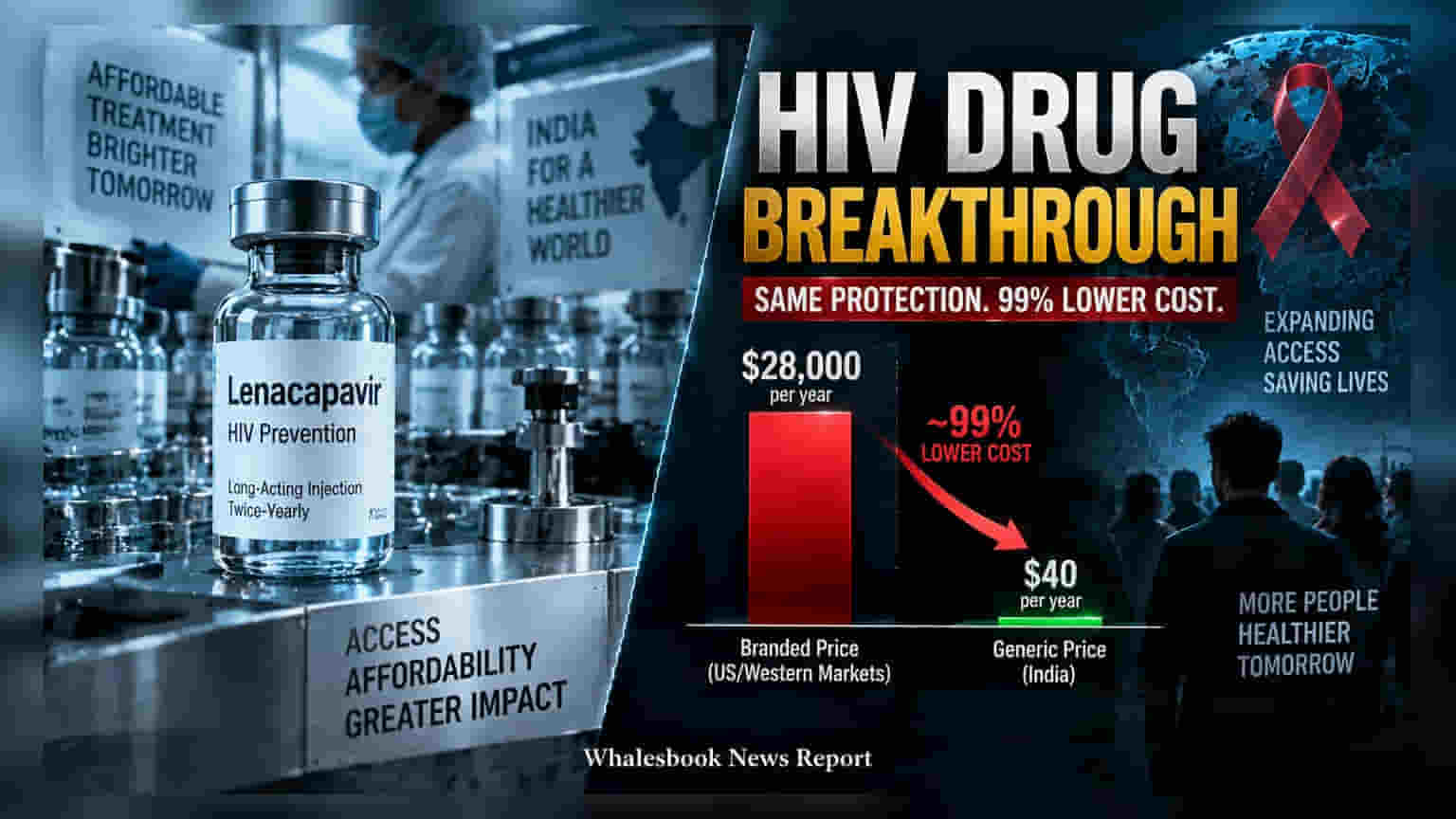
India's drug regulator has waived Phase III trials for generic lenacapavir, allowing Emcure Pharmaceuticals and Dr. Reddy's Laboratories to fast-track the HIV prevention drug. This move aims to bring annual treatment costs down to roughly $40, providing significant affordability, though investors should monitor the product's limited scope for complex, treatment-experienced patients.
The Central Drugs Standard Control Organisation (CDSCO) has cleared a significant regulatory barrier for Indian pharmaceutical companies by waiving the requirement for mandatory local Phase III clinical trials and bioequivalence studies for generic lenacapavir. This twice-yearly HIV prevention drug is set to become more accessible in India, with Emcure Pharmaceuticals and Dr. Reddy's Laboratories leading the rollout efforts. By removing the need for these late-stage trials, regulators have significantly reduced the time and cost required for manufacturers to bring the product to the Indian market.
Impact on Cost and Production
For investors, the primary business angle here is the drastic reduction in development time and the potential for a large, affordable market share. While lenacapavir is priced at a premium of approximately $28,000 per year in developed Western markets, generic versions in India are estimated to cost around $40 annually. Emcure Pharmaceuticals, which has already filed its version for approval, is utilizing its vertical integration to manage costs. Both Emcure and Dr. Reddy's Laboratories are operating under voluntary licensing agreements with Gilead Sciences, the original developer. These agreements allow Indian firms to manufacture and distribute the drug across 120 low- and middle-income countries, highlighting India's role as a major hub for affordable antiretroviral therapy.
Regulatory Limitations and Market Risks
Despite the positive regulatory waiver, the drug's application in India is not universal. The CDSCO waiver currently excludes the use of the drug for patients with multidrug-resistant HIV who have been heavily treated before. This limitation means the generic version will not be a replacement for all HIV treatments, which may constrain the total addressable market size for manufacturers. Furthermore, public health advocacy groups have flagged that this gap leaves a therapeutic void for the most vulnerable populations, suggesting that regulatory discussions may continue.
Investors should also consider that the antiretroviral market in India is highly competitive, and thin margins are common. While the fast-tracked approval is a benefit, success will depend on how efficiently these companies can ramp up production and secure widespread adoption. The reliance on voluntary licensing models also means that supply chain stability and pricing are closely tied to partnerships with global innovators like Gilead Sciences.
Moving forward, the key items to watch will be the speed at which individual brands receive final marketing authorization from the DCGI (Drugs Controller General of India), the actual scale of manufacturing capacity utilized, and the level of uptake in the HIV prevention market. Management commentary in upcoming quarterly results regarding the rollout timeline and competitive landscape will provide further clarity for stakeholders.