

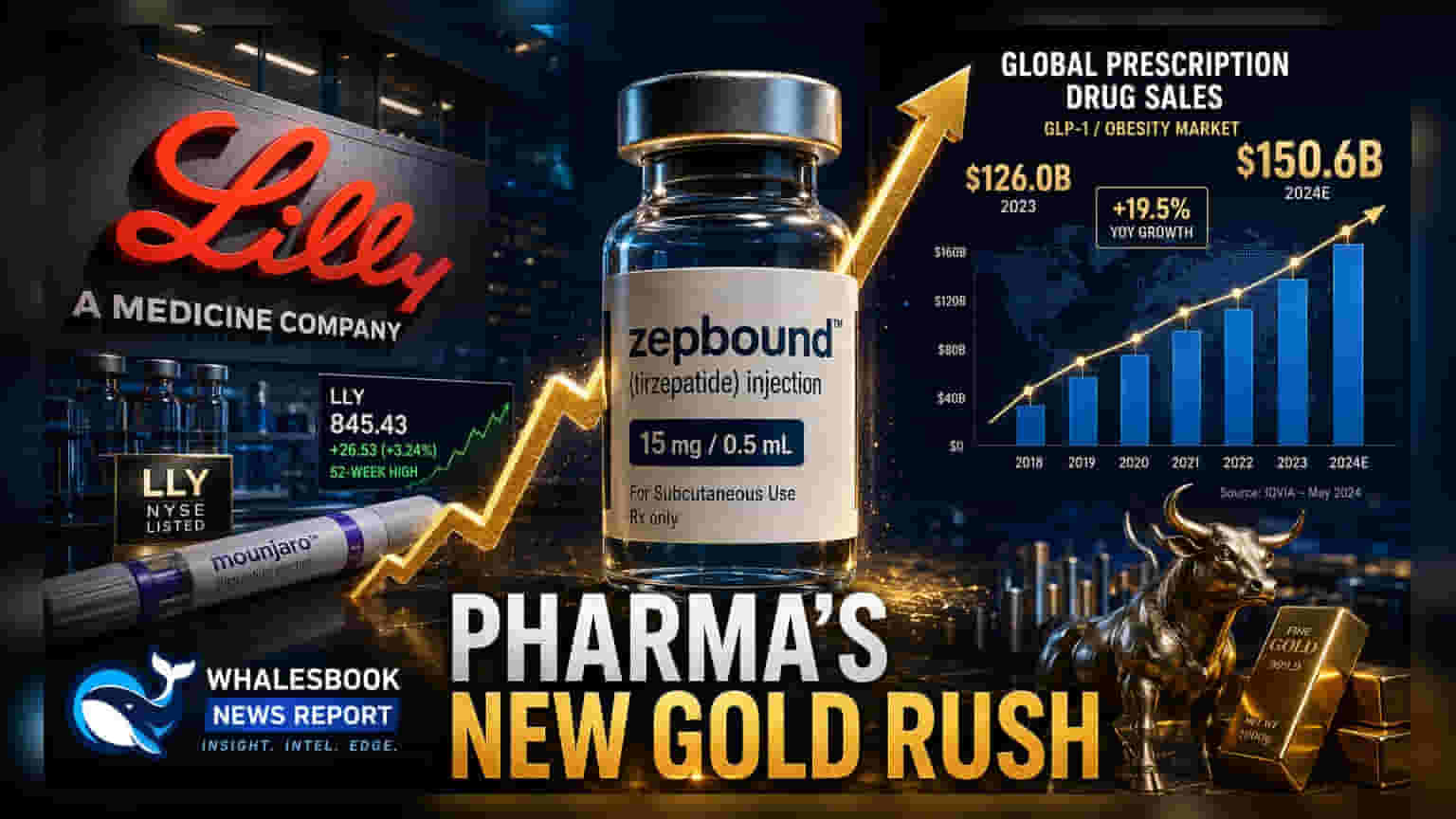
Global prescription drug sales are projected to exceed $2 trillion by 2032, largely driven by the high demand for weight-loss medications. Analysts expect Eli Lilly to emerge as the world's top-selling pharmaceutical company, with its obesity treatment Tirzepatide potentially becoming the highest-selling drug in history.
The global pharmaceutical sector is witnessing a major shift as weight-loss medications move from specialized treatments to become the primary drivers of industry revenue. According to projections by Evaluate, a market data provider, anti-obesity drugs are expected to represent roughly 9 percent of the total global prescription drug market by 2030. This growth is part of a larger trend that could see total global prescription sales cross the $2 trillion mark by 2032.
Eli Lilly and the Rise of Tirzepatide
Eli Lilly is positioned to benefit significantly from this trend, with its revenue estimated to grow to $137 billion by 2032. Central to this growth is Tirzepatide, the active ingredient in the company’s products Mounjaro and Zepbound. Industry forecasts suggest that Tirzepatide could reach sales of approximately $70 billion by 2032, potentially making it the highest-selling drug in history. This performance is expected to help Eli Lilly surpass industry peers, such as AbbVie, to become the leader in global prescription drug sales.
Market Dynamics and Investor Considerations
The rapid adoption of these therapies has created significant interest among healthcare investors, though the sector faces unique challenges. While the demand for obesity treatments is currently high, the long-term profitability of these products will depend on several factors, including manufacturing capacity, insurance coverage, and government pricing regulations. For instance, mass-producing these injectable medications requires substantial investment in new manufacturing facilities, which introduces execution risks related to supply chain stability.
Furthermore, the pharmaceutical industry frequently faces patent cliffs—the period when a drug’s patent expires and cheaper generic versions enter the market. While Tirzepatide is currently a growth engine, the long-term impact on company margins will depend on how successfully these firms manage their product pipelines and defend their market share against emerging competitors in the obesity and inflammatory disease categories.
Investors tracking this sector should focus on future quarterly earnings reports for updates on production volumes and market penetration. Additionally, monitoring regulatory discussions regarding drug pricing and reimbursement policies will be essential, as these factors often determine how much of the projected $2 trillion in global sales actually translates into sustainable profit margins for pharmaceutical companies.