 Whalesbook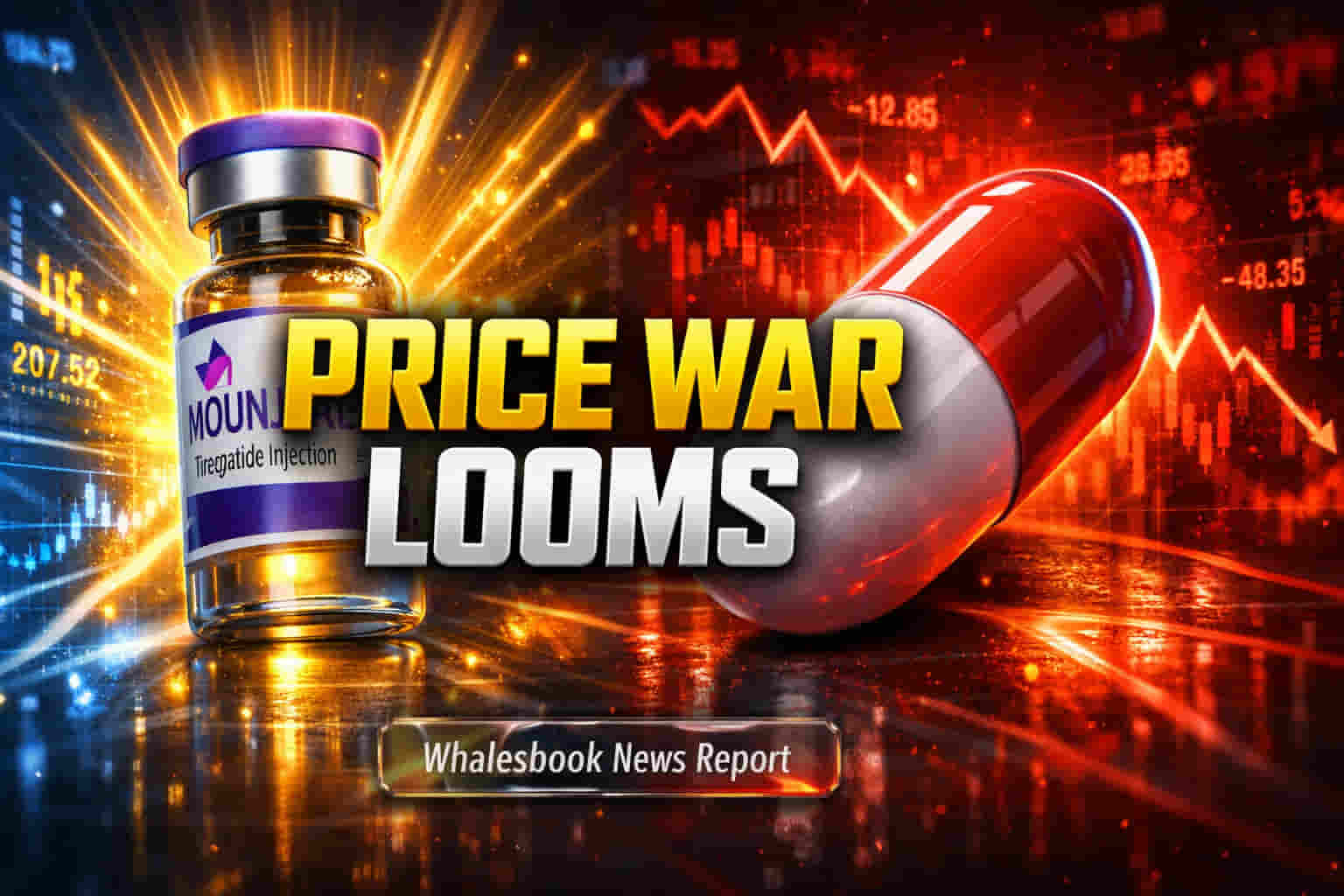


1. THE SEAMLESS LINK
The company's assertion of sustained demand for its premium-priced Mounjaro (tirzepatide) in India confronts the impending reality of price erosion from anticipated semaglutide generics. This dynamic pits Eli Lilly's defense of value-based pricing for its differentiated dual-agonist therapy against the inherent price sensitivity of the Indian pharmaceutical market.
2. THE STRUCTURE (The 'Smart Investor' Analysis)
The Value Proposition vs. Price War
Eli Lilly's president and general manager for India, Winselow Tucker, is banking on tirzepatide's unique GIP and GLP-1 dual-agonist profile to justify Mounjaro's premium pricing, which can range from ₹13,000 to ₹26,000 per injection. This mechanism is clinically positioned as superior to semaglutide-only therapies like Novo Nordisk's Ozempic and Wegovy, with Mounjaro estimated to achieve 20-22 kg average weight loss compared to 16-18 kg for competitors. Despite these efficacy claims, the imminent March 21st patent expiry for semaglutide in India signals a significant threat. Generic versions, expected to cost ₹3,000-₹5,000 per month, are poised to flood the market, challenging Mounjaro's current market leadership, evidenced by its ₹720 crore sales in the first 10 months. Eli Lilly's global parent trades at a high P/E of approximately 70x, reflecting strong growth expectations, but sustaining such multiples in emerging markets often requires strategic pricing adjustments.
Competitive Benchmarking and Sector Trends
The Indian pharmaceutical sector is fundamentally volume-driven, where significant price drops are common post-patent expiry. Key Indian players like Sun Pharmaceutical Industries Ltd (Market Cap ~$30B, P/E ~25x), Dr Reddy's Laboratories Ltd (Market Cap ~$25B, P/E ~20x), and Zydus Lifesciences Ltd (Market Cap ~$15B, P/E ~18x) are well-equipped to capitalize on the generic semaglutide opportunity, leveraging their established distribution networks and manufacturing scale. While Novo Nordisk's semaglutide brands (Ozempic, Wegovy) have a market presence, their reported sales (₹72 crore and ₹8 crore respectively) have been overshadowed by Mounjaro's rapid ascent, even at a higher price point. Analysts express caution regarding the sustainability of Mounjaro's premium pricing against an aggressive generic onslaught, although they acknowledge its differentiated clinical profile. The broader market sentiment for innovative therapies often sees initial strong adoption followed by significant impact from generic competition in chronic disease segments. Eli Lilly's global P/E ratio of around 70x indicates a significant premium valued by investors, likely anticipating continued strong performance from its innovative pipeline, which also includes the oral cardiometabolic drug orforglipron. In contrast, Indian competitors trade at substantially lower multiples, reflecting different risk-reward profiles and market positioning.
⚠️ THE FORENSIC BEAR CASE
The primary risk for Mounjaro in India is the market's inherent price sensitivity clashing with Eli Lilly's chosen 'value-based pricing' strategy. The imminent launch of semaglutide generics, potentially at half the price, will exert immense pressure. While Mounjaro's dual-agonist mechanism offers a clinical edge, Indian healthcare providers and patients often prioritize affordability for chronic treatments once viable generic alternatives emerge. Eli Lilly's reliance on premium pricing, even with flexible vial options starting at ₹3,281 for lower dosages, may prove insufficient to fend off a multi-pronged generic attack from large Indian manufacturers like Sun Pharma and Dr Reddy's. These companies operate at significantly lower P/E multiples and have a proven track record of capturing market share rapidly with cost-effective generics. Furthermore, while Eli Lilly is confident, historical precedents in the Indian market demonstrate that differentiated therapies, though valuable, often struggle to maintain dominance against aggressively priced generics in the long run for widespread chronic condition management. The company's long-term success hinges on its ability to demonstrate an undeniable, quantifiable value that transcends cost considerations for a broad patient base.
4. THE FUTURE OUTLOOK
Eli Lilly plans to counter competitive pressures by focusing on disease education, digital campaigns, and expanding its innovation pipeline in India. The introduction of Orforglipron, an oral cardiometabolic product, and Donanemab for Alzheimer's disease are key strategic moves to broaden patient access and cater to diverse treatment needs. The partnership with Cipla, which markets tirzepatide under the Yurpeak brand (generating ₹33 crore in sales), further extends Mounjaro's reach but also highlights market fragmentation even for the innovator molecule. While Winselow Tucker expressed confidence in Mounjaro's value and the company's long-term commitment, projecting future market share remains uncertain in the face of an aggressive generic market entry.