

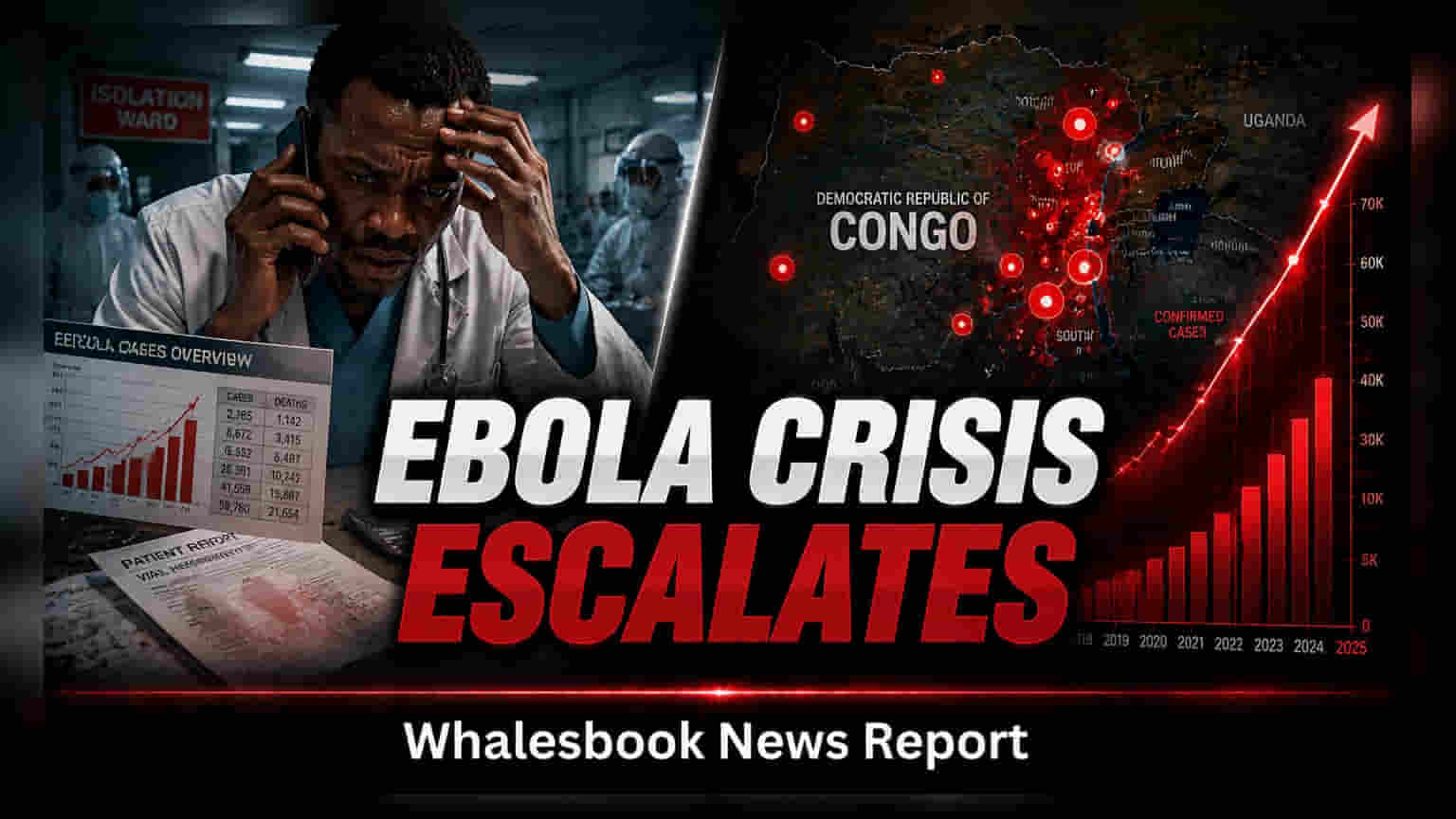
Confirmed Ebola cases in the Democratic Republic of Congo have surpassed 2,011, with 754 deaths recorded. The outbreak, caused by the rare Bundibugyo virus, lacks established vaccines or treatments, complicating containment efforts. Investors may note that the absence of effective countermeasures and ongoing local health worker strikes create significant uncertainty for regional healthcare stability.
The Democratic Republic of Congo is facing a severe health crisis as confirmed cases of the Ebola virus have crossed the 2,011 mark. Official data confirms a death toll of 754, with 753 individuals currently isolated or receiving medical care. Health authorities have reported 366 recoveries, but the rapid acceleration of the outbreak has strained local response infrastructure.
Challenges in Transmission Control and Treatment
This specific outbreak is driven by the Bundibugyo strain of the virus. Unlike the Zaire Ebola virus, which has seen prior outbreaks in the region and for which vaccines and treatments exist, the Bundibugyo virus currently lacks approved vaccines or established, proven medical countermeasures. According to the World Health Organization, roughly 80% of new cases are stemming from unknown transmission chains, meaning officials have not yet identified how the virus is jumping from person to person in many instances. This makes containment significantly more difficult than in previous instances where transmission routes were clearer.
Impact of Resource Constraints and Unrest
The crisis is further complicated by regional instability. Displacement caused by armed conflict and active mining operations has made it nearly impossible to maintain reliable contact tracing, which currently stands at 67% of exposed individuals. The situation is exacerbated by labour unrest within the medical sector. Health workers in the Ituri province have initiated strikes, citing a lack of payment since the outbreak began in May 2026. This has slowed the delivery of care and further complicated efforts to reach patients before the disease progresses to a fatal stage.
Monitoring Clinical Progress and Stability
For those monitoring the healthcare and pharmaceutical sector, the key developments to track are the outcomes of current clinical studies. A study involving two potential treatments for the Bundibugyo virus has recently begun enrollment in the Ituri province. The success or failure of these trials, combined with the government's ability to resolve the remuneration issues for health workers, will be the primary factors determining whether the spread of the virus can be brought under control. Until effective treatments are validated and the healthcare response in affected provinces stabilizes, the region faces significant public health and operational pressure.