

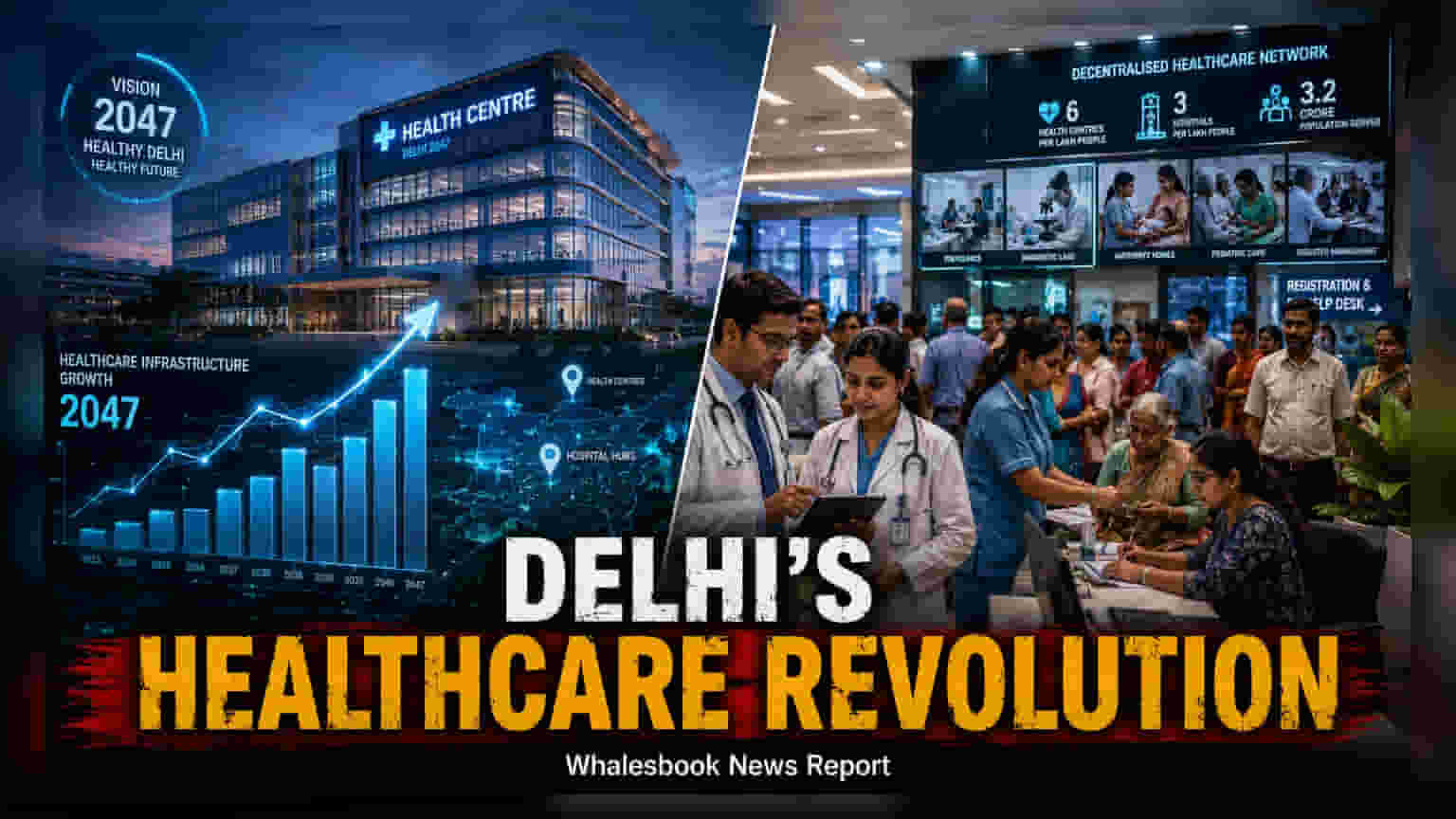
The newly approved Delhi Master Plan 2047 aims to decentralize city healthcare by creating neighbourhood facilities and hospitals for every lakh residents. This shift impacts the real estate and healthcare sectors, creating potential for new infrastructure projects and mixed-use developments. Stakeholders should track regulatory updates and upcoming DDA tenders for execution details.
The Delhi Development Authority (DDA) has formally set its long-term roadmap for the capital’s growth with the Master Plan 2047 (MPD-2047). While the plan covers a wide range of urban infrastructure, one of the most notable features is the complete overhaul of the city’s healthcare system. By moving toward a decentralized model, the plan aims to bring essential medical services closer to residential areas, serving a target population of roughly 3.2 crore.
Decentralized Healthcare and New Infrastructure
The central goal of the plan is to move away from a reliance on only a few large, centralized hospitals. Instead, the DDA proposes a network of six neighbourhood health centres and three hospitals for every lakh residents. This approach includes integrating various services—such as polyclinics, diagnostic labs, and maternity homes—under a single, consolidated 'Health Centre' category.
For the infrastructure and real estate sectors, this creates a new environment for development. The plan introduces provisions for vertical integration, allowing healthcare facilities to be built within mixed-use buildings. This is a significant change, as it potentially allows private developers and healthcare providers to utilize land more efficiently by incorporating medical amenities into residential or commercial plots, provided they meet specific size and setback requirements.
Potential Impact on Healthcare and Construction
The mandate for new medical infrastructure—including specialized geriatric centres, paediatric units, and disaster management facilities—suggests a growing demand for construction and facility management services. As the city expands, areas like Dwarka are being highlighted as potential medical hubs.
For healthcare providers and hospital chains, this policy creates a framework to expand their footprint in secondary and tertiary care services. However, the actual impact will depend on the speed at which the government opens these projects for public-private partnerships or auctions specific land parcels for medical use. The ability to build 'vertical' healthcare facilities may also change how developers plan new township projects in the city, adding healthcare as a key amenity to attract buyers.
Risks and Execution Challenges
While the plan is comprehensive, its success relies heavily on implementation. Major urban infrastructure projects often face delays due to bureaucratic hurdles, land acquisition issues, or changes in building by-laws.
Investors and business observers should be aware that these are indicative planning norms. The actual delivery of these facilities depends on DDA’s ability to amend the necessary legislation, finalize building codes, and attract private developers to participate in these new infrastructure projects. Regulatory risks, such as delays in clearing land-use changes or slow tender processing, remain the primary factor that could impact the timeline of these developments.
Moving forward, the most important updates to monitor will be specific DDA notifications regarding zoning changes, the release of tenders for these hospital clusters, and any shifts in building codes that allow for the proposed vertical integration of medical facilities.