

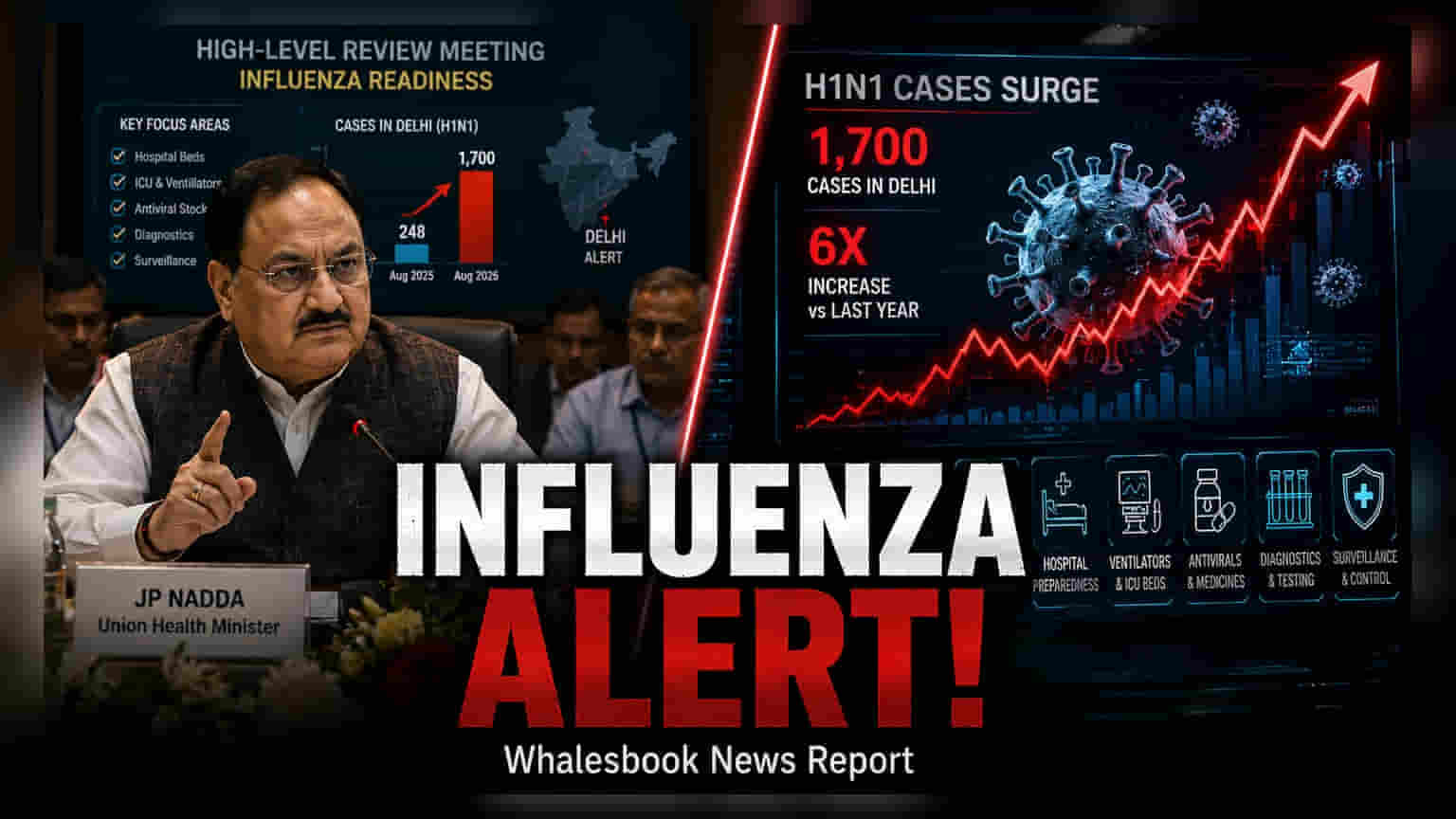
Union Health Minister JP Nadda held a critical review meeting as Delhi recorded nearly 1,700 H1N1 cases this season, a more than six-fold increase. The government is focusing on hospital infrastructure, bed availability, and diagnostic capacity to manage the rising influenza trend effectively.
Union Health Minister JP Nadda convened a high-level meeting on Friday, August 21, 2026, to assess the country's readiness to combat a significant spike in H1N1 and other influenza cases. The review, which included Delhi's Health Minister Pankaj Kumar Singh and senior medical officials, focused on the sharp rise in infections observed in the National Capital. Official data shows that Delhi has recorded nearly 1,700 cases this season, representing a more than six-fold increase compared to the same period last year.
The discussions centered on reinforcing the healthcare infrastructure to handle the growing caseload. Key areas of concern included the availability of hospital beds, critical care units, ventilators, and a sufficient stock of antiviral medications and diagnostic kits. Medical experts have attributed the rapid rise in transmission to monsoon-related humidity, fluctuating temperatures, and increased indoor social contact, which creates an environment conducive to the spread of respiratory viruses.
From a healthcare sector perspective, surges in seasonal influenza often lead to a temporary increase in utilization across the diagnostic and hospital landscape. Diagnostic companies typically see higher demand for respiratory panel testing, including RT-PCR and multiplex molecular assays, as symptoms of H1N1 often overlap with other seasonal illnesses. Similarly, private and public hospitals may witness higher outpatient department (OPD) footfalls for respiratory consultations. In the past, such public health trends have also heightened the focus on seasonal influenza vaccination programs, influencing demand patterns for preventive healthcare products.
Despite the sharp rise in case numbers, authorities have stressed that the situation is being managed through proactive surveillance. The Ministry of Health and Family Welfare is coordinating with state administrations to ensure that surveillance networks are alert and that early detection protocols are strictly followed. The primary risk for the healthcare system remains the potential for localized capacity strain if the upward trend in cases continues, particularly if severe complications like pneumonia or respiratory distress increase among vulnerable groups, such as the elderly and those with underlying health conditions.
The next steps for health officials involve sustaining vigilance and enhancing public awareness regarding respiratory hygiene, including hand washing and the use of masks in crowded areas. For investors and observers of the healthcare sector, the key monitorables will be the trend in testing volumes, hospital occupancy rates related to respiratory illnesses, and any further government directives regarding vaccine procurement or public health guidelines as the season progresses.