

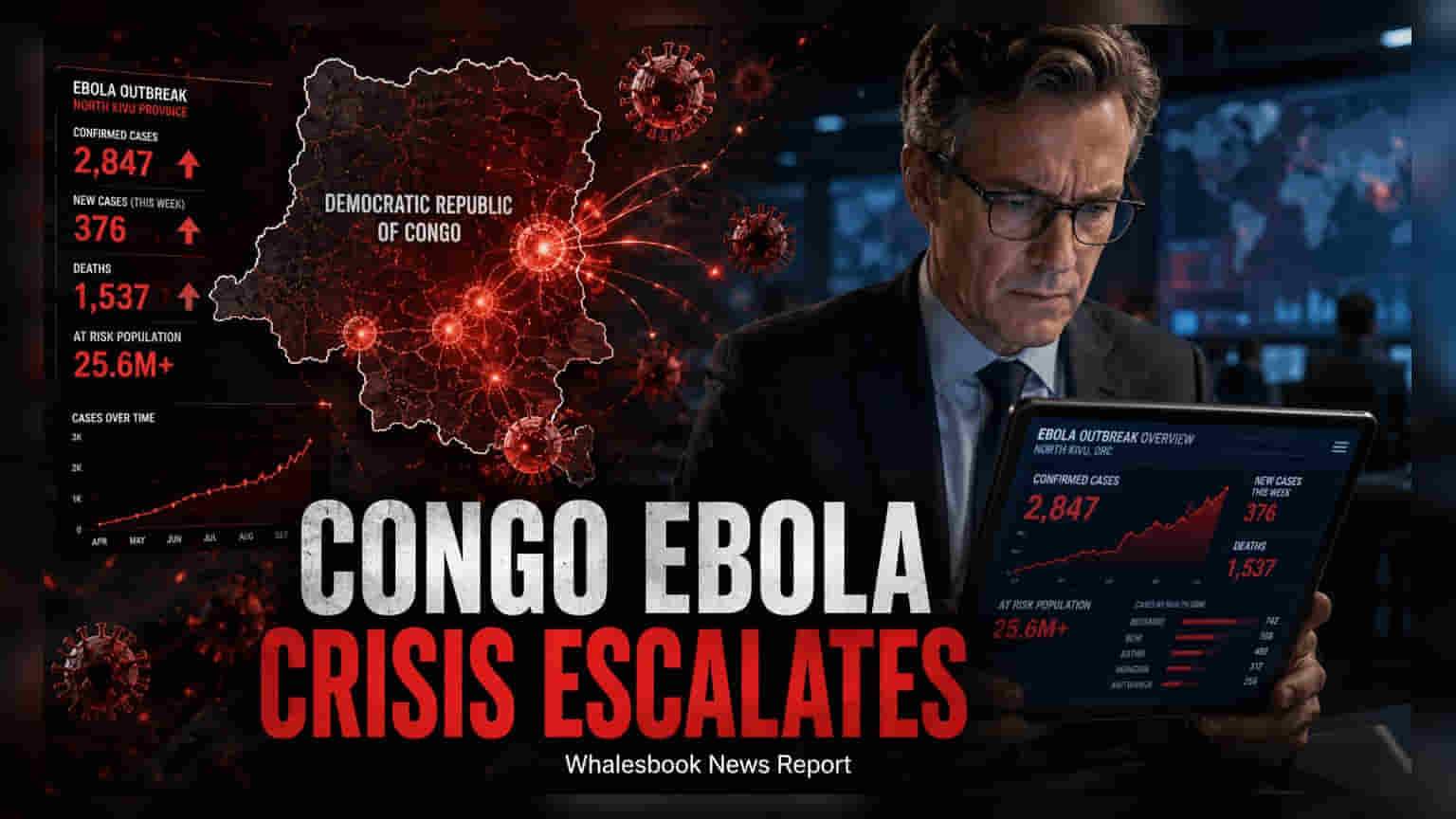
The Ebola epidemic in the Democratic Republic of Congo has surpassed all previous records, reaching 2,325 confirmed deaths. The United Nations has warned that the virus is outpacing containment efforts, prompting an additional $30.5 million in emergency funding to address the deepening health crisis.
The Democratic Republic of Congo (DRC) is currently grappling with its most severe Ebola epidemic in history. As of mid-August 2026, confirmed deaths have climbed to 2,325, a figure that exceeds the fatalities recorded during the 2018-2020 outbreak. With infections approaching 5,000, the virus is spreading rapidly, with cases doubling approximately every 20 days.
United Nations officials have issued a stark warning, stating that the virus is outpacing the current containment response. To mitigate the impact and regain control, the UN has allocated an additional $30.5 million from its Central Emergency Response Fund. This brings the total recent emergency funding commitment to $54.5 million, aimed at increasing treatment capacity, enhancing contact tracing, and expanding safe burial teams.
The health system in the DRC is under extreme pressure. In the North Kivu province, dedicated treatment centers are operating at maximum capacity, forcing the isolation of suspected cases in non-specialized facilities. This approach raises concerns about the potential for further transmission and increases the risk to healthcare workers, who have seen over 150 infections and dozens of fatalities since the current crisis began.
From a sector perspective, this crisis highlights significant challenges within the regional healthcare supply chain. Conflict in the eastern DRC complicates the distribution of medical supplies and the deployment of aid teams. The World Food Programme is also actively involved, increasing assistance to treatment centers to support patients and staff, as hospitals struggle with reduced supplies and staff shortages.
Investors and observers tracking the global health and pharmaceutical sectors may note that this specific outbreak involves the Bundibugyo ebolavirus strain, for which specific approved vaccines or targeted treatments are currently limited. This emphasizes the urgent need for medical resources and sustained humanitarian infrastructure. The ongoing crisis also threatens to divert resources from other critical public health needs, such as measles and cholera, which have already caused thousands of deaths in the region this year.
The key monitorables for the coming weeks will be the efficacy of the expanded containment measures and whether the deployment of additional humanitarian personnel can curb the virus's spread. Stability in the affected provinces, specifically North and South Kivu, remains a critical factor for the success of aid operations and the containment of the epidemic.