

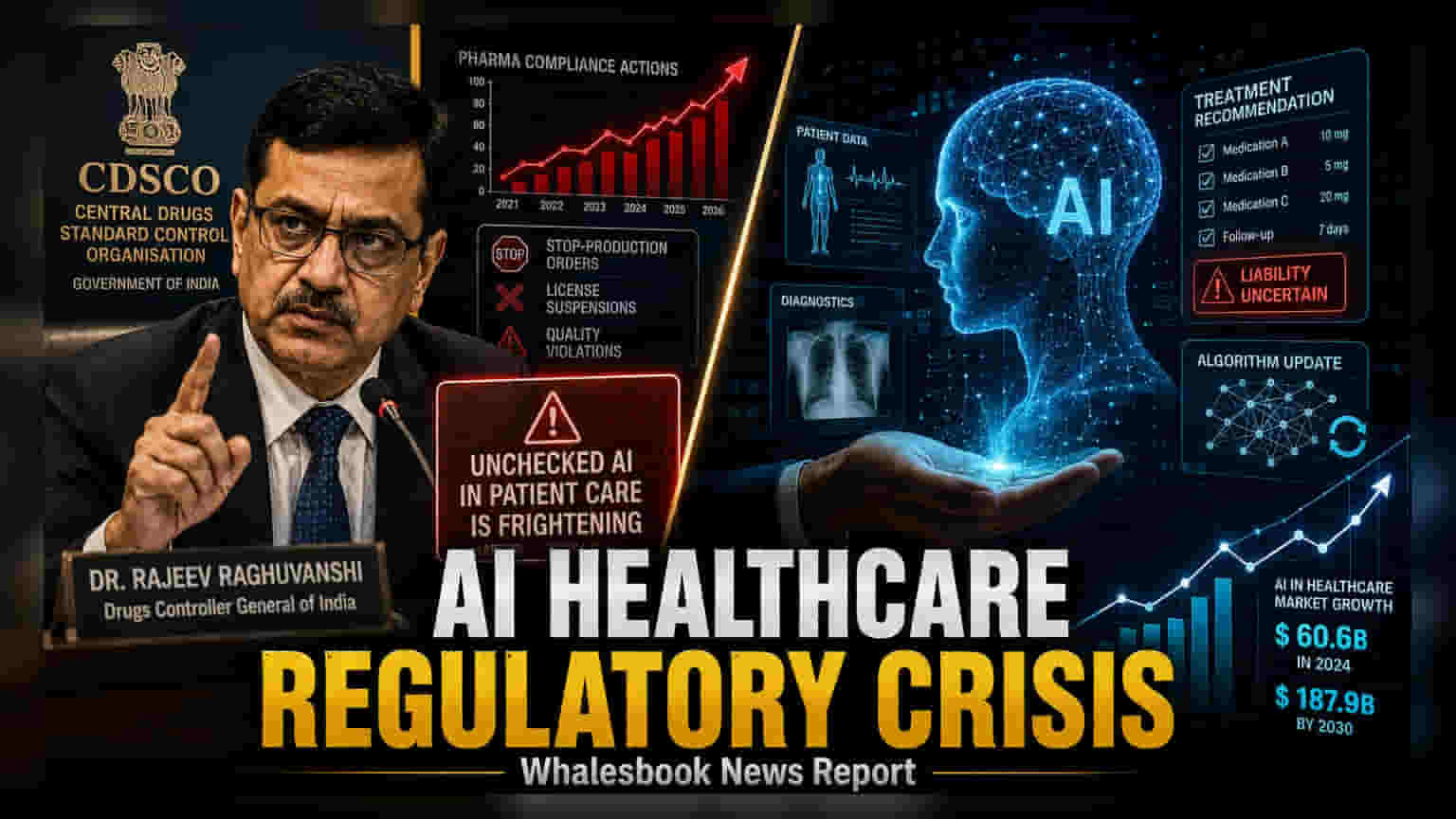
India's drug regulator, Rajeev Raghuvanshi, has raised concerns over the 'frightening' regulatory challenges posed by AI tools that directly advise patients. While pharmaceutical firms use AI to speed up drug discovery, the lack of an accountability framework for self-evolving medical algorithms remains a key hurdle for authorities.
Drugs Controller General of India (DCGI) Rajeev Raghuvanshi has highlighted significant regulatory concerns regarding the integration of Artificial Intelligence (AI) in patient care. Speaking at a recent summit, Raghuvanshi described the rapid, unchecked use of AI in delivering medical advice as a 'frightening' development. His primary concern centers on the accountability gap, where AI tools providing direct treatment recommendations to consumers lack the clear liability structure associated with traditional doctor-patient interactions.
The Regulatory Hurdle of Dynamic AI
The fundamental challenge for regulators lies in the nature of AI systems. Traditional medical products are static; once a drug or device is approved, its quality and performance remain consistent. In contrast, AI models are dynamic and often change their behavior as they process more data. Raghuvanshi noted that this creates a 'moving target' that current regulatory frameworks are ill-equipped to assess. If an AI system updates itself or adapts its advice, verifying its safety and performance against an original approval standard becomes technically difficult. This creates a significant dilemma for the Central Drugs Standard Control Organisation (CDSCO) as it attempts to maintain public safety without stifling innovation.
Industry Adoption vs. Regulatory Caution
Despite these concerns, the pharmaceutical industry is actively integrating AI, particularly in backend processes like drug discovery and clinical trial optimization. Leaders in the sector, including representatives from companies like Zydus Lifesciences and Abbott India, have emphasized that AI’s role is currently most effective as a support tool for clinicians, such as drafting notes or summarizing diagnostic data, rather than as a replacement for human judgment. For investors, this creates a clear distinction: AI usage that streamlines R&D and improves operational efficiency is viewed as a productivity booster, while patient-facing AI applications carry higher regulatory and liability risks.
Broader Regulatory Context
The regulator's warning comes at a time when the CDSCO is significantly tightening its oversight of the pharmaceutical sector. Beyond the scrutiny of new technologies, the regulator is conducting nationwide, risk-based quality drives. These audits have resulted in increased enforcement actions, including stop-production orders and license suspensions for facilities that fail to meet manufacturing standards. Simultaneously, the CDSCO is working on an ambitious 18-month plan to launch an end-to-end digital regulatory platform to improve transparency and compliance tracking. For shareholders, this signals a period of higher compliance costs and intensified focus on operational quality across the industry. The ability of pharma and healthcare companies to balance technological innovation with strict adherence to evolving regulatory standards will be a key factor for long-term sustainability.