

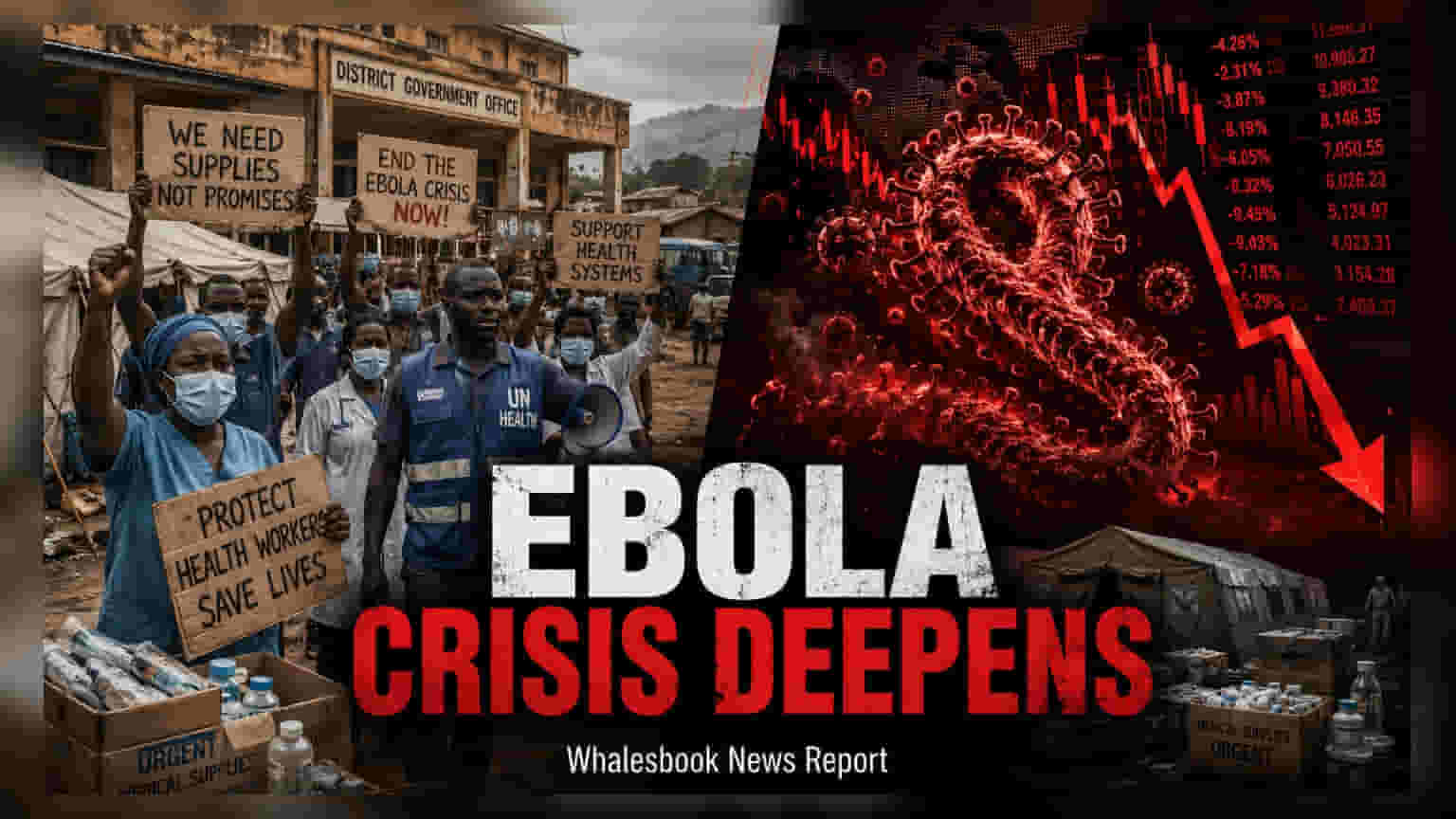
Frontline health workers in Congo’s Ituri province are striking over months of unpaid wages, threatening the containment of the second-largest Ebola outbreak on record. With 3,802 confirmed cases and 1,707 deaths reported as of August 2026, the labor dispute and regional instability are hampering critical virus control efforts, increasing the risk of uncontrolled spread.
The Ebola containment effort in the Democratic Republic of Congo (DRC) has hit a critical roadblock as health workers in the Ituri province have initiated a strike over months of unpaid wages and bonuses. This labor dispute, which escalated on August 6, 2026, has led to the closure of multiple health facilities in a region that accounts for nearly 90% of the country’s current Ebola cases. The protest is not just a localized labor issue; it threatens to dismantle the fragile system currently struggling to control the second-largest Ebola outbreak on record.
As of early August 2026, health authorities have confirmed 3,802 cases and 1,707 deaths. The strain of the virus involved is the rare Bundibugyo virus. Unlike other strains, there is currently no approved vaccine or specific medical treatment, making the response entirely dependent on rapid containment, isolation, and strict hygiene protocols. When health workers—including doctors, nurses, and laboratory staff—stop working, these transmission chains remain unbroken, allowing the virus to spread into the community.
Operational Risks and Funding Challenges
The crisis on the ground highlights a major gap between international aid and local implementation. While the U.S. State Department has pledged $242 million in funding to support Ebola response and preparedness, the actual delivery of these funds to frontline workers is fraught with logistical and administrative hurdles. Protesters have reported that they have not received compensation since the outbreak was declared in May 2026. These payment delays, often attributed to complex local payment mechanisms, have severely eroded staff morale and forced many essential personnel to abandon their posts in high-risk zones.
Compounding the situation is the volatile security environment in Ituri. Health facilities and medical staff have faced repeated threats, including attacks by rebel groups and hostile local mobs. The combination of financial stress, physical danger, and a lack of clear logistical support has made it difficult for organizations like the World Health Organization (WHO) and other aid groups to maintain consistent operations. The WHO has issued stern warnings, noting that the outbreak is currently spreading faster than the response teams can track, directly threatening to overwhelm local medical infrastructure.
The outlook for the next few weeks depends heavily on how quickly the Congolese authorities can resolve the payment crisis. Investors and global health observers should monitor three key areas: the resumption of services at treatment centers, the stabilization of payment channels to prevent further staff exodus, and the effectiveness of the containment strategy in reaching remote communities. Without a stable and well-supported workforce, the ability to curb the virus remains under severe pressure, raising the possibility of a longer and more costly humanitarian crisis.