

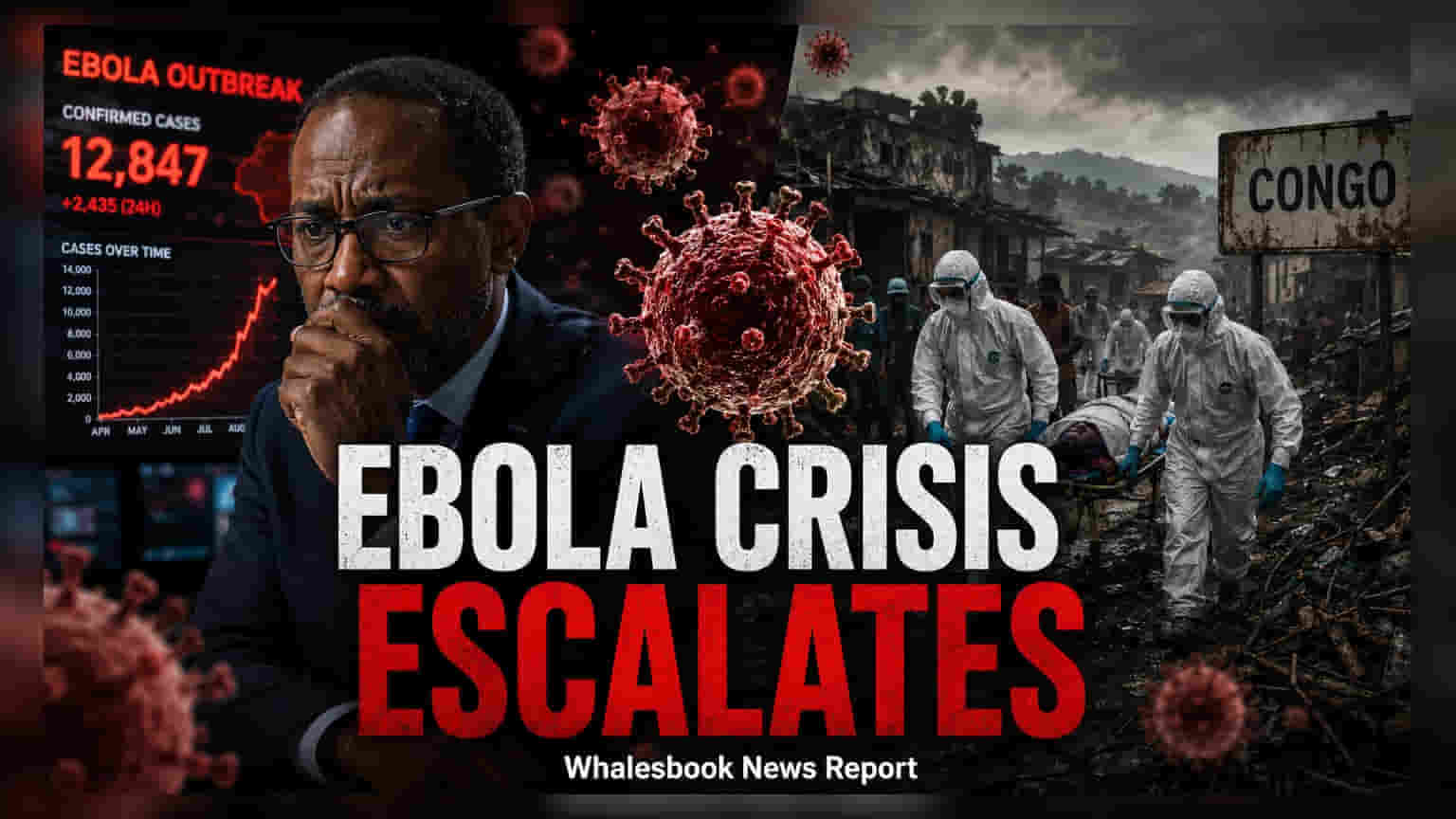
The Ebola outbreak in eastern Congo has reached 1,926 infections and 702 deaths, with 80% of new cases emerging from untraceable transmission chains. Despite expanded treatment capacity, healthcare efforts face major pressure from funding shortages, local conflict, and community mistrust, complicating efforts to contain the virus.
The Ebola outbreak currently affecting eastern Congo is intensifying, with international health authorities warning that the rate of new infections is consistently outpacing containment measures. According to the World Health Organisation, the crisis has become increasingly difficult to manage as a high proportion of new cases lack clear links to previously identified contact lists.
Transmission Trends and Healthcare Impact
Data from Congolese authorities indicates that at least 1,926 infections and 702 deaths have been recorded across three provinces. A critical concern highlighted by health officials is that 80% of newly reported cases originate from unknown chains of transmission. Furthermore, a significant number of patients are passing away within their local communities before they can be transported to specialized health facilities, which complicates tracking and prevention efforts.
While the Africa Centres for Disease Control has identified this as the fastest-growing Ebola outbreak on the continent, the response has seen some operational improvements. Laboratory capacity in the region has been scaled up from a single facility to 14 locations, and treatment capacity has been increased to accommodate nearly 800 beds. However, these infrastructure gains have yet to stabilize the spread of the disease.
Operational and Economic Challenges
The containment mission is currently facing several structural and social pressures. A substantial funding gap has emerged, limiting the availability of resources for rapid response teams. Beyond financial constraints, the region is dealing with ongoing armed conflict, which frequently disrupts medical operations. Security risks have resulted in direct attacks on health centers, hindering the work of medical personnel.
Trust within local communities also remains a persistent barrier to effective healthcare delivery. This skepticism has been compounded by internal labor issues, including recent strikes by workers at treatment centers demanding overdue salary payments. These factors collectively create significant execution risk for the ongoing medical response. While clinical trials for new treatments are underway in coordination with international agencies, the combination of insecurity, limited funding, and operational friction continues to challenge the ability of health organizations to get ahead of the transmission curve. The next important update for stakeholders will be the effectiveness of current treatment trials and whether additional international funding can be mobilized to address the resource gaps.