 Whalesbook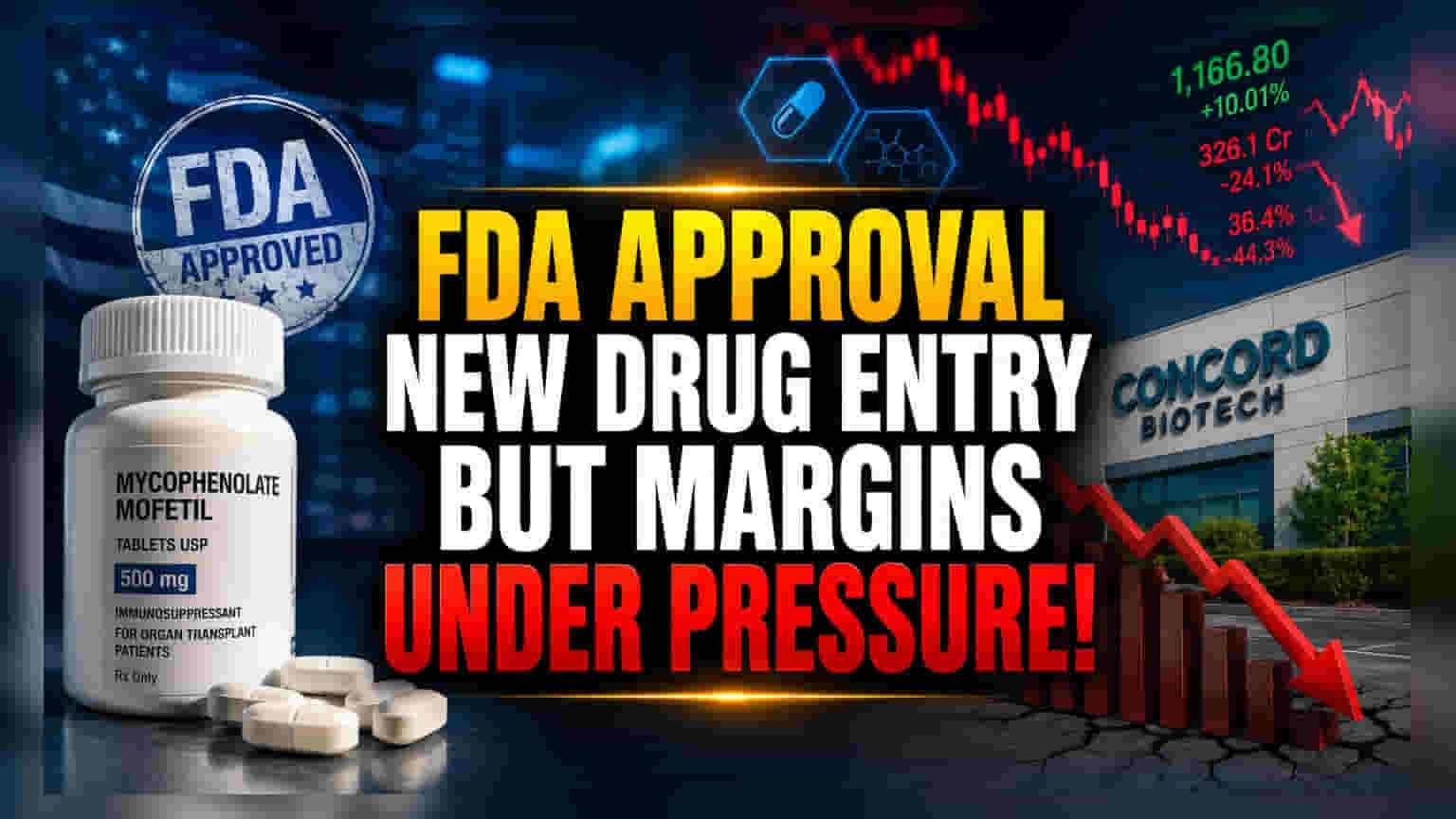


The Regulatory Catalyst
The approval of the abbreviated new drug application for mycophenolate mofetil provides a necessary entry point into the United States, targeting a niche but stable $30 million segment. This antimetabolite, essential for managing organ rejection in transplant recipients, arrives as the company attempts to diversify its revenue streams outside of its traditional fermentation-based portfolio. However, the market impact remains tethered to the execution of this launch rather than the approval itself, as the US pharmaceutical sector remains notoriously difficult for generic entrants to penetrate profitably.
The Margin Compression Narrative
Investors reacted with unusual optimism to the regulatory win, driving the share price up by 10.01% to ₹1,166.80. This exuberance partially ignores the grim realities detailed in the company's most recent financial filings. With revenue from operations cratering by 24.1% year-on-year to ₹326.1 crore, and EBITDA margins contracting sharply from 44.3% to 36.4%, the underlying business model is showing signs of stress. This contraction suggests that the company is struggling with either aggressive pricing competition or an inability to pass through rising input costs, both of which threaten the long-term sustainability of the current dividend payout of ₹7.55 per share.
The Bear Case and Sector Risks
While the market focused on the new FDA clearance, the structural weakness of the company cannot be ignored. Unlike larger, diversified biopharmaceutical players that possess robust commercial infrastructure, Concord Biotech faces a steep uphill climb to gain market share in a highly saturated generic immunosuppressant space. The significant drop in net profit to ₹88.8 crore highlights an acute sensitivity to volume declines, which could intensify if the US launch faces logistical delays or regulatory scrutiny regarding manufacturing throughput. Furthermore, the company’s heavy reliance on fermentation technology exposes it to volatility in global supply chains, a vulnerability that often leads to inconsistent margin performance compared to synthetic drug manufacturers. If the company fails to reverse the trend of declining revenue in the next two quarters, the current valuation may face a harsh correction as the initial excitement over the US launch dissipates.
Future Outlook
Management has signaled a transition toward portfolio expansion, hoping that the entry into the US pediatric and adult transplant market will stabilize future quarterly reports. However, analysts remain cautious about whether this product can offset the broader decline in the company’s core legacy segments. The focus for shareholders now shifts toward the upcoming annual general meeting, where the conversation will likely pivot from the regulatory win to the viability of the current growth strategy in the face of persistent earnings pressure.