 Whalesbook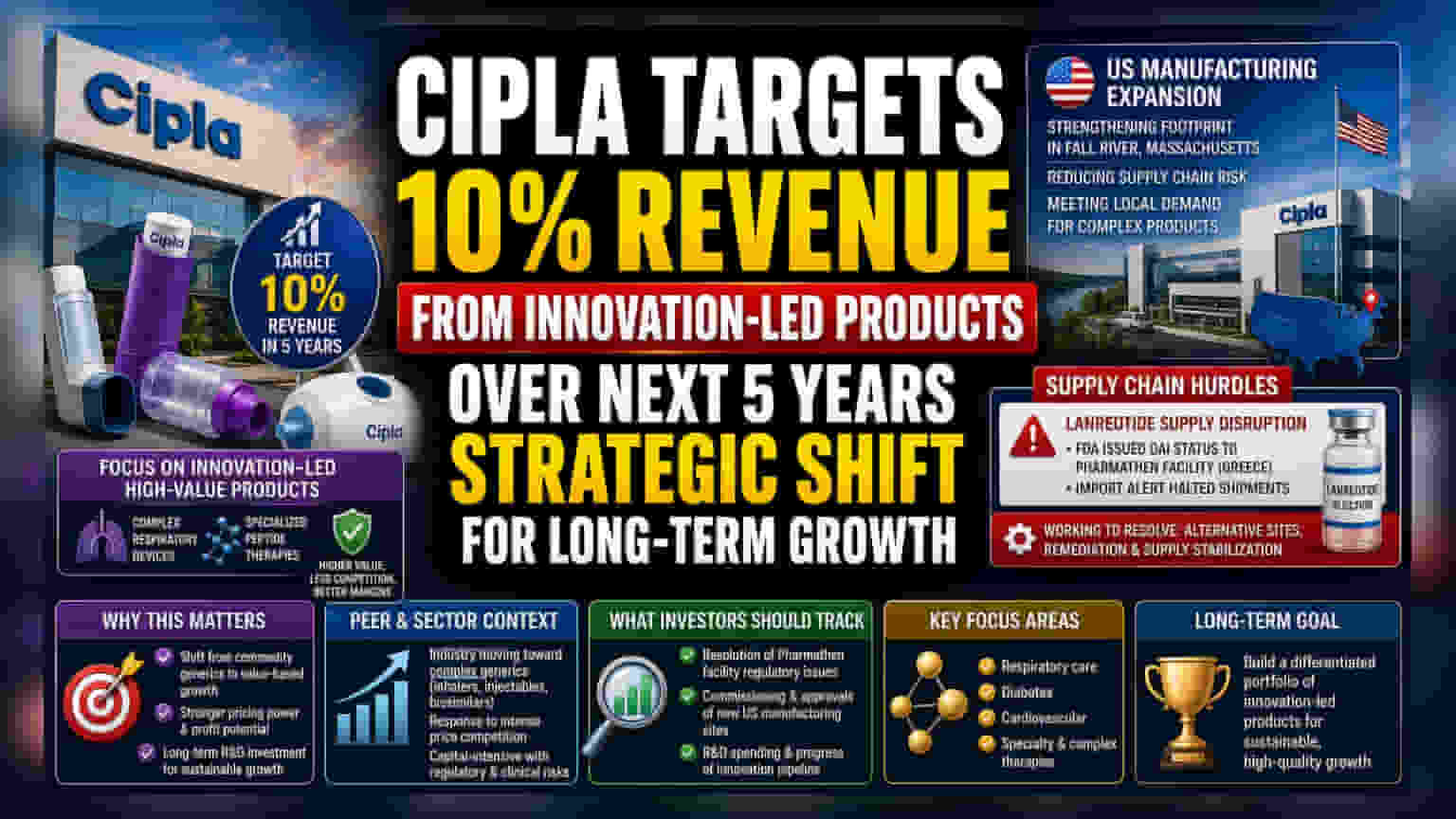


Cipla targets 10% of revenue from new, innovation-led products within five years, shifting its strategy to higher-value specialty medicines. While the company pursues this growth, it is also navigating supply chain hurdles, including recent regulatory alerts for a key product partner, which investors should monitor alongside the firm's US expansion efforts.
What Happened
Cipla has announced a strategic shift to target 10% of its revenue from innovation-led products over the next five years. This plan represents a move away from relying heavily on traditional generic medicines, which often face high competition and pricing pressure in global markets. The company plans to focus on creating or acquiring proprietary technologies and higher-value drugs, such as complex respiratory devices and specialized peptide therapies, to drive long-term growth.
Why This Matters For Investors
For investors, this shift indicates an attempt to improve profit margins. Generics are often seen as commodities where price is the main competitive factor. By moving toward “innovation-led” or “specialty” products, Cipla aims to enter markets where there is less competition and stronger pricing power. This is a common trend among large Indian pharmaceutical companies seeking to move up the value chain. Investors may view this as a potential transition from volume-based growth to value-based growth, though such shifts typically require long periods of research and investment before they show up in the bottom line.
The US Manufacturing Shift
As part of its strategy to support this goal, Cipla is actively expanding its manufacturing footprint in the United States, including its facilities in Fall River, Massachusetts. By strengthening its local production capabilities, the company aims to reduce supply chain risks and meet the growing demand for locally made medicines in the US. This expansion is designed to provide greater control over production timelines and regulatory compliance, particularly for complex products that are difficult to manufacture.
Supply Chain Hurdles and Regulatory Risks
While the long-term strategy focuses on innovation, the company is currently navigating immediate operational challenges. A key concern for investors is the supply disruption of Lanreotide, a significant drug in Cipla’s US portfolio. This disruption follows regulatory actions taken by the US Food and Drug Administration (FDA) at the manufacturing facility of its Greek partner, Pharmathen. The FDA issued an “Official Action Indicated” (OAI) status to the facility and a subsequent import alert, which halted shipments of the drug.
Cipla has stated it is working to resolve these supply issues, including exploring alternative manufacturing sites and remediating the current supply chain. Because Lanreotide is one of the company's top-performing products in the US, investors have been closely tracking this situation, as it impacts revenue visibility and margins in the near term. The company’s management has indicated that resolving these regulatory hurdles is a high priority.
Peer and Sector Context
Cipla is not alone in this transition. Many large Indian pharmaceutical players are moving toward "complex generics"—drugs that are harder to copy, such as injectables, inhalers, and biosimilars. This shift is a response to the fierce price competition in the basic generic drug market, both in the US and India. By focusing on therapeutic areas like respiratory care, diabetes, and cardiovascular health, companies like Cipla are trying to build more stable, long-term businesses. However, this strategy is capital-intensive and subject to the risks of clinical trial failures and lengthy regulatory approval processes.
What Investors Should Track
Investors may want to monitor a few key areas in the coming quarters. First, the resolution of the regulatory issues at the Pharmathen facility remains a critical factor for the company’s near-term US revenue. Second, any updates on the commissioning and approval of new US manufacturing sites will be important for assessing the company’s ability to stabilize its supply chain. Finally, while the 10% revenue target for innovation is a long-term goal, watching the company’s spending on research and development (R&D) and the progress of its new product pipeline in respiratory and specialty segments will help gauge the execution of this strategy.