

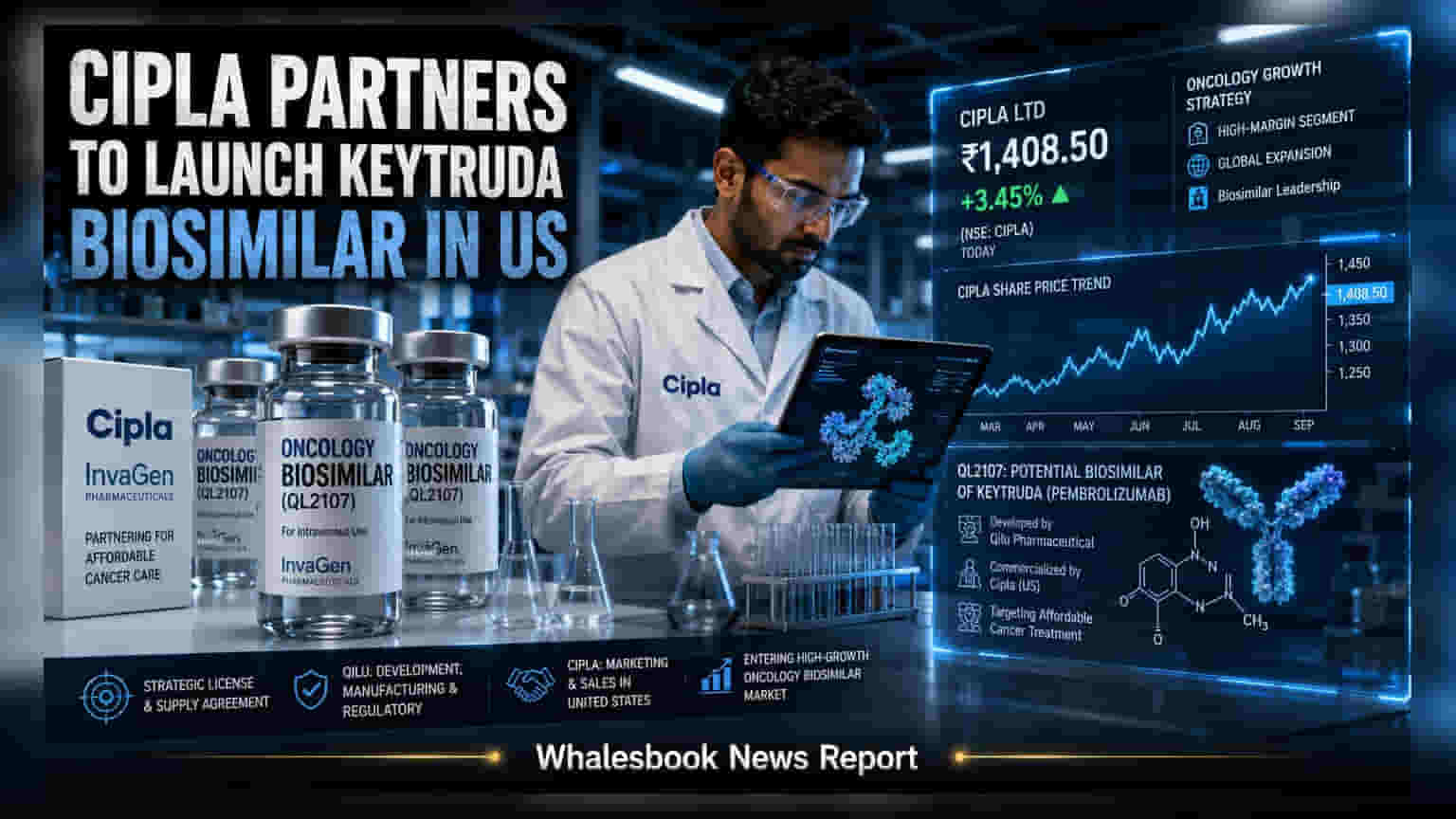
Cipla’s US subsidiary, InvaGen Pharmaceuticals, has signed a deal with China’s Qilu Pharmaceutical to develop and sell a biosimilar version of the cancer drug Keytruda. The partnership aims to expand Cipla’s high-margin oncology business in the US market. While this is a strategic move to boost long-term growth, investors should monitor the regulatory approval process and competition, as the biosimilar market is crowded and complex.
Cipla Ltd, through its US-based subsidiary InvaGen Pharmaceuticals, has entered into a strategic licensing and supply agreement with China’s Qilu Pharmaceutical. The primary objective of this partnership is to bring a biosimilar version of Keytruda, a widely used cancer treatment, to the United States market. A biosimilar is a biological drug that is highly similar to an existing, approved treatment but is typically offered as a more cost-effective alternative.
Division of Responsibilities
The agreement is structured to leverage the specific strengths of both companies. Qilu Pharmaceutical will be responsible for the clinical development, regulatory filings, and manufacturing of the biosimilar candidate, known as QL2107. Meanwhile, Cipla will utilize its established commercial infrastructure and distribution network in the United States to lead the marketing and sales efforts. This division of labor allows Cipla to enter the competitive oncology segment without needing to build extensive manufacturing capacity from the ground up for this specific product.
Strategic Importance and Market Context
This partnership marks a significant step for Cipla as it looks to expand its presence in the high-margin specialty and biosimilar segments. The company has been working to reduce its reliance on traditional generic drugs, which often face intense pricing pressure. By focusing on complex areas like oncology, Cipla aims to improve its profit margins over the long term.
For context, Cipla's shares have recently been trading in the range of ₹1,395 to ₹1,414. The company’s North American business remains a critical growth engine, but it is also subject to fluctuations based on new product launches and regulatory developments. Success in this new venture will depend on the company's ability to navigate the complex US regulatory environment.
Key Risks for Investors
While the partnership offers potential growth, it comes with notable risks that investors should keep in mind. The most significant is the regulatory hurdle; any delay in receiving approval from the US Food and Drug Administration (USFDA) for QL2107 could impact the projected timeline and revenue.
Additionally, the oncology space is highly competitive. Numerous pharmaceutical companies are racing to develop biosimilars for blockbuster drugs, which could lead to significant pricing pressure once these products hit the market. There is also an execution risk inherent in relying on a third-party partner like Qilu for development and manufacturing. If there are delays or quality issues at the production stage, it could directly affect Cipla's commercial plans.
Investors should monitor future exchange filings for updates on the clinical trial progress, regulatory milestones, and the anticipated launch timeline. The ultimate financial impact of this partnership will become clearer as the product moves closer to regulatory submission and eventual commercialization.