

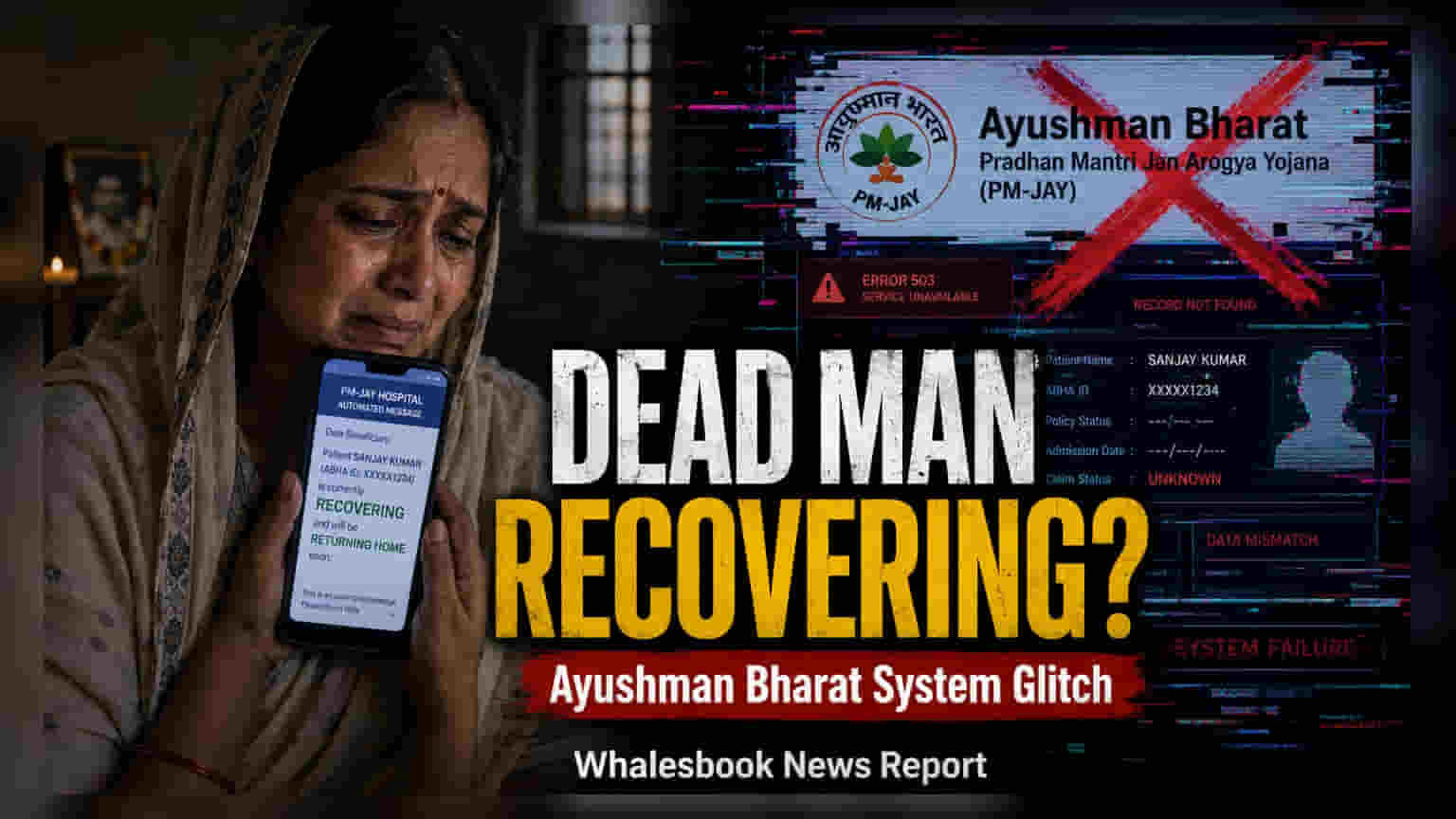
A police constable in Chhattisgarh received an automated 'recovery' message from the Ayushman Bharat health insurance scheme 42 days after his death. Hospital authorities attributed the error to a data entry delay, while the victim's family has raised concerns over administrative lapses. This incident highlights significant challenges regarding real-time data accuracy in public welfare systems.
A troubling administrative error has surfaced at the Ambikapur Medical College Hospital in Chhattisgarh, where the Ayushman Bharat Pradhan Mantri Jan Arogya Yojana (PM-JAY) system sent an automated 'recovery' message for a patient 42 days after his death. Dev Narayan Ram, a police constable, was admitted to the hospital on June 26, 2026, and passed away on June 30, 2026. His widow, Seema Kujur, received the notification on her husband's phone on August 11, stating that the patient was recovering and returning home.
This incident has sparked immediate concern regarding the integrity of patient record-keeping within government-backed healthcare portals. For the families of patients and the public, such errors not only cause personal distress but also raise broader questions about how administrative systems manage the status of beneficiaries.
The hospital administration has acknowledged the incident but refuted claims of insurance misuse. Dr. Shailendra Gupta, speaking for the hospital, clarified that the patient’s Ayushman card was only utilized for the four days of actual treatment before his passing. According to the hospital, the erroneous message was triggered by a delay in updating the patient's discharge or closure status on the central portal. The facility stated that the staff member responsible for the data entry error has been removed from that specific duty.
From a governance perspective, this case highlights the operational risks inherent in large-scale welfare programs. The PM-JAY scheme relies on the continuous and accurate updating of patient data to ensure that benefits are correctly allocated and closed. When records are not updated in real-time, it creates gaps in the system. As the victim's wife noted, even for those within the hospital ecosystem, such discrepancies can undermine faith in the healthcare infrastructure.
The family of the deceased has requested a formal inquiry into the matter, seeking to understand why the administrative lapse occurred and what safeguards are in place to prevent future errors. The key monitorable for the public and policymakers will be the steps taken by the health department to ensure that the patient database is synced accurately with the actual hospital status. This incident serves as a reminder of the critical importance of digital hygiene and administrative accountability in preventing the potential misuse of public funds and maintaining the credibility of state-run health insurance schemes.