 Whalesbook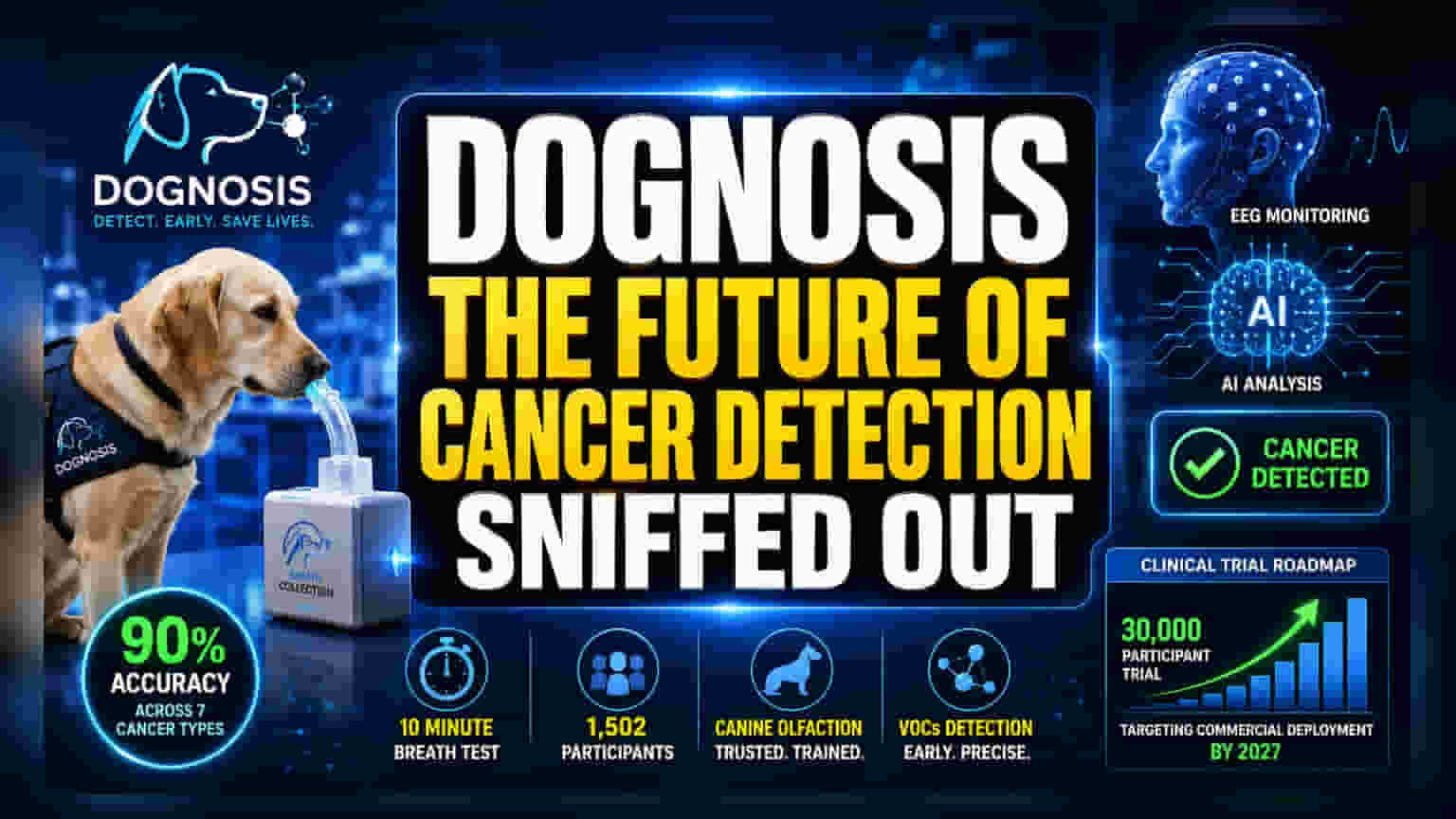


The Intersection of Biology and Diagnostics
The diagnostic industry frequently grapples with the limitations of sensitivity and specificity in early-stage oncology screening. The emergence of Dognosis as a player in this space shifts the focus from traditional liquid biopsies—which analyze circulating tumor DNA—toward the use of canine olfactory capabilities calibrated by proprietary sensor hardware. By utilizing canines to identify volatile organic compounds (VOCs) and supplementing that biological input with EEG-based monitoring and AI, the startup attempts to solve the consistency issues that have historically plagued animal-based diagnostic research.
Scalability and Structural Constraints
While the reported 90% accuracy rate across seven cancer categories within a 1,502-participant study appears promising, the transition from controlled clinical trials to widespread deployment presents a daunting operational challenge. Traditional diagnostic companies like Exact Sciences or Guardant Health rely on standardized, replicable laboratory protocols that are inherently scalable. In contrast, training and maintaining a fleet of specialized canines involves high biological volatility, animal welfare overhead, and complex logistical demands that could limit the addressable market size. Furthermore, the requirement for a ten-minute breath collection period per patient introduces a throughput bottleneck that may struggle to compete with established high-volume pathology laboratories.
The Forensic Bear Case
The primary risks associated with this approach reside in the domain of regulatory scrutiny and clinical reproducibility. Regulatory bodies typically demand rigorous evidence that a diagnostic method is robust across diverse demographic and physiological profiles. Biological sensors, regardless of the level of AI-assisted interpretation, are subject to fatigue and behavioral variance that synthetic hardware is not. There is also the unresolved question of long-term commercial sustainability. Maintaining a network of trained animals requires significant ongoing investment in specialized training staff and veterinary care, which could compress margins compared to automated, reagent-based diagnostic platforms. Investors should also monitor the potential for litigation or ethical challenges, as the reliance on animal subjects in a clinical healthcare environment often invites intense scrutiny from health authorities and public interest groups alike.
Institutional Outlook
The proposed 30,000-participant trial will serve as the true litmus test for the company’s valuation. If the startup can demonstrate consistent efficacy at scale, it may find a niche in underserved, rural environments where access to centralized, expensive imaging technology remains restricted. However, the path to commercial deployment by 2027 remains narrow, necessitating not only regulatory validation but also the establishment of an infrastructure capable of ensuring that canine performance does not drift over time. Until then, the model remains a high-risk, high-reward alternative to current molecular diagnostics.