

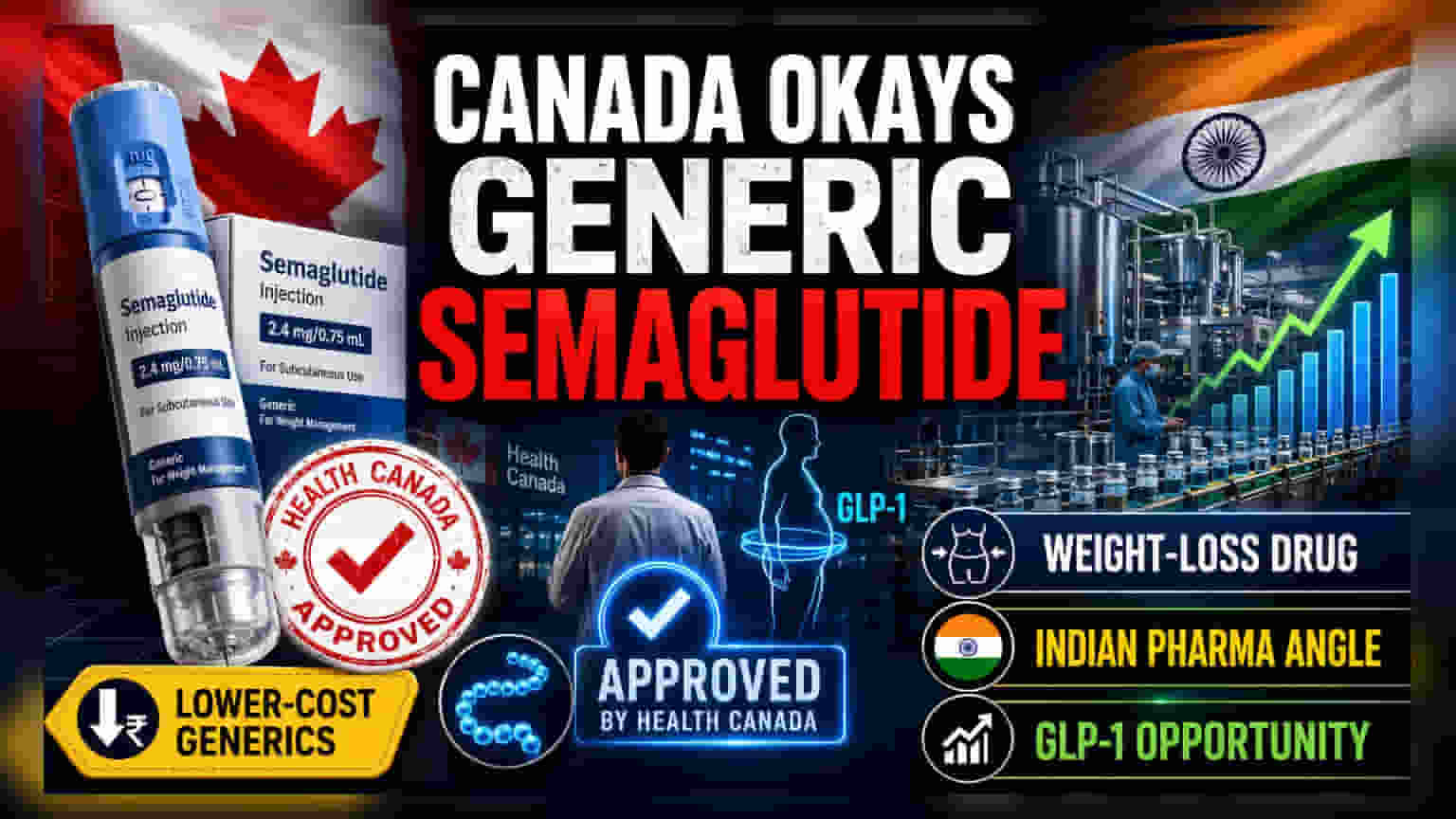
Health Canada has approved the first generic version of the weight-loss drug Wegovy (semaglutide), branded as Sevmia by Apotex. This regulatory move signals a shift toward cheaper alternatives for this high-demand drug class. For Indian pharma investors, this development highlights the growing race to manufacture generic GLP-1 drugs, where Indian firms face significant patent, manufacturing, and legal hurdles.
What Happened
Health Canada has granted approval for the country's first generic version of semaglutide for weight management, marketed as Sevmia by the pharmaceutical firm Apotex. This decision follows a strict regulatory review where the generic version was proven to meet safety and quality standards equivalent to the brand-name drug Wegovy, manufactured by Novo Nordisk. This is the third generic semaglutide approval in Canada this year, with earlier approvals targeting diabetes management. Generic drugs in the Canadian market typically retail at 45% to 90% less than the original branded product, aiming to reduce costs for patients and the broader healthcare system.
The Indian Pharma Angle
For Indian pharmaceutical investors, this approval is a significant development to track. The global market for GLP-1 receptor agonist drugs, which includes blockbuster medications like Ozempic and Wegovy, is witnessing a massive surge in demand. Several top Indian pharma companies, including industry leaders like Sun Pharma, Dr. Reddy's Laboratories, and others, have been exploring opportunities to develop and launch generic versions of these high-value drugs. While Canada's regulatory environment is distinct from the US or India, the move confirms that regulators are creating pathways for generic versions, potentially paving the way for similar developments in other major markets.
Patent And Manufacturing Hurdles
Investors should understand that launching generic versions of semaglutide is not straightforward. The primary hurdle remains patent protection. Novo Nordisk, the manufacturer of Wegovy and Ozempic, holds robust global patent rights. Indian generic manufacturers aiming to enter this space must navigate a minefield of patent litigation. Many lawsuits are likely as companies attempt to launch versions before the original patent expires.
Beyond legal issues, there is a significant manufacturing challenge. Semaglutide is a peptide-based drug, which is structurally much more complex to manufacture than standard chemical pills. Developing the capacity to produce these complex injectable biologics at scale requires high-level technical expertise and specialized manufacturing facilities. This 'barrier to entry' means that only companies with advanced research and manufacturing capabilities are likely to succeed, potentially limiting competition compared to easier-to-produce generics.
Pricing And Market Risks
While the prospect of generic entry offers huge revenue potential, it also comes with risks. If multiple companies successfully launch generics, the market could see rapid price erosion, which may squeeze profit margins. Additionally, the regulatory approval process in major markets like the US is highly stringent. Any delays in approvals or complications in demonstrating bioequivalence to the original drug can result in wasted research and development spending. Investors should be wary of assuming immediate success for any single company, as the path to market involves multi-year legal and regulatory battles.
What Investors Should Track
Investors monitoring the Indian pharmaceutical sector should look for three key updates. First, watch for management commentary regarding progress in developing GLP-1 pipeline products. Second, keep an eye on updates regarding patent litigation involving global innovators and generic manufacturers. Finally, monitor regulatory filings in major markets like the US, as these are the primary drivers of growth and potential revenue for the Indian generic export business.