

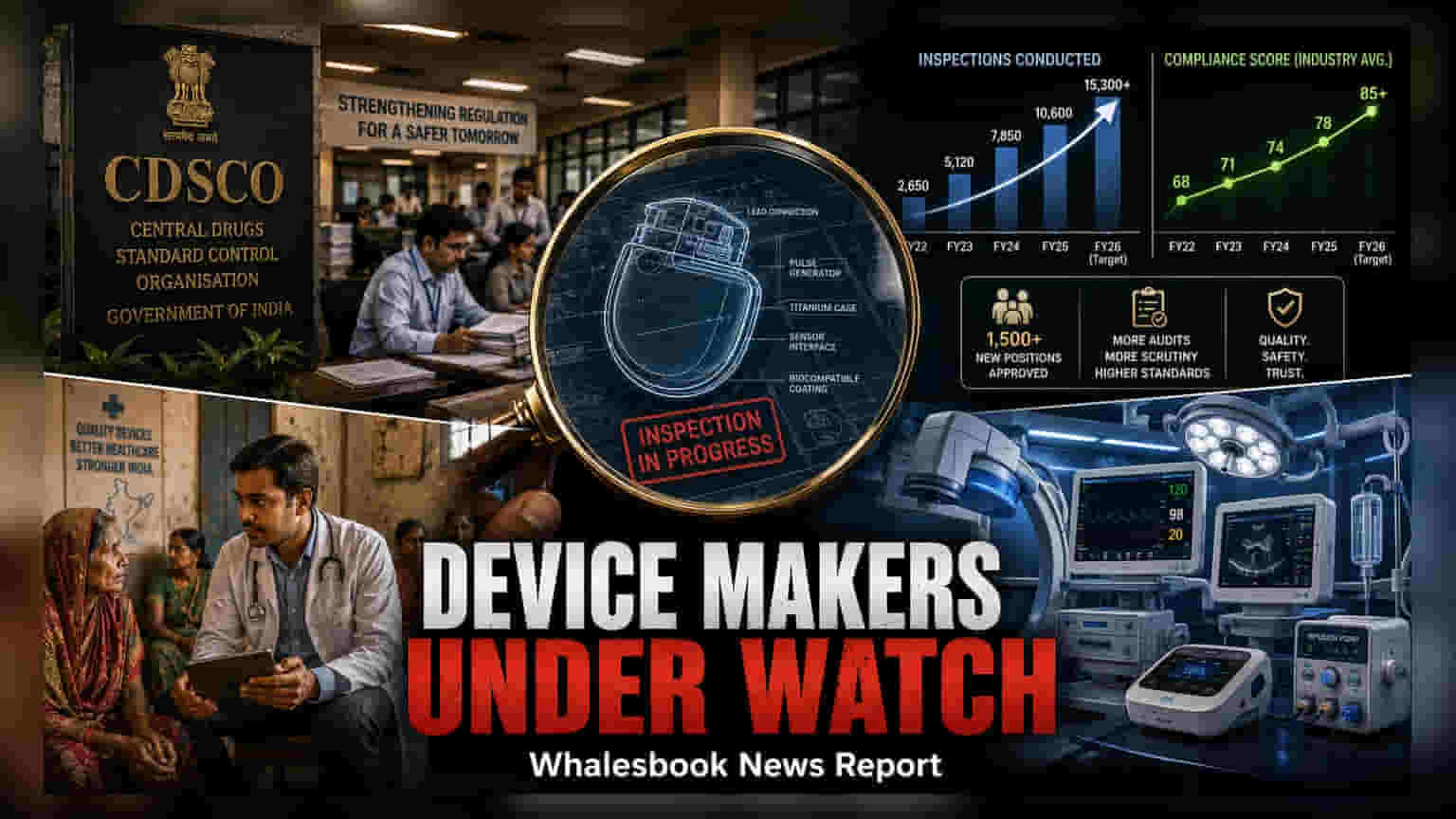
The Central Drugs Standard Control Organisation is shifting from license issuance to rigorous audits of medical device manufacturers, supported by a significant increase in staff. This regulatory change signals a move toward stricter oversight, which may impact compliance costs and operational standards for companies across the sector.
The Central Drugs Standard Control Organisation (CDSCO) has signaled a shift in its regulatory approach for the medical device industry. After a two-year period largely dedicated to issuing over 40,000 product licenses, the regulator is now moving toward a more rigorous inspection and audit regime. This transition is being supported by a substantial expansion in manpower, with the government approving over 1,500 new positions within the CDSCO to strengthen regulatory capacity.
For investors, this change marks a transition from a "licensing phase" to a "compliance phase." With new officers and specialized personnel joining the regulator, medical device manufacturers should expect more frequent and detailed scrutiny of their manufacturing facilities, documentation, and quality management systems. This ramp-up in oversight is designed to ensure that the rapid growth in the sector, which is estimated to be worth approximately US$16 billion in India, is matched by consistent product quality and safety standards.
Alongside this increased oversight, the regulator is pushing the industry to move beyond lower-risk, high-volume products. CDSCO officials have indicated a strategic preference for companies to pivot toward more sophisticated, high-risk devices, such as Class C and D devices and in-vitro diagnostics. The current market structure is heavily tilted toward simpler products, and regulators are now encouraging a shift toward innovation and higher-tech healthcare solutions. This could influence the future growth trajectory of companies that choose to invest in R&D and advanced manufacturing capabilities.
However, this regulatory tightening occurs against the backdrop of an ongoing debate regarding the draft 'Drugs, Medical Devices & Cosmetics Bill, 2026.' Many industry stakeholders have expressed concerns that the proposed legal framework treats medical devices too similarly to pharmaceuticals. A primary fear among manufacturers is the potential for 'pharma-centric' regulations, which could lead to the criminalization of technical or engineering lapses, potentially creating an undue burden of compliance for smaller companies and MSMEs.
Investors should monitor how individual companies adapt to these stricter audit requirements. Firms that already maintain high global quality standards may find it easier to comply, while those with less robust internal processes could face higher operational costs or temporary production hurdles if audits reveal gaps. The most critical factors to track in the coming quarters will be management commentary regarding regulatory compliance expenses, any updates on the final version of the 2026 bill, and the progress companies make in upgrading their product portfolios toward higher-risk, higher-value devices.