 Whalesbook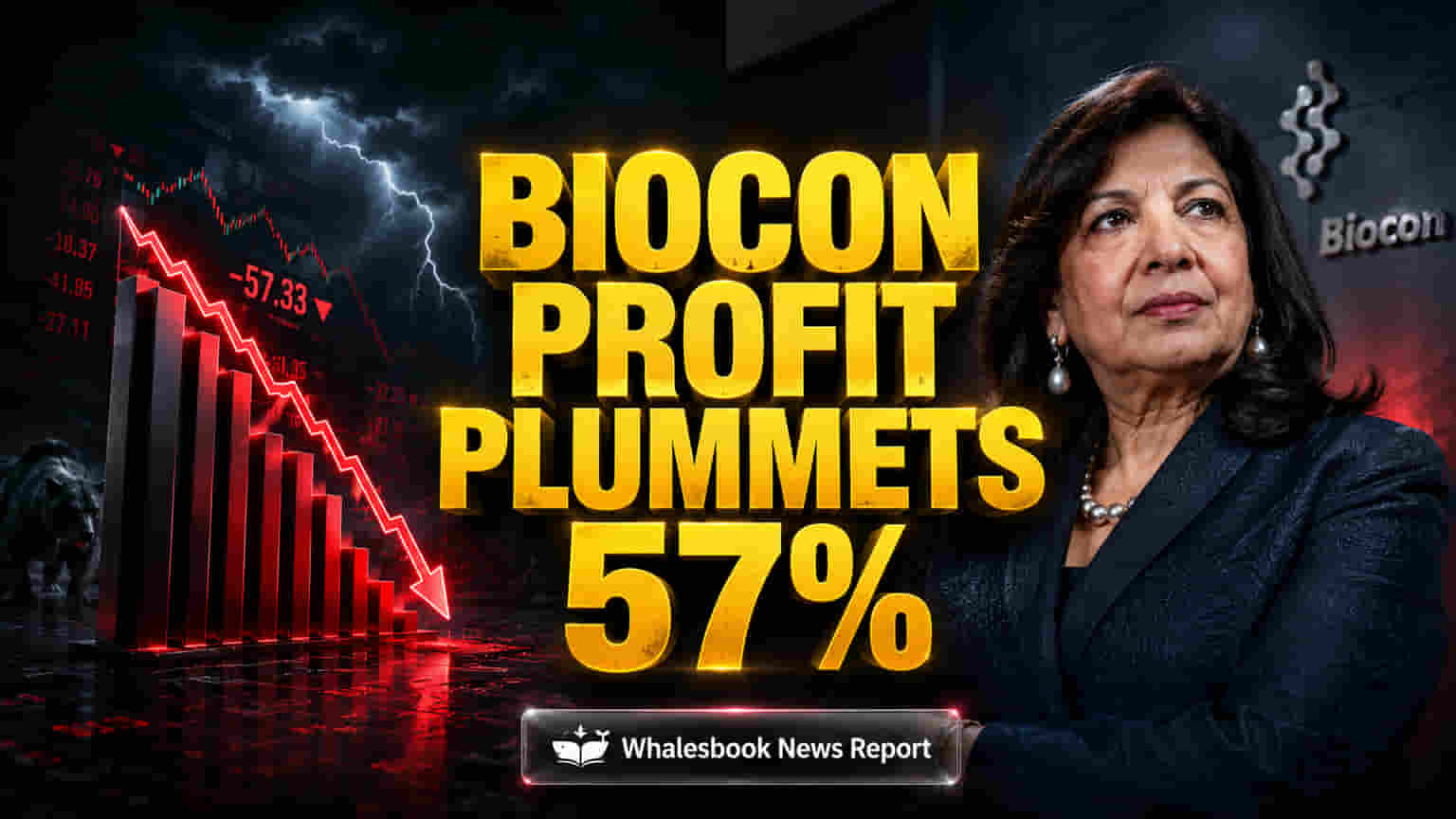


Biocon's Profit Dives 57% as New CEO Tackles Margin Pressures
Biocon's profitability faced significant pressure in the fourth quarter of fiscal year 2026, with a sharp decline in net profit. This downturn, coupled with rising operating expenses, creates a challenging environment for the company's recently integrated biopharma operations and its new leadership team. Despite revenue growth, increased costs and one-time charges are impacting margins and potentially hindering the full realization of its strategic consolidation.
Profitability Hit by Costs and One-Time Charges
The company reported a net profit of ₹198.6 crore for the fourth quarter, a significant 56.8% drop from ₹459.4 crore in the same period last year. A substantial ₹80.4 crore in exceptional items, including costs related to India's new labor code, heavily influenced this result. While revenue edged up to ₹4,516.6 crore from ₹4,417 crore, overall expenses climbed to ₹4,241.2 crore from ₹3,987.5 crore. This widening cost base outpaced revenue gains, squeezing profit margins. For the full fiscal year 2026, net profit fell to ₹368.8 crore from ₹1,429.4 crore, even as annual revenue rose to ₹16,927 crore from ₹15,261.7 crore. The stock saw cautious trading on the NSE following these results.
High Valuation Faces Market Realities
Biocon's current valuation, with a P/E ratio around 98.13 as of early May 2026, is considerably higher than the sector average of 42.17. This premium valuation implies strong investor expectations for future growth. However, the company operates amidst persistent margin pressures within the pharmaceutical industry. For instance, competitors like Zydus Lifesciences trade at a P/E of 19.2x, and Divi's Laboratories at 67.4x. The critical U.S. market faces pricing challenges and an oversupply of generics. Furthermore, the absence of high-margin products like gRevlimid is expected to contribute to a 10% year-on-year decline in U.S. formulation sales. The implementation of India's new labor codes, intended to improve worker welfare, also presents short-term financial burdens through potentially higher wages and compliance costs. Analysts hold a mixed view, with average price targets suggesting potential upside, though recent stock performance has shown technical weakness.
Integration Hurdles and Financial Pressures
The strategy of integrating Biocon's biosimilars, generics, and APIs businesses under new leadership, with CEO Shreehas Tambe and CFO Kedar Upadhye at the helm, faces immediate headwinds. The ₹80.4 crore exceptional item, partly linked to the new labor code, indicates that integration costs and regulatory changes are already impacting profitability. This raises questions about sustaining revenue growth against rising operational expenses. The reported net profit figures, even before exceptional items, show considerable compression compared to historical performance. Given Biocon's elevated P/E multiple, the company must clearly demonstrate a path to margin improvement and consistent earnings to justify its valuation, particularly as competitors maintain leaner multiples. The proposed final dividend of 50 paise per share is nominal. The company's balance sheet, while strengthened by recent equity issuance, still carries the burden of past acquisitions, leading to a debt-to-EBITDA ratio of approximately 7x in FY24.
Navigating Growth and Profitability
Biocon's management highlights a focus on margin expansion and 13% year-on-year growth in operating revenue, excluding one-time lenalidomide sales, emphasizing the strength of its core biosimilar business. The ongoing integration of its various divisions is anticipated to result in a stronger balance sheet and improved leverage metrics. Despite the recent profit dip, analyst consensus generally recommends a 'Buy' or 'Moderate Buy' rating, with average price targets indicating potential upside. The immediate future will depend on the company's ability to convert revenue growth into sustainable profits, manage integration expenses effectively, and overcome competitive pressures in key global markets.