

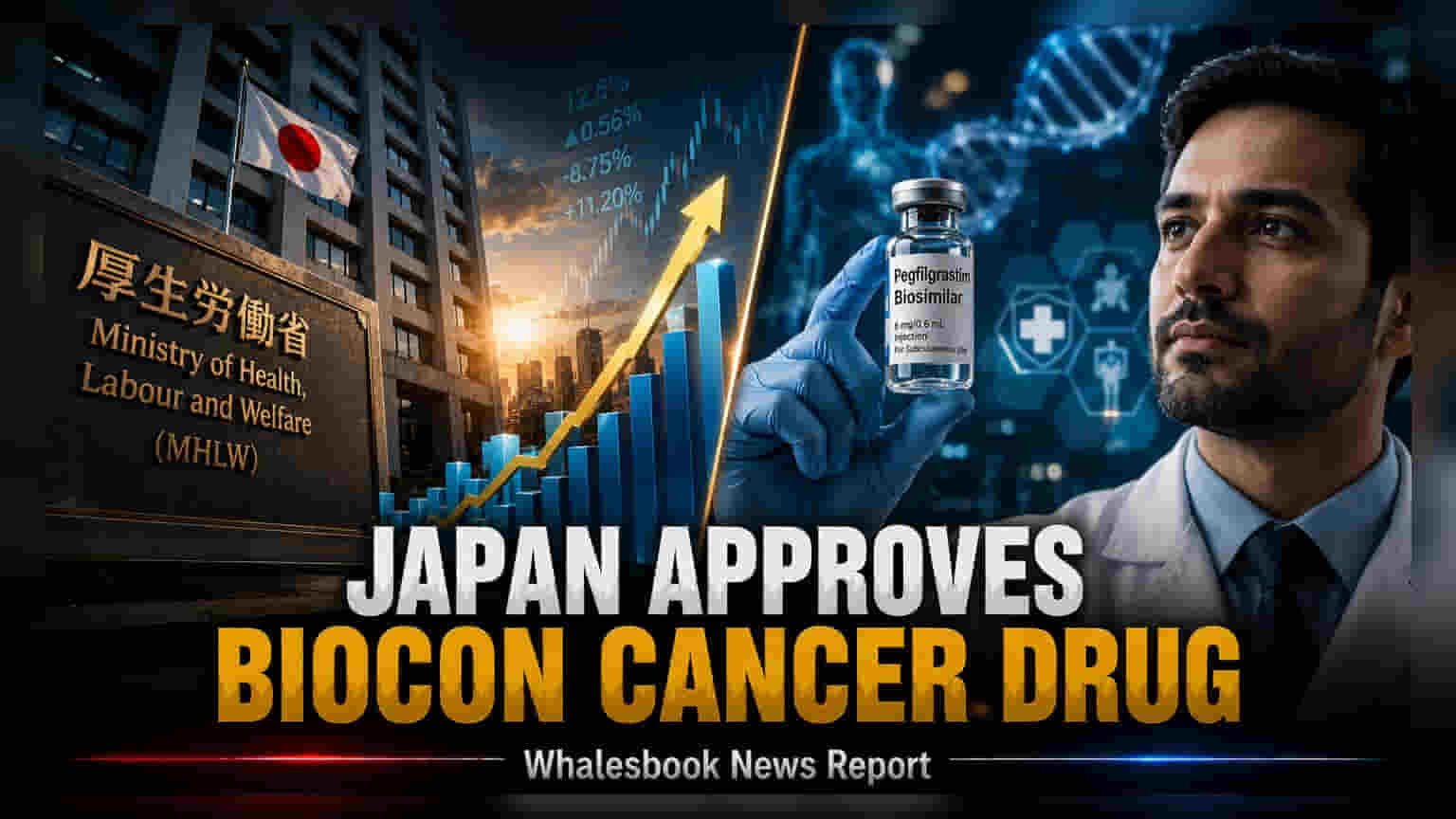
Biocon Biologics has received marketing approval from Japan’s Ministry of Health, Labour and Welfare for its pegfilgrastim biosimilar. This drug is used to prevent infections in cancer patients undergoing chemotherapy. The company has partnered with Sandoz K.K. to manage distribution, marking a strategic expansion into the Japanese market.
Biocon Biologics, a subsidiary of Biocon Ltd, has received formal approval from the Japanese Ministry of Health, Labour and Welfare (MHLW) to market its pegfilgrastim biosimilar. This medication, which is a biosimilar to Amgen's Neulasta, is a critical supportive care treatment for cancer patients, helping to reduce the risk of infections following chemotherapy.
Expanding Market Presence in Japan
Under this arrangement, Global Regulatory Partners Japan will serve as the marketing authorization holder. Biocon has designated Sandoz K.K. as the exclusive commercial partner responsible for the promotion, sales, and distribution of the product within Japan. This partnership structure is part of Biocon’s strategy to leverage established local networks to navigate the highly regulated Japanese pharmaceutical market, which often requires strong localized support for successful product adoption.
Financial and Strategic Context
For investors, this approval adds to the company’s recent operational updates following its Q1 FY27 performance, where the company reported consolidated revenue of ₹4,336 crore, marking a 10% year-on-year growth. During the same period, the company saw a significant jump in its consolidated net profit to ₹141 crore.
Beyond revenue and profit, Biocon has been focused on improving its balance sheet. The company reported a 15.9% year-on-year reduction in total debt for FY2026, a key move aimed at reducing interest costs and improving financial flexibility. This focus on deleveraging is a significant monitorable for shareholders as the company continues to invest in global product launches and manufacturing capabilities.
Market Competition and Risks
While this approval represents a step toward revenue diversification, the global biosimilars and generics sector remains highly competitive. The company faces ongoing challenges, including potential price erosion as more biosimilar products enter the market. Additionally, Biocon, like its peers, must navigate market access hurdles, including complex payer negotiations and contracting environments in key regions such as the United States.
Investors will likely track the effectiveness of the partnership with Sandoz K.K. and how quickly the company can achieve meaningful market share in Japan. The speed of commercial rollout and the subsequent impact on operating margins will be the key indicators to watch in the coming quarters. Success will depend on the company’s ability to manage execution risks related to scaling new product launches while maintaining cost discipline.