

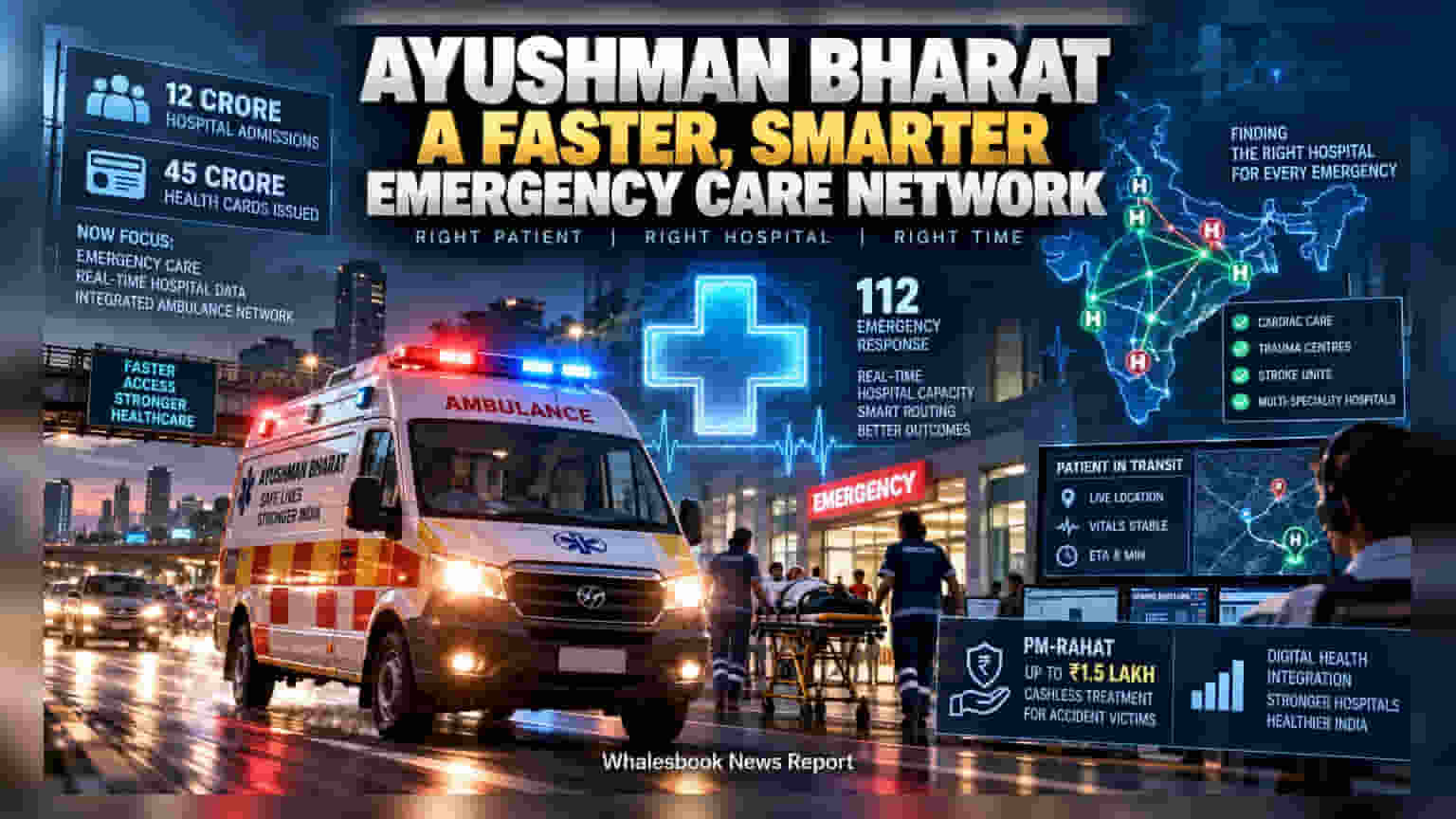
India is moving to modernize its emergency health response by linking ambulance services with digital patient records under the Ayushman Bharat mission. With 45 crore cards issued, the government is shifting focus to operational efficiency. For investors, this digital integration and expanded accident coverage under the PM-RAHAT scheme could improve patient throughput and streamline insurance settlements for healthcare providers.
The Ayushman Bharat health scheme is transitioning from an enrollment-focused strategy to one prioritizing emergency operational efficiency. While the program has already facilitated 12 crore hospital admissions and issued 45 crore health cards, the focus is now on fixing gaps in emergency care. The government plans to integrate ambulance services with the Ayushman Bharat Digital Mission to ensure critical patients are routed to facilities capable of handling their specific trauma needs.
This move toward a centralized emergency command structure is intended to prevent the current fragmentation where patients are often taken to the nearest, rather than the most appropriate, hospital. By linking the 112 emergency response number with real-time hospital occupancy data, the government aims to reduce time-sensitive delays for cardiac and accident cases.
For investors monitoring the healthcare sector, the operational success of this integration is key. The current model often suffers from delays in patient stabilization due to bureaucratic hurdles or payment authentication. The PM-RAHAT scheme, which provides up to ₹1.5 lakh for accident victims, is being positioned as a solution to provide immediate cashless treatment. If this model is successfully expanded to cover general medical emergencies, it could help private hospitals manage their patient flow more effectively by reducing the documentation burden at the point of care.
Efficient digital integration acts as a supporting factor for hospital chains. Seamless transfer of medical history and referral summaries allows for faster diagnosis and treatment planning. Reduced time-to-treatment can improve clinical outcomes, which is a metric often scrutinized by both patients and health insurers. Furthermore, a faster and more transparent payment mechanism could help hospitals improve their working capital cycles, reducing the days sales outstanding that are often tied up in insurance receivables.
However, the success of this strategy faces significant execution risks. Integrating private sector hospitals into a standardized, government-led emergency network requires seamless technology adoption and strict compliance with operational protocols. Hospitals will need to invest in the necessary IT infrastructure to transmit real-time data, and there is always a risk of project delays or cost overruns in such large-scale public health technology rollouts. Additionally, unless payment settlements are processed without significant friction, private players may remain hesitant to prioritize these admissions over elective or higher-margin procedures.
Investors should track the implementation timeline of the National Ambulance Service Operational Guidelines, which are expected in 2026. The pace at which hospitals adopt these digital protocols, combined with how quickly the government settles claims under the PM-RAHAT framework, will be the primary monitorables for the sector’s operational health in the coming quarters.