

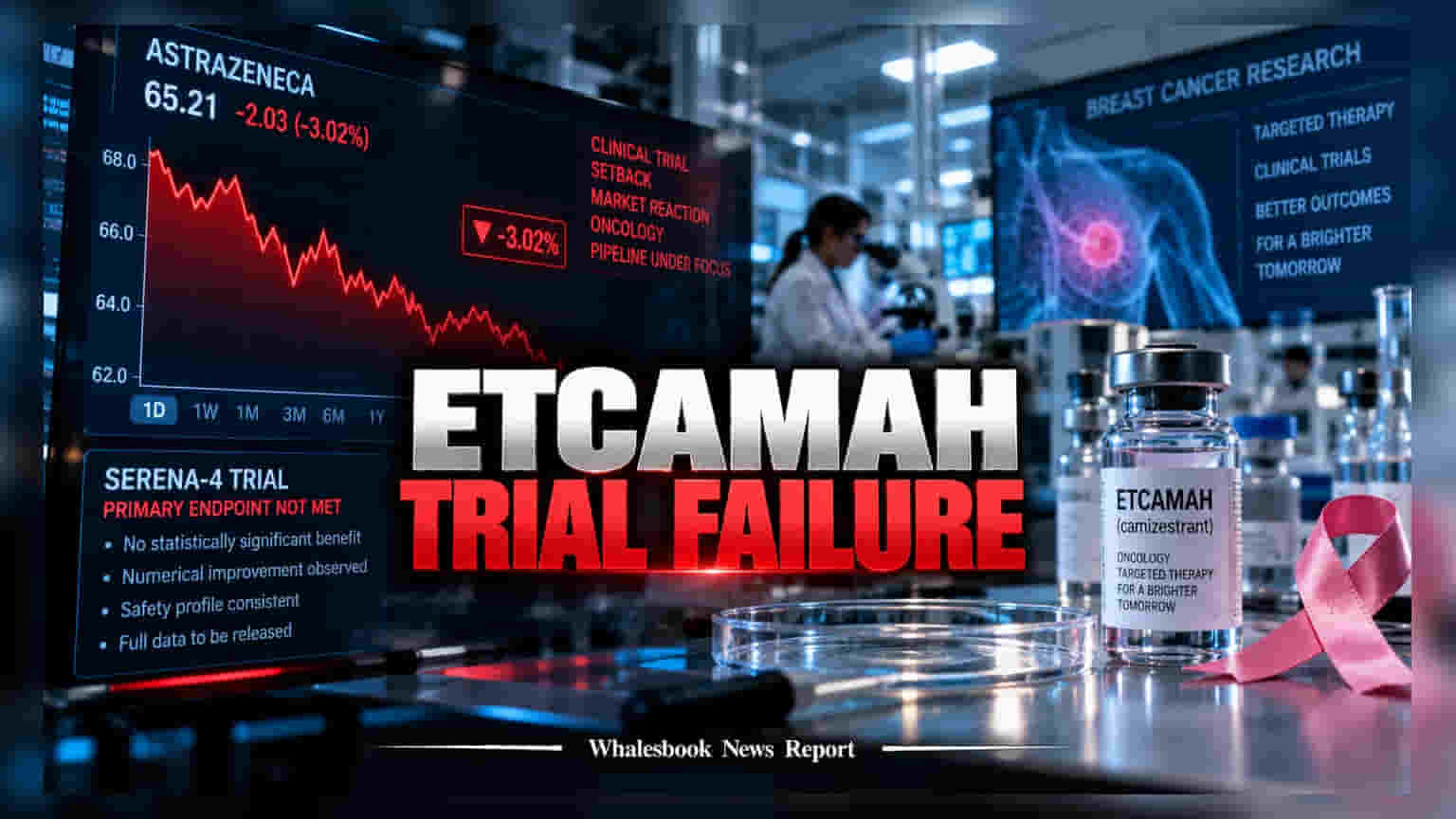
AstraZeneca announced that its breast cancer treatment, Etcamah, failed to meet the main goals of its late-stage SERENA-4 study. Although the drug recently received FDA approval for a different usage, this trial outcome dampened market sentiment, with US-listed shares falling 3% in after-hours trading. Investors are now assessing the impact of this clinical setback on the company's broader oncology pipeline.
AstraZeneca faced a clinical setback this week after its breast cancer drug, Etcamah (also known as camizestrant), failed to meet the primary goal in a major late-stage study known as the SERENA-4 trial. The trial was designed to test the drug's effectiveness in delaying the worsening of cancer in previously untreated patients, often referred to as progression-free survival.
While the company reported that the drug showed some numerical improvement in patients, it did not reach the level of statistical significance required to prove a clear clinical benefit. In simple terms, while the drug performed slightly better than the standard therapy being tested, the difference was not strong enough to meet the researchers' predefined success criteria. AstraZeneca also noted that the drug's safety profile remained consistent with previous findings, with no new safety issues identified during the trial.
It is important for investors to distinguish this trial result from the drug’s recent regulatory progress. Earlier this month, on September 4, 2026, the U.S. Food and Drug Administration granted accelerated approval to Etcamah for a specific group of patients with advanced breast cancer who have emerging ESR1 mutations, based on a separate study called SERENA-6. The current failure in the SERENA-4 trial specifically impacts the drug's potential in the broader, first-line treatment market for patients who have not received prior therapy.
Following the announcement, AstraZeneca’s U.S.-listed shares declined by approximately 3% during after-hours trading. This reaction reflects the high stakes involved in oncology drug development. For pharmaceutical companies, late-stage clinical trials are pivotal moments that determine whether a drug can be expanded into larger patient populations. When a high-profile asset fails to meet its primary goals, it can lead to immediate market volatility as analysts reassess the expected revenue and long-term potential of the drug pipeline.
The commercial rollout for oncology treatments depends heavily on success in these diverse patient settings. The company has stated that it will release full data from the SERENA-4 trial in the future, which will provide more clarity on the results. Moving forward, the key monitorable for shareholders will be the management’s strategy for the drug’s continued development and how this outcome impacts the company’s broader oncology portfolio, which remains a core pillar of its growth strategy.