

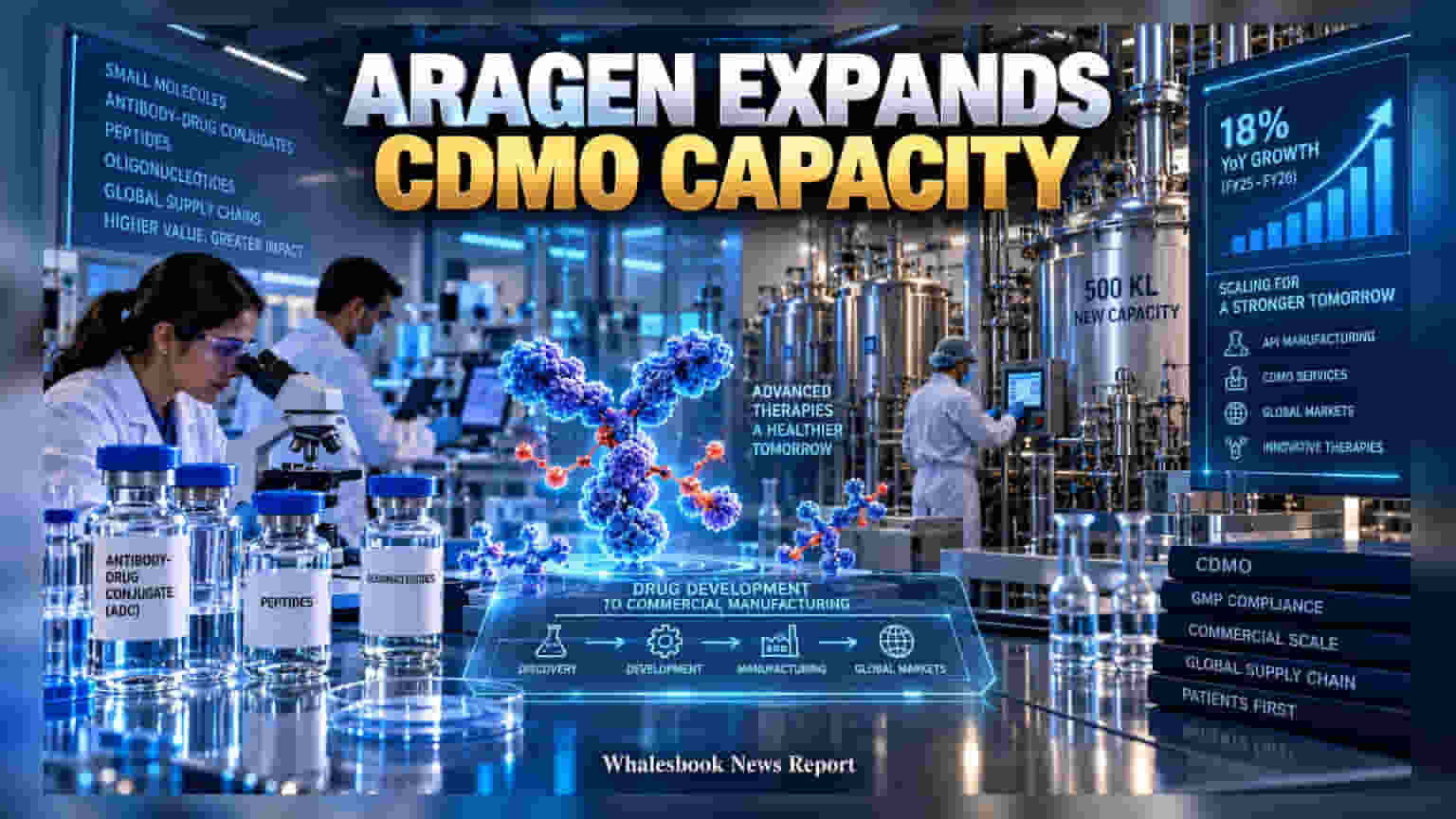
Aragen Life Sciences is expanding its CDMO capacity by 500 kilolitres to move into full-scale commercial drug manufacturing. The Hyderabad-based firm is focusing on complex drug segments like antibody-drug conjugates to capture global demand. Investors may track how this capital-intensive expansion impacts the company's financial health as it progresses with its planned public market debut.
Expanding Commercial Manufacturing Capacity
Aragen Life Sciences is significantly scaling up its operations by adding 500 kilolitres of small-molecule contract development and manufacturing (CDMO) capacity. This move marks a strategic shift for the company, which is pivoting from its established roots in discovery research toward full-scale commercial drug production. For the Indian pharmaceutical sector, this represents a broader trend of local firms attempting to capture a larger share of the global value chain as pharmaceutical companies seek to diversify their supply chains away from China.
Strategic Shift and Market Focus
The company is targeting specialized and complex drug segments, including antibody-drug conjugates, peptides, and oligonucleotides. These areas require advanced proprietary technology and high levels of manufacturing precision. By building capacity in these niches, the firm aims to move up the value chain. Unlike discovery services, which are typically research-heavy and capital-light, commercial manufacturing is capital-intensive and requires rigorous adherence to international regulatory standards, such as Good Manufacturing Practice (GMP), to ensure quality and safety for global markets.
Monitoring Execution and Financials
Aragen reported 18% growth between fiscal years 2025 and 2026, a figure that indicates strong operational momentum. However, the move into large-scale manufacturing changes the financial risk profile. As the company prepares for its initial public offering, investors may watch several key factors. First is the execution risk; the company must successfully commission its new facilities and ensure they are compliant with international regulators. Second, while the goal is to win high-margin commercial contracts, the company must also manage the debt and cash flow pressures that often accompany such large infrastructure investments. The next important updates will be the specific commissioning timeline for the new capacity, progress on the IPO process, and the company's ability to secure long-term contracts in these specialized drug segments.