

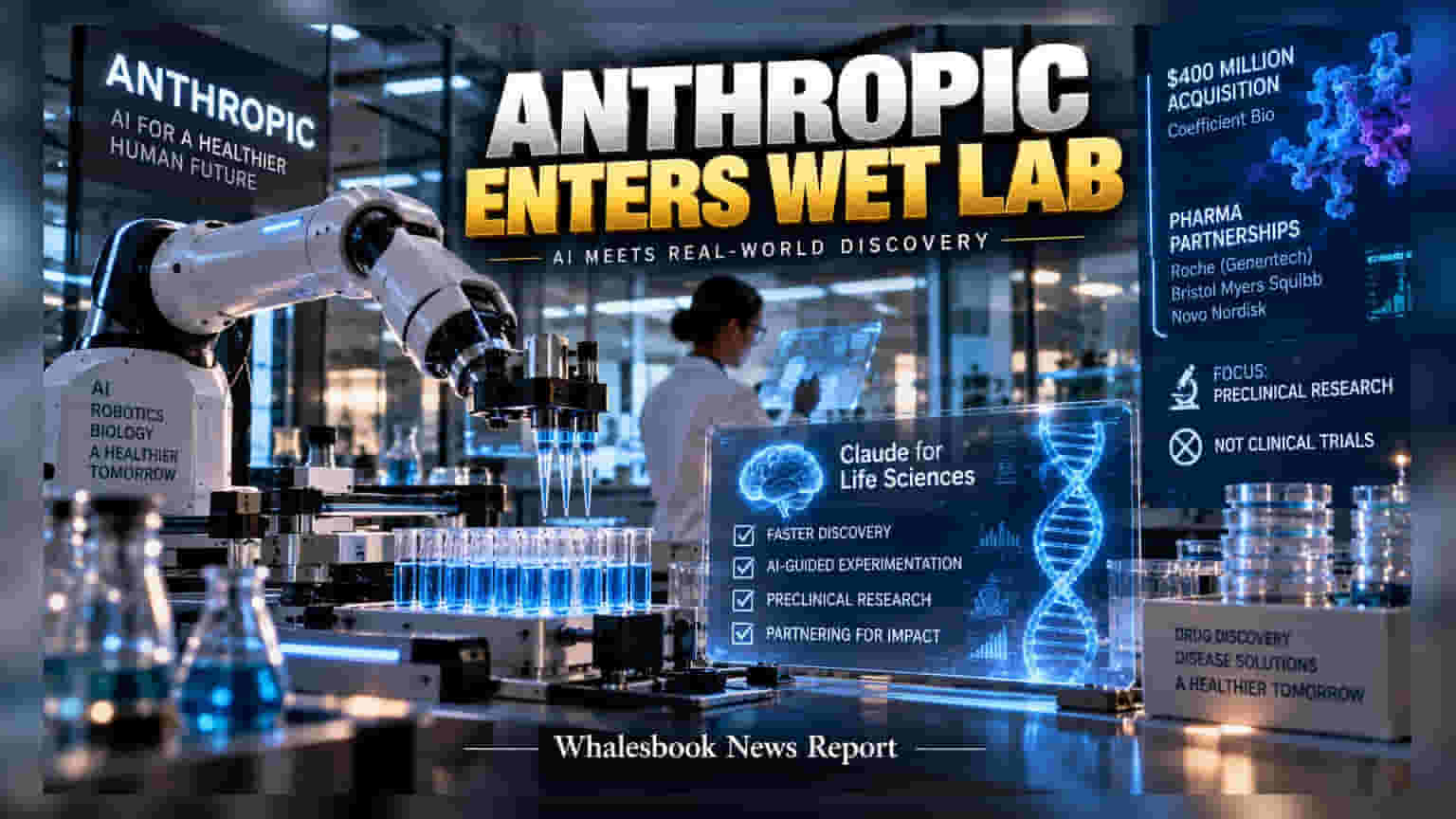
AI startup Anthropic has opened a physical wet lab in San Francisco to accelerate drug discovery, alongside a $400 million stock-based acquisition of Coefficient Bio. This strategic shift combines digital models with robotics for preclinical research, as the company works to avoid direct competition with its pharmaceutical clients.
AI company Anthropic has officially entered the physical laboratory space, launching a new wet lab facility in the San Francisco Bay Area. This development marks a shift from purely digital AI simulations to hands-on biological experimentation. To bolster this capability, the company also acquired Coefficient Bio in a stock-based deal valued at approximately $400 million. This move is designed to integrate the company’s Claude AI model with physical robotic systems to automate biological research, specifically targeting conditions that have historically been difficult to treat.
Strategic Boundaries in Pharma Partnerships
A critical factor for investors in the pharmaceutical and biotech sectors is how Anthropic manages its relationship with industry giants. The company explicitly stated that it will not conduct clinical trials. This decision is a deliberate business strategy to maintain trust with enterprise clients like Roche’s Genentech, Bristol Myers Squibb, and Novo Nordisk. By limiting its involvement to the preclinical phase—the early research stage before human testing—the company aims to avoid becoming a direct competitor to the very pharmaceutical firms that use its AI tools. For these pharma companies, the biggest risk remains data privacy; they are protective of their proprietary biological data. Anthropic's choice to remain a research-service provider rather than a drug developer helps mitigate fears that the AI firm might leak or misuse client data to develop its own competing drugs.
The Impact of AI on R&D Efficiency
The pharmaceutical industry is currently in a race to use generative AI to cut down the years of research required to bring a new medicine to market. By using AI to direct robotic lab equipment, companies like Anthropic hope to increase the speed of discovery significantly. This is part of a broader trend where tech-native firms are disrupting the traditional drug discovery model. However, investors should monitor the technical execution risk. While AI can simulate many outcomes, biological systems are complex and unpredictable. Errors in AI-driven laboratory processes, sometimes called hallucinations in a digital context, could lead to costly time delays or failed research if not managed with human oversight.
What Investors Should Track Next
The future success of this venture will depend on how well the company can integrate its AI software with physical laboratory hardware, a process they call the Model Hardware Standard. The key monitorable for the industry is whether these automated workflows can produce data that is reliable enough for pharmaceutical companies to justify their investments. Additionally, investors will watch for any shifts in the competitive landscape as other major tech players and dedicated AI-biotech firms continue to pour resources into the same space. The primary goal for Anthropic remains establishing this new lab as a proof-of-concept that can eventually scale, provided they can continue to balance the push for automation with the strict data privacy requirements of their large-scale pharmaceutical partners.