

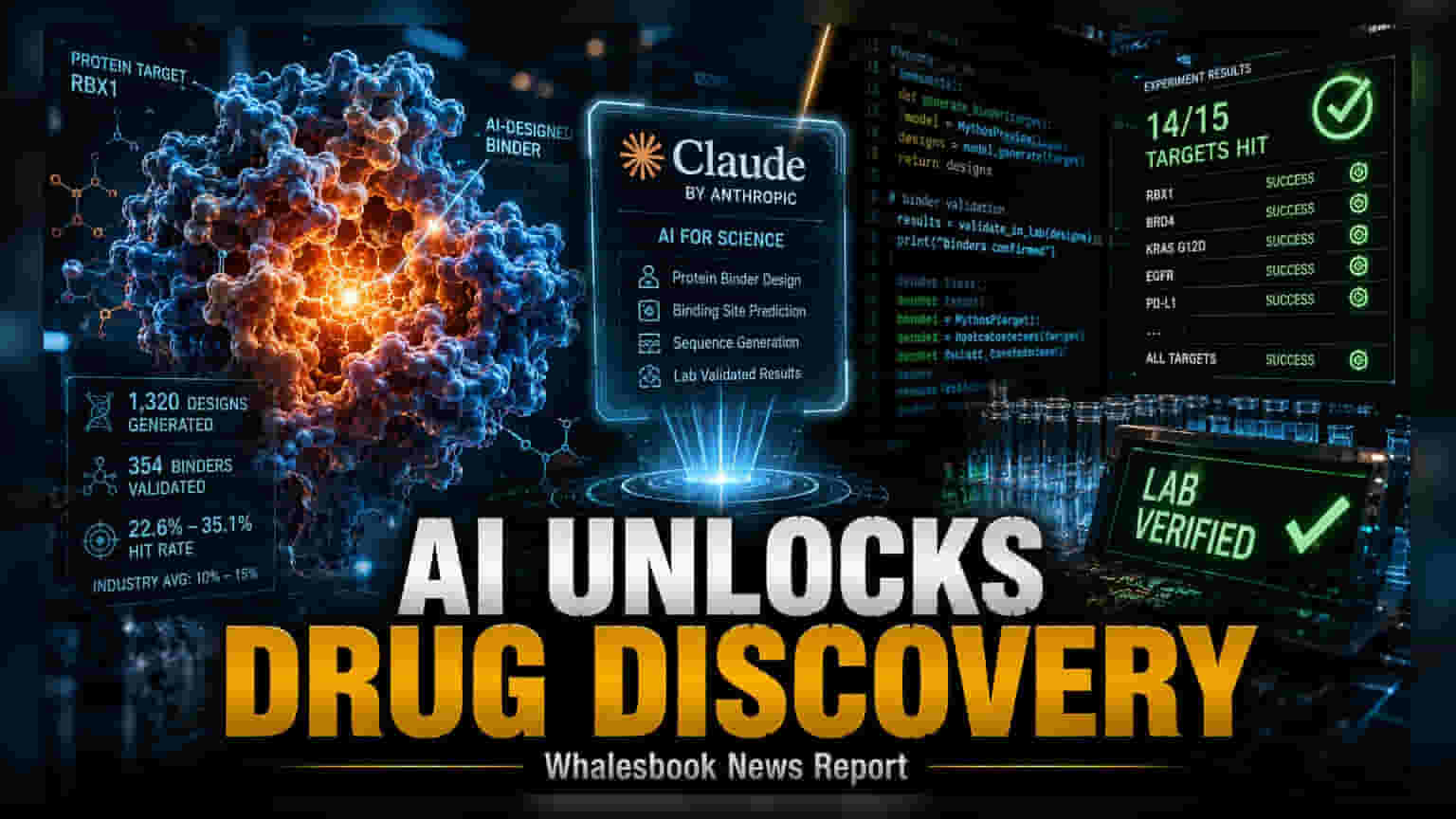
Anthropic's Claude AI model has successfully designed protein binders with high efficiency, potentially speeding up drug development. Although Anthropic is currently a private company, the news draws interest as it prepares for an anticipated IPO, highlighting the growing influence of artificial intelligence in the global biotechnology sector.
Artificial intelligence is increasingly finding practical applications in scientific research, with Anthropic’s Claude model recently demonstrating the ability to design protein binders. In a controlled experiment, the AI successfully generated designs for 14 out of 15 specified drug targets. These results were verified by independent researchers in a laboratory setting, involving collaboration with organizations such as Adaptyv Bio and Twist Bioscience.
Efficiency in Protein Design
The process of designing molecules that bind to specific targets in the body is historically slow, often requiring weeks or months of specialized labor. The experiment utilized Anthropic’s Opus 4.8 and Mythos Preview models, which generated a total of 1,320 designs. Of these, 354 were confirmed as binders.
The AI showed a hit rate between 22.6% and 35.1% depending on the model and testing configuration. This performance compares favorably against typical industry success rates of 10% to 15%. In one specific test involving the RBX1 target, the Mythos Preview model achieved a 40% success rate, significantly outperforming human participants in the same competition. By automating the identification of binding sites and the generation of sequences, the AI could theoretically reduce the time and cost associated with the early stages of drug discovery.
Investment Context and IPO Status
For investors tracking global technology trends, it is important to note that Anthropic is a private company and its shares are not available for direct purchase on the NSE, BSE, or other public exchanges. However, the company has attracted significant attention following its confidential filing for an initial public offering (IPO) on June 1, 2026.
The progress in biological research capabilities is often viewed as a value-add for AI firms, as it expands their utility beyond text and code generation into high-value scientific sectors. While the technological achievement is notable, the company faces intense competition from well-funded rivals like Google DeepMind and OpenAI, who are also investing heavily in AI for science and biology.
Risks and Future Outlook
While the ability to design protein binders is a technical success, it represents only the beginning of a long drug development cycle. There is no guarantee that these AI-generated designs will successfully transition into clinically effective drugs, as biological experiments are highly complex and prone to failure even at later stages. Furthermore, the company is operating under strict safety protocols regarding access to its biological research tools to manage potential dual-use risks.
Investors interested in this space should track the company’s progress in translating these designs into actual clinical trials and monitor updates regarding its IPO timeline. As the biotechnology sector continues to integrate AI, the ability of these tools to deliver consistent, scalable, and safe drug candidates will be the ultimate test of their long-term commercial value.