 Whalesbook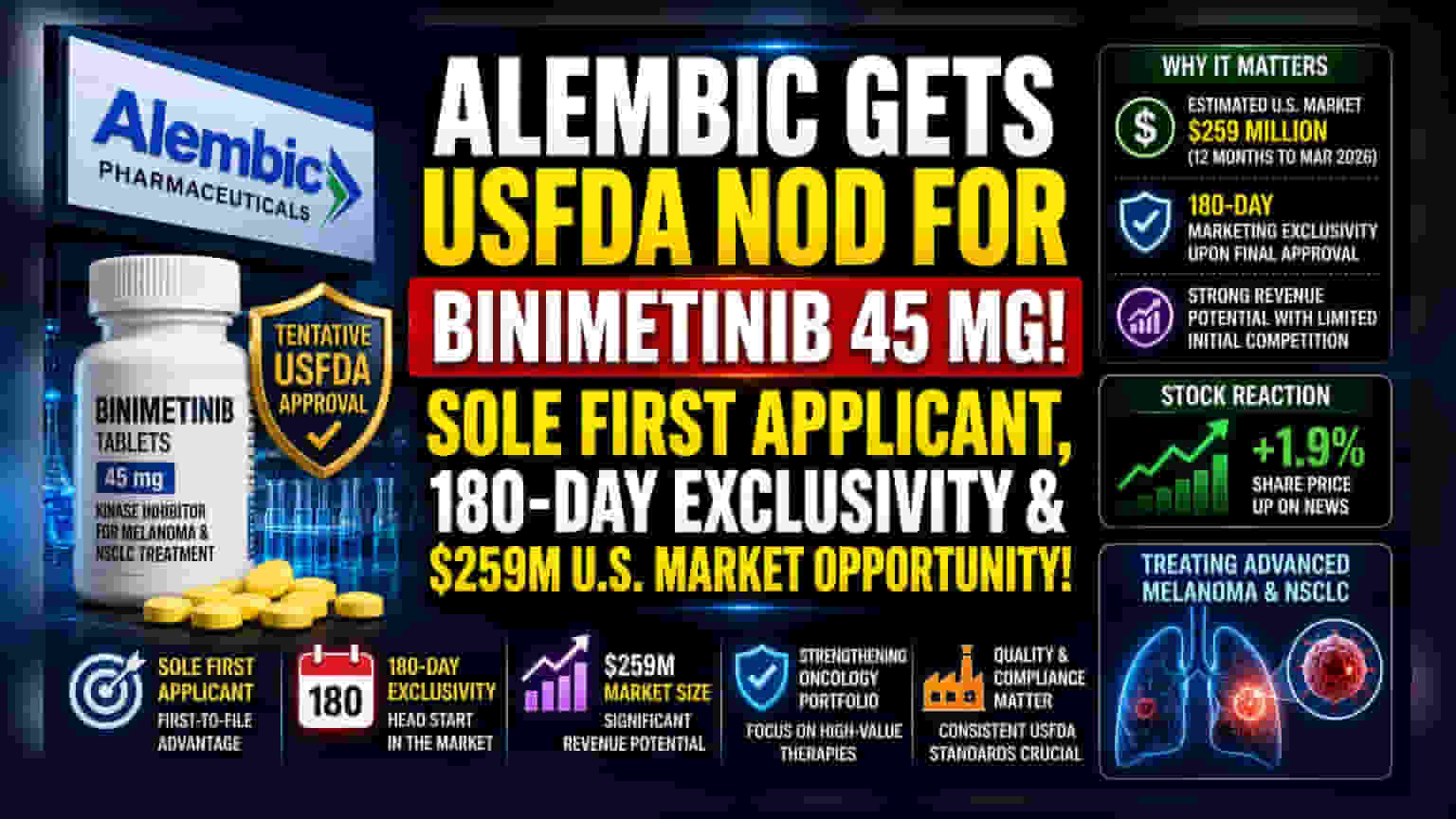
Alembic Pharmaceuticals has received USFDA tentative approval for its generic Binimetinib tablets, a cancer treatment with an estimated $259 million market. As the first applicant, the company may qualify for 180 days of marketing exclusivity, a potential boost for its U.S. oncology pipeline.
What Happened
Alembic Pharmaceuticals announced it has received tentative approval from the U.S. Food and Drug Administration (USFDA) for its generic version of Binimetinib tablets in the 45 mg strength. Binimetinib is a kinase inhibitor typically used in combination therapies to treat certain types of advanced melanoma and metastatic non-small cell lung cancer.
This approval is particularly notable because Alembic is the sole first applicant for this specific drug, according to company disclosures. In the U.S. generic drug market, this “first-to-file” status can grant a company 180 days of marketing exclusivity upon final approval. This exclusive period essentially allows the manufacturer to enter the market without immediate competition from other generic players, which can lead to stronger initial sales and better pricing.
Why This Matters For Investors
The commercial opportunity for this drug is significant, with the company estimating the U.S. market size for Binimetinib tablets to be approximately $259 million over the 12 months leading up to March 2026. For Alembic, this development is part of a broader strategy to expand its oncology portfolio in the U.S., which is one of the most competitive pharmaceutical markets globally.
For shareholders, the value lies in how quickly this tentative approval can convert into final approval and a commercial launch. While tentative approval is a positive regulatory milestone, it does not allow the company to sell the drug in the U.S. until final approval is granted, which often depends on resolving any outstanding patent litigation or regulatory requirements.
How The Stock Reacted
Following the announcement, Alembic Pharmaceuticals shares saw positive momentum, trading up about 1.9% on the day of the news. Investors often view such approvals as a signal of a company's success in navigating complex regulatory pathways and strengthening its future revenue pipeline.
The Bigger Business Context
Alembic Pharmaceuticals has been investing heavily in its manufacturing and research capabilities to grow its international presence. The company has a substantial portfolio of abbreviated new drug applications (ANDAs) and has been working to scale up its specialty and oncology segments.
However, the company’s ability to fully capitalize on its new pipeline depends on consistent compliance with USFDA standards. Investors often monitor the company’s manufacturing facilities, such as the site at Panelav, for any signs of regulatory scrutiny. While the company has maintained a large portfolio of approved drugs, it has previously received regulatory observations (Form 483s) at its facilities during inspections. A strong track record of resolving these observations and maintaining high manufacturing quality is essential to ensuring that new product launches remain on schedule.
Risks And Concerns
Investors should be aware of the inherent risks in the generic oncology space. First, tentative approval does not guarantee immediate revenue; final market entry can be delayed by ongoing patent disputes with the brand-name drug manufacturer. Second, the U.S. generic market is known for intense price erosion, where increased competition can quickly reduce profit margins even for companies that launch early.
Additionally, as with any pharmaceutical company reliant on exports to regulated markets like the U.S., any adverse regulatory action—such as warning letters or import alerts—can disrupt supply and hurt financial performance. Maintaining operational excellence at manufacturing plants is a constant requirement to avoid such disruptions.
What Investors Should Track
The most critical monitorable for investors will be the transition from tentative to final approval. Beyond the regulatory timeline, investors may look for management commentary on the expected commercial launch date, the status of any patent litigation that might delay the market entry, and how the company plans to manage potential price competition once the 180-day exclusivity period ends. Monitoring the company’s quarterly updates on its U.S. generic business performance will also provide insight into whether these R&D investments are effectively translating into top-line growth.

