

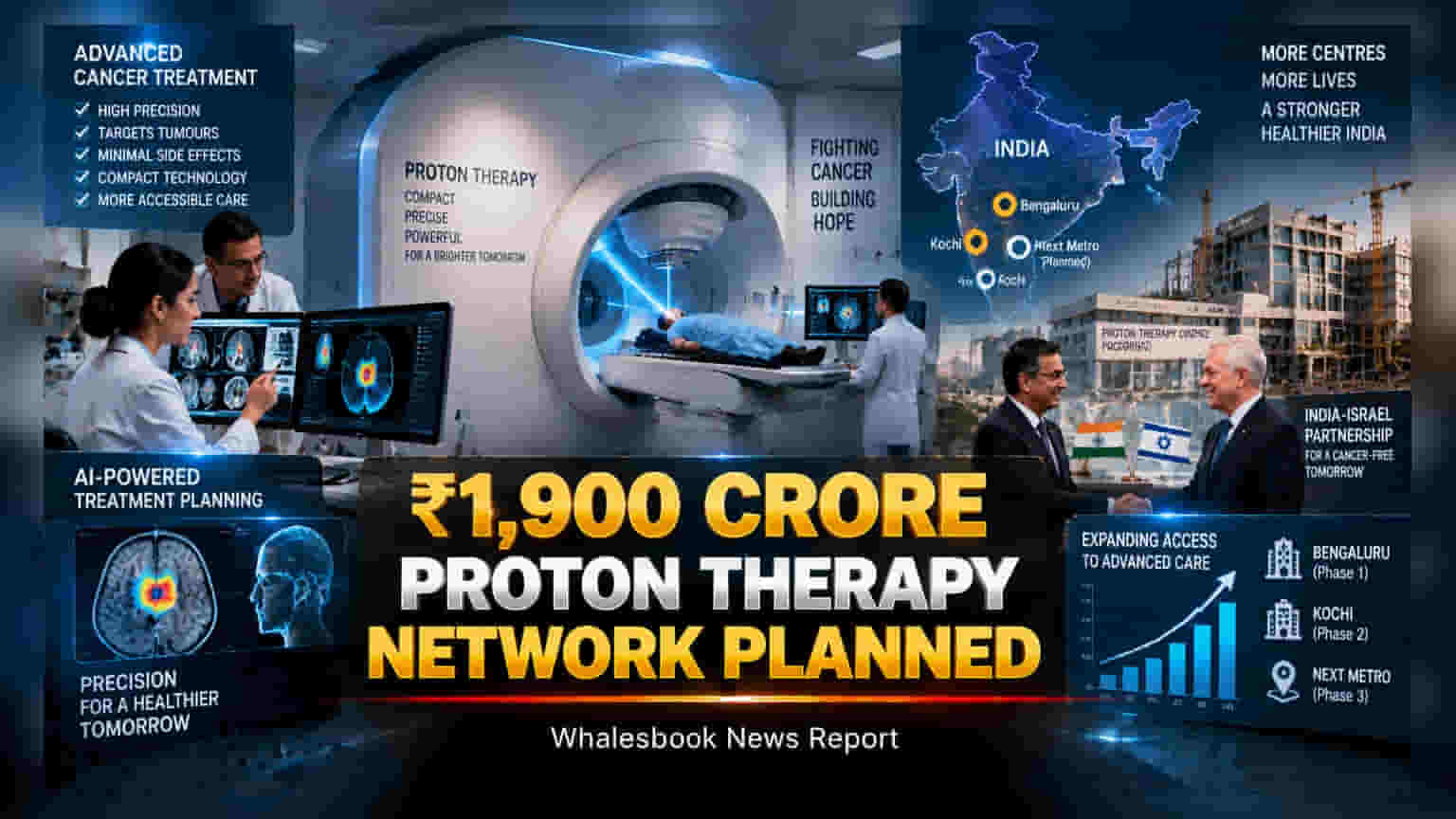
ARISTION Proton Center plans to invest ₹1,900 crore to build a network of proton therapy centers in India using compact technology from Israel’s P-Cure. The project aims to reduce infrastructure costs compared to traditional models, with the first center set for Bengaluru. Investors should track project execution, funding for future sites, and whether the compact model can drive enough patient volume in the premium healthcare market.
ARISTION Proton Center Private Limited has announced plans to invest approximately ₹1,900 crore to develop a network of proton therapy facilities across India. The project represents a strategic move to introduce compact, synchrotron-based technology supplied by the Israel-based medical technology firm P-Cure Ltd to the Indian healthcare sector.
The project marks a shift from the conventional model of proton therapy, which typically requires large-scale, high-cost infrastructure. By adopting P-Cure’s ultracompact systems, ARISTION aims to reduce the physical footprint and the upfront capital spending needed for each facility. This approach is designed to improve the economic viability of establishing multiple centers, potentially making this specialized cancer treatment more accessible while maintaining the precision of proton beam therapy.
Scaling the Network and Strategic Locations
The initial phase of the rollout is centered at Sentient Health City in Bengaluru, which will serve as the first test case for this operating model. Following the Bengaluru launch, the company has identified Kochi as the next site, with a third location planned for an undisclosed major metropolitan area. The expansion strategy appears to rely on integrating artificial intelligence into the treatment process to enhance operational efficiency.
While the plan is ambitious, the successful execution of a ₹1,900 crore infrastructure project involves significant variables. Developing specialized cancer treatment facilities requires navigating complex regulatory approvals, managing long construction timelines, and securing highly skilled clinical personnel to operate the equipment.
Investor and Industry Context
For those monitoring the healthcare sector, the success of this project will depend on more than just the technology. Proton therapy is a premium service that costs significantly more than conventional radiation treatments. The business model must achieve sufficient patient volume to ensure the investment generates adequate returns.
Furthermore, the project’s growth trajectory remains tied to capital availability. ARISTION is currently seeking a joint venture partner for the Kochi facility, suggesting that future expansion phases may require external funding or collaborative partnerships rather than relying solely on internal resources. The ability of the management to secure these partnerships and manage costs will be the primary indicator of the network's long-term sustainability. The industry will also watch for the commissioning timeline of the first Bengaluru unit as a benchmark for how quickly these specialized medical projects can transition from the planning stage to operational service.