 Whalesbook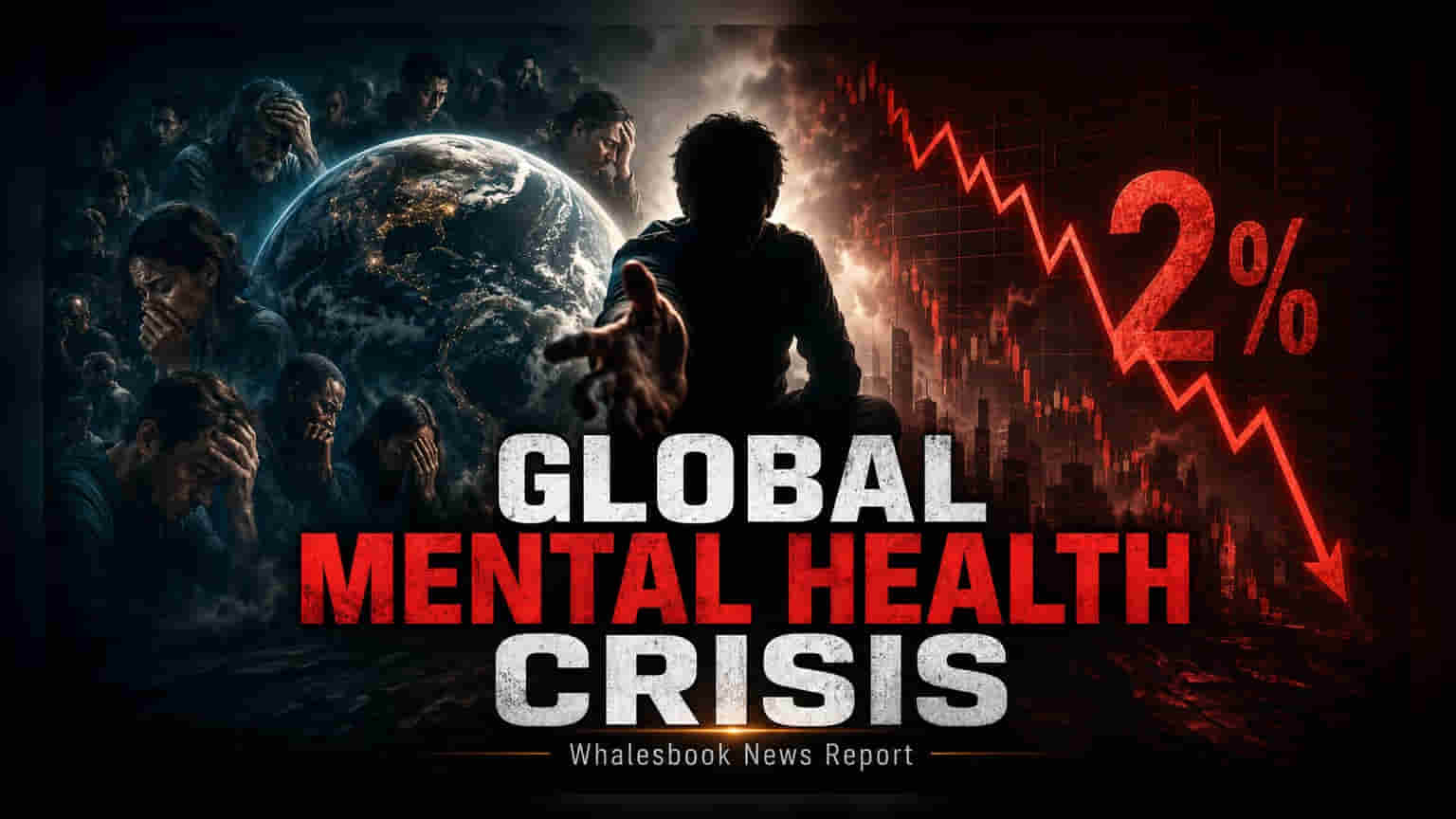


Global Mental Health Crisis Deepens Amid Severe Underfunding
An escalating global mental health crisis now affects over a billion individuals, signaling widespread underinvestment and increasing societal strain. The lack of resources, particularly in low- and middle-income countries, worsens the impact of conditions like anxiety and depression, which are leading causes of disability worldwide. The economic consequences are significant, with lost productivity alone costing trillions annually.
Chronic Underfunding Fuels Disability
Government spending on mental health remains critically low, averaging just 2% of total health budgets globally, a level unchanged since 2017. This chronic underfunding creates a stark disparity: high-income nations spend up to $65 per person annually on mental health, while low-income countries spend as little as $0.04. Consequently, less than 10% of affected individuals receive care in low-income countries, compared to over half in higher-income nations. The economic toll is immense, with direct and indirect costs of mental disorders estimated at $2.5 trillion in 2016, projected to double by 2030. Lost productivity from depression and anxiety alone costs nearly $1 trillion annually, with an estimated 12 billion work days lost each year. Mental health disorders are the leading cause of disability globally, accounting for one in six years lived with disability.
Anxiety and Depression Affect Millions
Anxiety and depressive disorders are the most common mental health conditions, impacting an estimated 359 million and 332 million people worldwide, respectively. These disorders have increased significantly, with anxiety disorders rising over 50% since 1990. Women and young people are disproportionately affected. Alarmingly, only about one in four individuals with anxiety or depression receive treatment, and over 75% of people experiencing mental disorders in low- and middle-income countries receive no care at all, according to WHO.
Suicide: A Growing Tragedy
Approximately 740,000 suicides occur globally each year, or one death every 43 seconds. Suicide is the third leading cause of death for individuals aged 15-29 worldwide and the second leading cause for women in that age group. While men have higher suicide rates, women are more likely to attempt suicide. The majority of global suicides occur in low- and middle-income countries.
Stagnant Spending Masks Systemic Issues
Despite the immense human and economic costs, mental health spending has remained frozen at 2% of global health budgets since 2017. This stagnation suggests a systemic issue rather than a lack of awareness. The extreme disparity in per-capita spending between high-income ($65) and low-income ($0.04) countries severely limits care access, especially in resource-limited settings. Slow reform is evident, with only about one in five countries having a national mental health policy aligned with human rights. Many past reforms also began with deinstitutionalization without adequate planning for community care infrastructure, financing, or workforce development.
Innovation Meets Underfunding
Investment in mental health technology has surged, reaching $352 million in 2025, a 150% increase from 2024, indicating a market shift toward deep-tech and clinical solutions. However, this surge contrasts with the persistent underfunding of essential services. New WHO guidance calls for urgent policy transformation, emphasizing leadership, service organization, workforce development, and addressing social determinants. Closing the treatment gap requires significant expenditure increases; EU countries alone may need a 41% rise. The combination of increased demand, technological innovation, and growing recognition of mental health as a public health priority creates a critical moment for policy reform and resource allocation.