 Whalesbook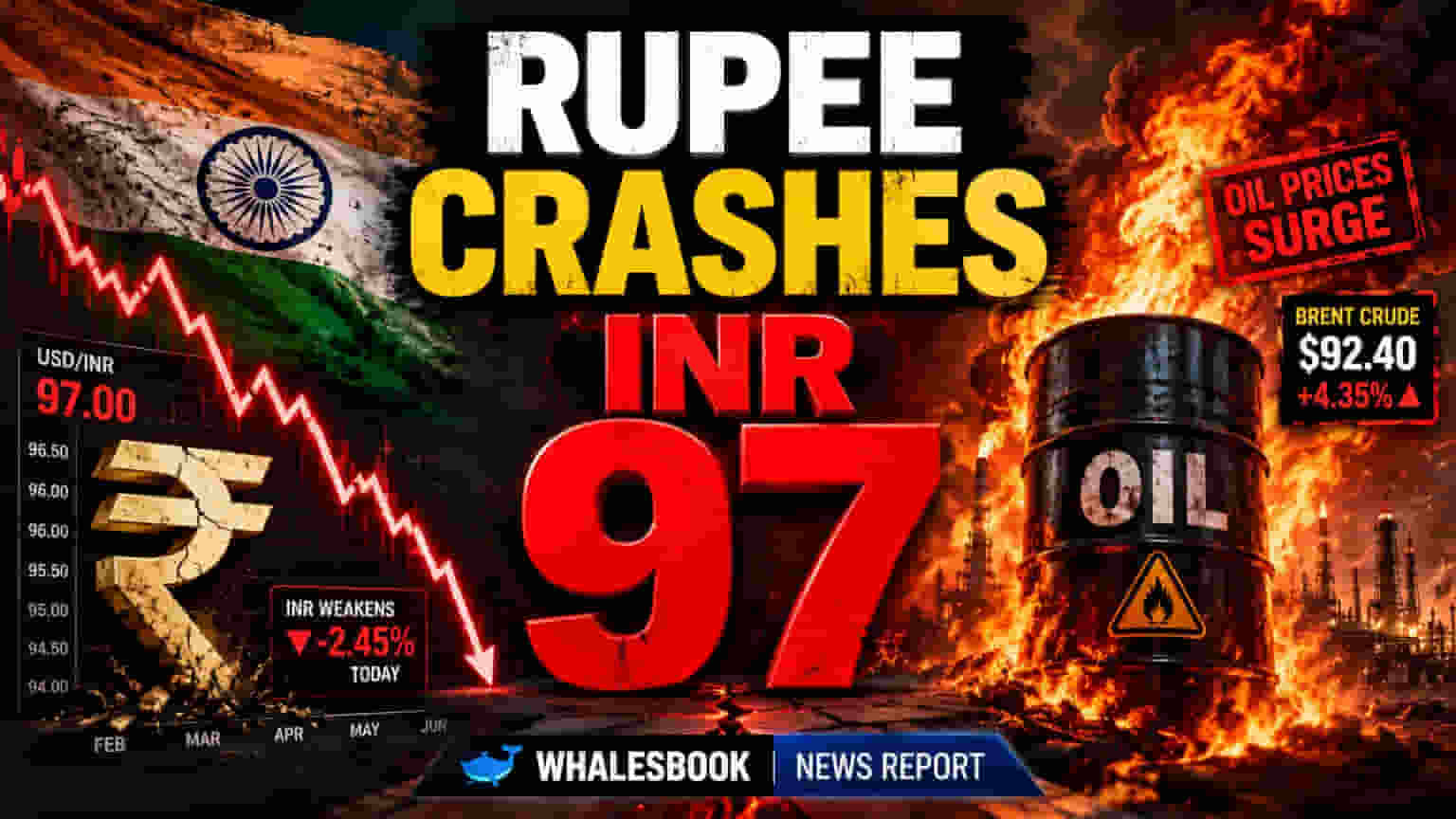


Oil Shock and Yield Increases Hit Indian Rupee
The Indian rupee has fallen to an unprecedented low, trading near Rs 97 per US dollar and touching 96.44 on Tuesday. This significant drop is caused by rising global crude oil prices and increasing U.S. Treasury yields. Since India imports about 85% of its oil, higher energy prices directly impact the rupee. The country will likely spend more dollars on imports, pushing the current account deficit to an estimated $65 billion to $70 billion this fiscal year.
At the same time, U.S. 10-year Treasury yields have reached a one-year high. This makes U.S. investments more attractive, drawing capital away from emerging markets like India. This trend makes it harder for India to get the foreign investment it needs to cover its deficits, adding pressure on the rupee.
Inflation, Trade Gaps, and Capital Concerns Grow
Higher energy costs are already affecting India's economic data. The trade deficit widened to $28.38 billion in April, with crude oil imports hitting a six-month high. Wholesale inflation also climbed to a three-and-a-half-year peak in April, showing that rising fuel costs are impacting the broader economy. State-run oil companies have increased petrol and diesel prices twice recently.
India faces the challenge of reducing its current account deficit while still attracting foreign investment. Weak portfolio investment and worries about India's economic growth complicate these efforts. Additionally, remittances from the Middle East could decrease if regional conflicts worsen. The Reserve Bank of India (RBI) is reportedly selling dollars to slow the rupee's decline and is taking other measures to manage reserves and imports. However, if oil prices stay high and foreign investment doesn't recover, the rupee could remain weak.
Structural Weakness and Foreign Investment Risks
India's dependence on imported oil is a significant structural weakness, especially with current geopolitical instability and potential supply issues. As a net payer for energy, India faces constant pressure on its balance of payments. While the current account deficit is expected to grow, attracting foreign direct investment (FDI) remains a concern, particularly if global economic sentiment weakens or if India is seen as a riskier investment compared to other countries.
Asian competitors that rely less on energy imports or have stronger export sectors may see their currencies perform better. Historically, high oil prices have often led to significant currency depreciation in India, requiring the RBI to carefully manage foreign exchange reserves. Any sign of insufficient reserves or a steady drop in capital inflows could lead to further weakening of the rupee, worsening inflation and hindering economic growth.
Future Outlook Uncertain
The rupee's future direction depends heavily on global oil prices and the U.S. Federal Reserve's interest rate decisions. If oil prices fall and foreign investment picks up, the rupee might stabilize. However, experts are cautious, believing the currency will likely face continued pressure. The RBI's actions and the government's efforts to lessen the impact of high energy costs will be key to the rupee's performance in the short to medium term.