

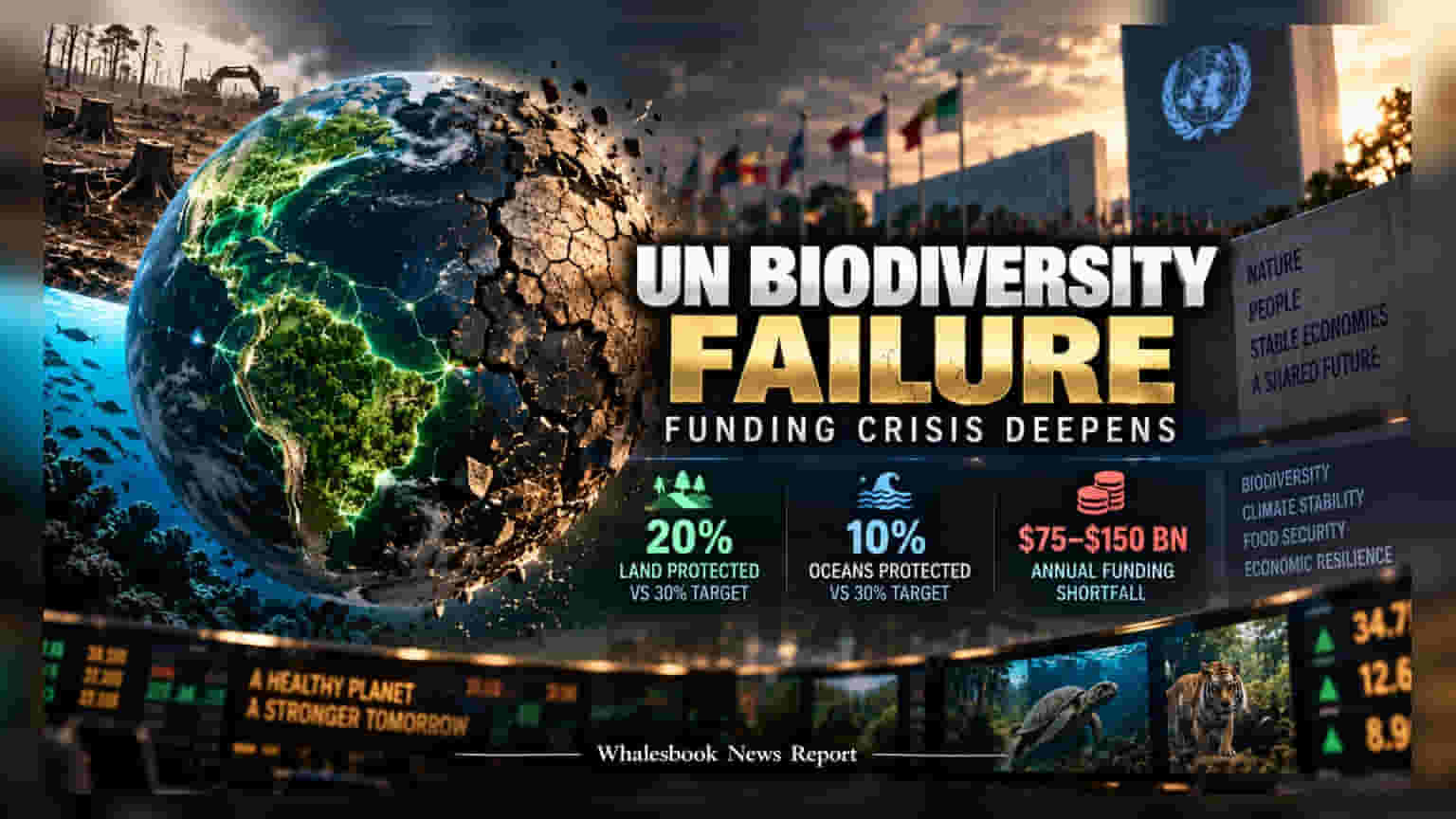
The global '30-by-30' biodiversity plan faces a funding gap of up to $150 billion, with targets well off track. For Indian investors, this slow progress suggests potential tightening of environmental regulations and higher compliance costs for companies in sectors dependent on natural resources like agriculture, mining, and forestry.
The ambitious '30-by-30' initiative, designed to protect 30 percent of the world's land and marine areas by 2030, is currently falling short of its goals. Recent data from the UN framework shows that while nations pledged to protect these vital zones, progress stands at only 20 percent for land and 10 percent for oceans. This delay is increasingly viewed as a financial and operational risk for global industries, including many sectors significant to the Indian stock market.
At the core of the issue is a massive funding shortfall, estimated between $75 billion and $150 billion annually. This deficit means that even the areas marked as protected often lack the resources for effective management. In fact, only 3.5 percent of current ocean zones are considered effectively managed, suggesting that many 'protected' areas exist only on paper. As the UN Convention on Biological Diversity prepares to review progress, there is growing pressure on governments to adopt stricter policies to bridge this gap.
For investors, this development is relevant because it highlights the vulnerability of natural capital. Indian companies operating in sectors like agriculture, forestry, water utilities, and mining rely directly on stable ecosystems. If global efforts to curb biodiversity loss remain weak, governments may shift toward more aggressive regulation. This could result in higher costs for companies, including mandatory environmental restoration projects, stricter land-use regulations, and new biodiversity-related taxes or compliance requirements.
In India, the Securities and Exchange Board of India (SEBI) has already moved toward better transparency through the Business Responsibility and Sustainability Report (BRSR) framework. As global biodiversity standards fail to gain traction through voluntary means, Indian corporations may face stricter ESG (Environmental, Social, and Governance) reporting mandates. Companies that depend on commodities—such as paper, agrochemicals, or large-scale infrastructure projects—may find their supply chains at higher risk of disruption or regulatory penalties if biodiversity-linked laws are tightened to make up for lost time.
Investors may monitor how these global policy shifts influence Indian corporate governance and operational costs. The primary monitorable for the coming months will be any changes in the Ministry of Environment, Forest and Climate Change guidelines or updates to SEBI's sustainability disclosures, as these will indicate how India plans to align with global biodiversity expectations. The long-term financial health of resource-heavy companies will increasingly depend on their ability to manage these environmental dependencies and proactively meet rising sustainability standards.