

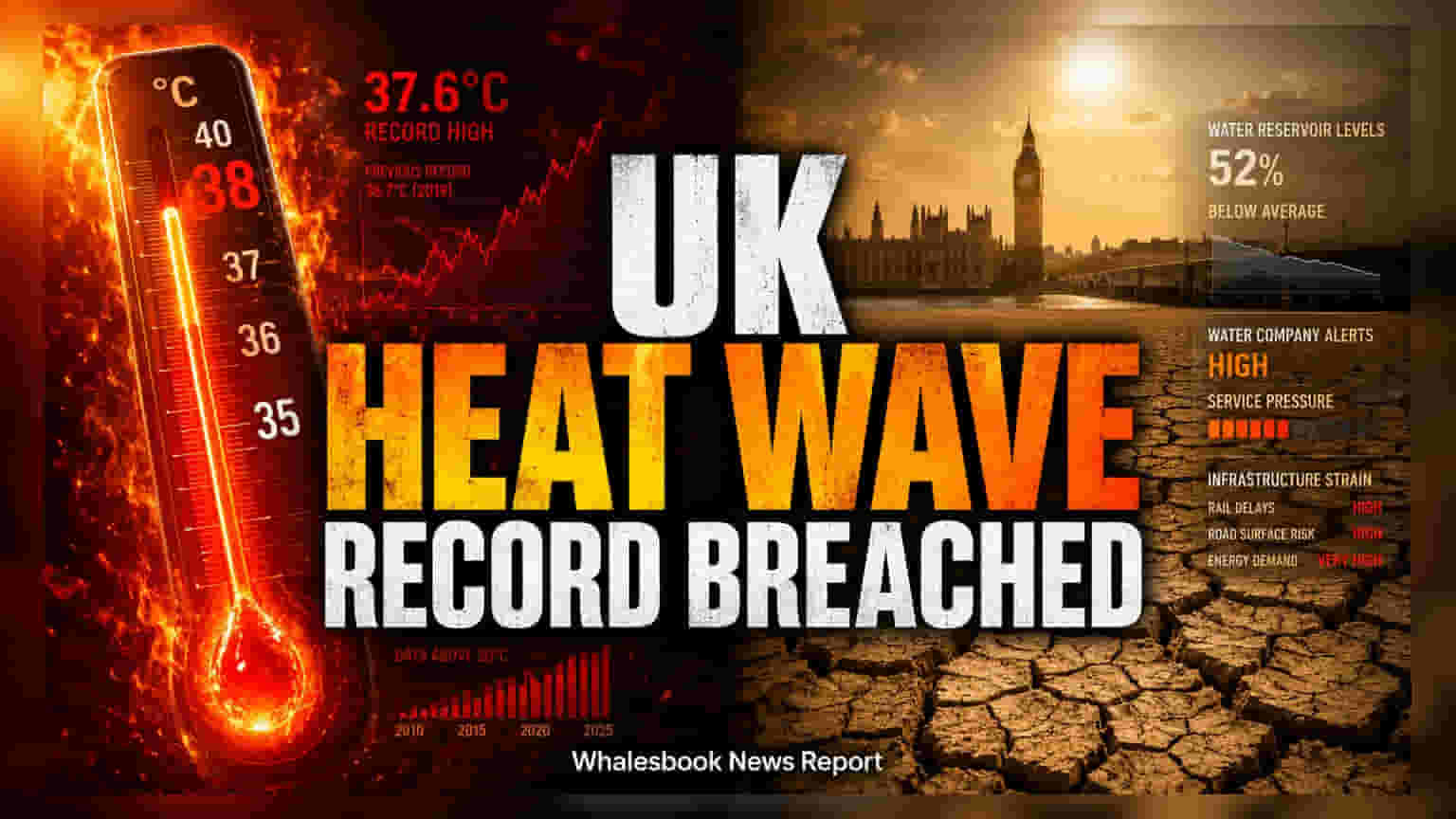
The UK is experiencing its fifth heatwave, with temperatures reaching 38°C, causing severe water shortages and strained infrastructure. For Indian investors, this situation highlights potential operational challenges for companies with significant UK exposure, such as the IT and automotive sectors, due to utility cost pressures and supply chain risks.
Large parts of the United Kingdom are currently facing intense weather conditions, with temperatures in central and southeast England forecast to reach 38 degrees Celsius. This ongoing heatwave, the fifth to hit the country this summer, is pushing infrastructure to its limits and raising concerns about the economic impact of sustained extreme heat.
The situation is causing significant strain on public services and utilities. Water resources are under pressure, with much of the country officially declared in drought. Southern Water has taken steps to seek a drought order, which would allow the company to restrict non-essential water usage for businesses. Furthermore, the National Fire Chiefs Council has reported over 1,000 wildfire incidents across England and Wales this year, a figure that is drawing government attention toward potential restrictions on outdoor activities.
For Indian investors, the primary concern lies with the operational environment for companies that have a heavy business presence in the UK. Many large Indian IT services firms and automotive manufacturers derive a substantial portion of their revenue from British markets. When extreme weather disrupts daily life and utility services, it can create indirect pressure on business costs.
For example, automotive companies like Tata Motors, which owns Jaguar Land Rover (JLR) with significant operations in the UK, often face risks related to logistics and supply chain continuity when infrastructure like roads and railways face heat-related restrictions. Similarly, IT firms with large employee bases in the region must navigate disruptions to office infrastructure and service continuity, which can impact productivity.
Beyond specific sectors, the drought conditions could lead to higher utility costs for businesses and potentially lower discretionary consumer spending if the extreme weather continues to disrupt economic activity. Investors may also monitor how these climate-related risks influence broader UK economic policies, particularly regarding energy and water management.
The key monitorables for shareholders include management commentary from UK-exposed companies regarding weather-related disruptions to their supply chains or office operations. Additionally, investors may track whether the sustained drought leads to increased utility expenses or regulatory compliance costs for businesses operating in the affected regions. While the current situation is primarily an environmental concern, its persistence can create ripple effects in operational costs and infrastructure reliability for multinational corporations.