

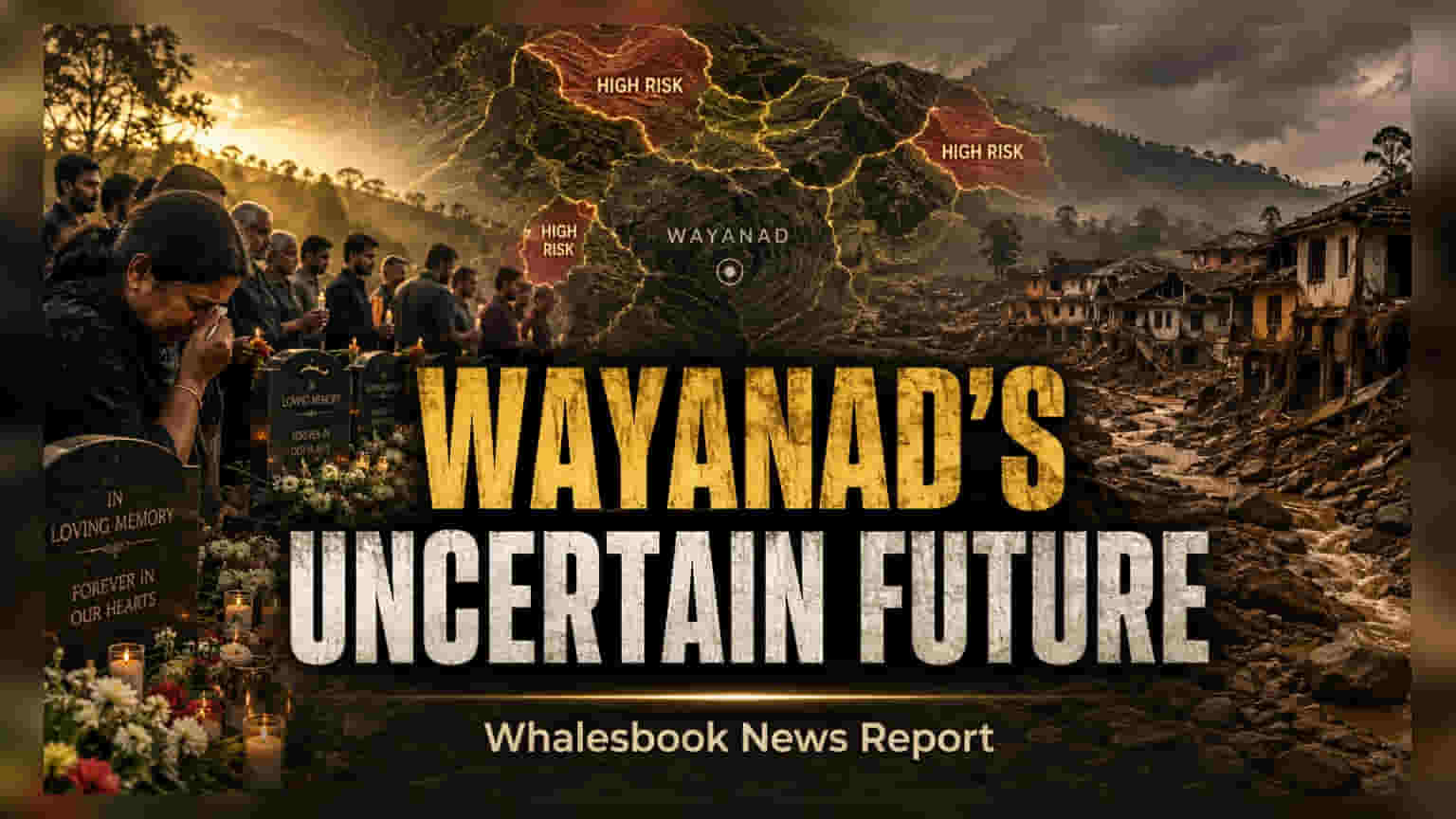
Two years after the Mundakkai-Chooralmala landslides in Wayanad, survivors continue to struggle with incomplete government housing and unresolved debt. A recent local landslide has reignited safety concerns, highlighting the ongoing tension between regional development and the ecological sensitivity of the Western Ghats.
The second anniversary of the devastating Mundakkai-Chooralmala landslides in Kerala’s Wayanad district marks a painful period of recovery for the affected communities. While the state government has embarked on a multi-crore rehabilitation township project, the path to normalcy remains obstructed by bureaucratic hurdles. Officials are currently working through verification processes and appeals for permanent housing allotments, a critical step for the more than 400 families identified for aid.
Economic and Social Hurdles in Recovery
The recovery process is complicated by the exclusion of approximately 70 families from government assistance packages. Many of these individuals are estate workers or tenants who lack formal land titles, leaving them unable to meet the technical eligibility criteria required for support. Furthermore, many survivors are still burdened with debt tied to properties destroyed in the disaster, leading to urgent calls for comprehensive loan waivers to help these families regain financial stability. Beyond government efforts, non-governmental initiatives, such as the Indian Union Muslim League’s 105-home project funded by over ₹37 crore in public contributions, have provided much-needed support, yet the scale of the need remains vast.
Geological Risks and Future Preparedness
Investor and public anxiety has been compounded by a recent landslide at Kalladi, located only five kilometers from the 2024 disaster site, which resulted in eight fatalities. This event serves as a stark reminder of the region's extreme geological vulnerability. Experts from the Hume Centre for Ecology and Wildlife Biology have emphasized that thousands of residents are still living in areas classified as highly vulnerable. Scientists point to the intersection of geological weakness, changing hydrology, and human activity in the Western Ghats as a primary concern for long-term safety.
The core challenge for the region involves re-evaluating development strategies in high-risk zones. Geologists have consistently called for mandatory rigorous geological assessments before any new infrastructure projects are cleared in such terrains. The focus for stakeholders and local administration has shifted toward the urgent need for enhanced early-warning systems, improved community awareness, and land-use policies that strictly prioritize ecological prudence over traditional development models. The coming months will likely see continued debate over the pace of housing allotments and the potential for a more science-based approach to land management in Wayanad.