 Whalesbook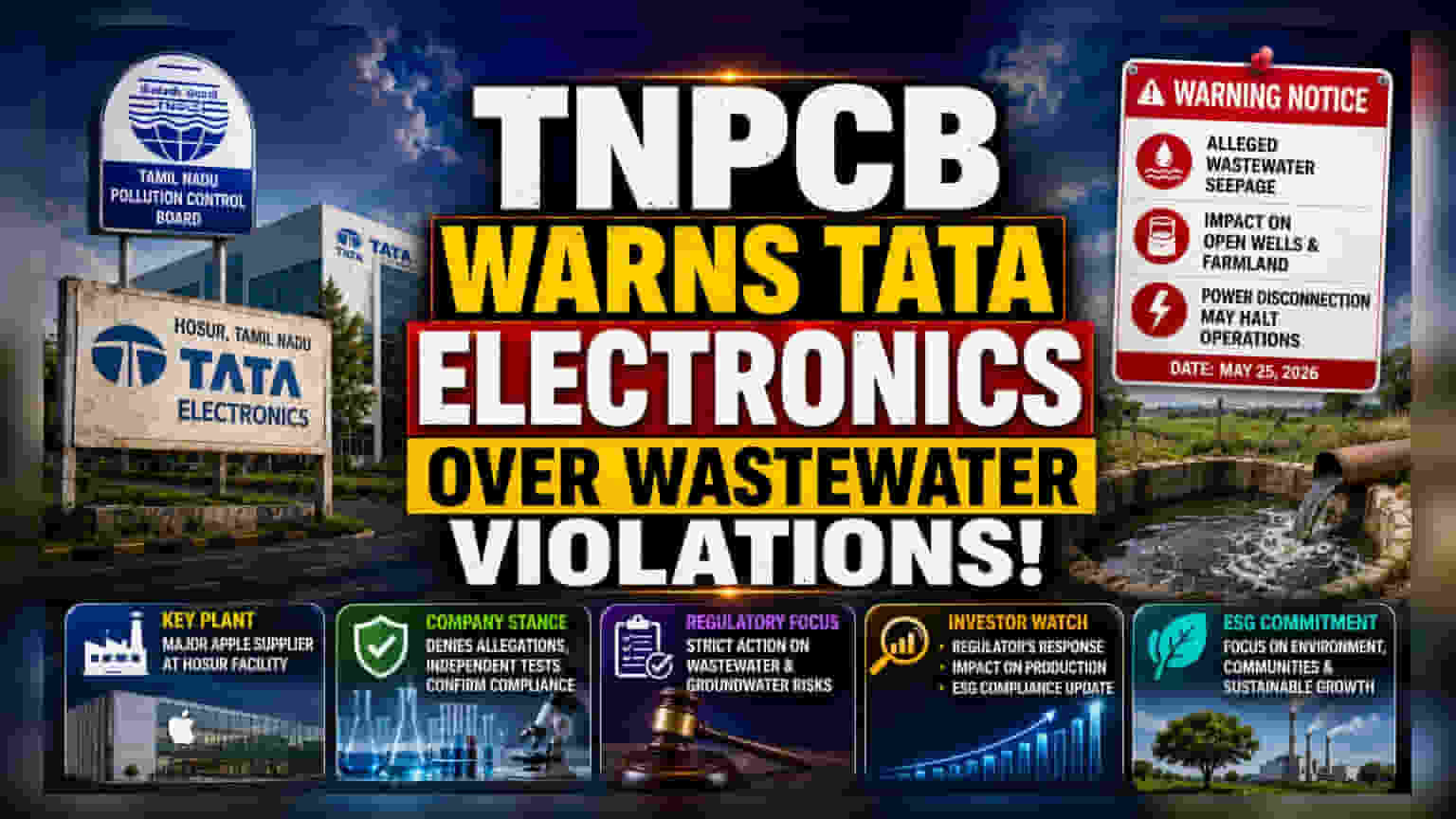


The Tamil Nadu Pollution Control Board has issued a warning to Tata Electronics’ Hosur facility regarding alleged water contamination. The regulator cited potential power disconnection due to claims of wastewater leakage into local groundwater, though the company has denied the allegations. This development is significant for investors as the plant plays a key role in the Apple iPhone supply chain. The situation highlights the importance of environmental compliance for major manufacturing hubs in India and serves as a key monitorable regarding operational stability.
What Happened
The Tamil Nadu Pollution Control Board (TNPCB) has issued a warning notice to the Tata Electronics manufacturing facility located in Hosur, Tamil Nadu. The notice, dated May 25, 2026, concerns alleged environmental violations involving wastewater management at the site. Regulators have stated that wastewater from the plant reportedly seeped into open wells located on neighboring farmland, leading to concerns about groundwater contamination. The board’s warning mentioned the possibility of disconnecting electricity to the unit, which would effectively halt production operations at the facility if the issue is not addressed to the regulator's satisfaction.
Why This Matters For Investors
For investors, the primary concern lies in operational continuity. The Hosur plant is a significant asset in India's growing electronics manufacturing landscape, serving as a key component supplier for the Apple iPhone ecosystem. Major global companies like Apple maintain strict environmental, social, and governance (ESG) standards for their suppliers. Any potential operational disruption or sustained environmental dispute could create uncertainty regarding production timelines for critical electronic components.
The Company Stance
Tata Electronics has firmly denied the allegations of environmental non-compliance. In response to the regulatory notice, the company stated that it commissioned an independent laboratory analysis. According to Tata Electronics, these test results confirm that the facility is in full compliance with all regulatory norms. The company has emphasized its commitment to responsible business practices, environmental protection, and the well-being of the local communities surrounding its operations. They have also formally responded to the authorities to contest the claims.
Regulatory and ESG Context
Environmental compliance is a critical aspect of large-scale industrial projects in India. Regulators are increasingly vigilant about wastewater discharge and its impact on local agriculture and groundwater. When large manufacturing units are accused of violating environmental norms, the process involves state board inspections and, in severe cases, the threat of utility disconnection. For investors, this underscores the importance of monitoring how companies manage their environmental footprint and navigate local regulatory scrutiny. A failure to manage these risks effectively can lead to legal complications, fines, and reputation management challenges that may impact investor sentiment.
What Investors Should Track
There are several monitorables for investors following this situation. First, the most immediate development will be the response from the Tamil Nadu Pollution Control Board following the company’s submission. Investors will look for clarity on whether the regulator accepts the company's independent test findings or if they pursue further action. Second, any potential impact on production capacity or shipping schedules from the Hosur facility should be monitored, as this could have downstream effects on component supply. Finally, future updates from the company regarding its environmental management systems and continued alignment with global ESG standards will be key to maintaining investor confidence in its long-term manufacturing operations.